Jump starting a car sounds simple. Yet modern vehicles are far more complex than they used to be. If you make a mistake, you can damage the ECU (Engine Control Unit) or other sensitive electronics. Those parts are costly to replace and vital for your car to work. So how do you jump start a car safely and avoid harming these components?
I wrote this guide after years of helping friends and family when their batteries die. I’ll show the safest method, explain why each step matters, and point out the most common, costly mistakes. Whether you drive a hybrid, a luxury sedan, or a simple hatchback, you’ll learn how to protect the ECU, sensors, and other electronics while getting back on the road.
Why Modern Cars Are Sensitive To Jump Starting
Older cars had simple electrical systems. New cars—especially those made after 2000—have many electronic systems controlling the engine, lighting, brakes, safety features, and infotainment. The ECU, the car’s “brain,” controls fuel injection, ignition timing, emissions, and more. A sudden surge or incorrect connection can fry circuits or reset settings.
A typical modern vehicle can have more than 50 microprocessors. Even a small voltage spike may damage them, create error codes, or make the car behave oddly. Damage isn’t always immediate. You might drive away fine but see rough idling or warning lights days later.
Features like automatic emergency braking, parking sensors, advanced infotainment, and start-stop systems all need clean, stable voltage. A poor jump start can send unpredictable power through these systems and cause failures that take time to diagnose.
How voltage spikes damage electronics
When you connect two batteries or a booster incorrectly, you can create a voltage spike. That spike travels through the wiring harness and can overload microchips, sensors, and relays. Alternator surges (if the donor car is running) make this worse. I’ve seen cases where a single bad jump fried the ECU and left the car undrivable.
Common Problems After Incorrect Jump Starting
- ECU failure: The car may not start or runs poorly. It might crank but not fire, stall, or show engine fault lights.
- Blown fuses: Lights or accessories stop working. Modern fuse boxes are complex; tracking down the right fuse can take hours.
- Radio or navigation resets: Loss of presets or locked features. Some systems require dealer codes to reactivate.
- Sensor errors: ABS, airbag, or engine sensors malfunction. This affects safety systems and may prevent passing inspection.
Repairs range from around $100 for a fuse replacement to $2,000 or more for an ECU. That’s why following the right steps matters. Even experienced technicians sometimes need dealer diagnostic tools to trace faults caused by a bad jump start.

What You Need To Jump Start Safely
Before you begin, gather the right tools. The wrong equipment raises the chance of damage.
Essential Equipment
- Quality jumper cables: Choose thick cables (4–6 gauge preferred), with clean, strong clamps. Thin, cheap cables can overheat or fail to deliver enough current, especially for modern engines.
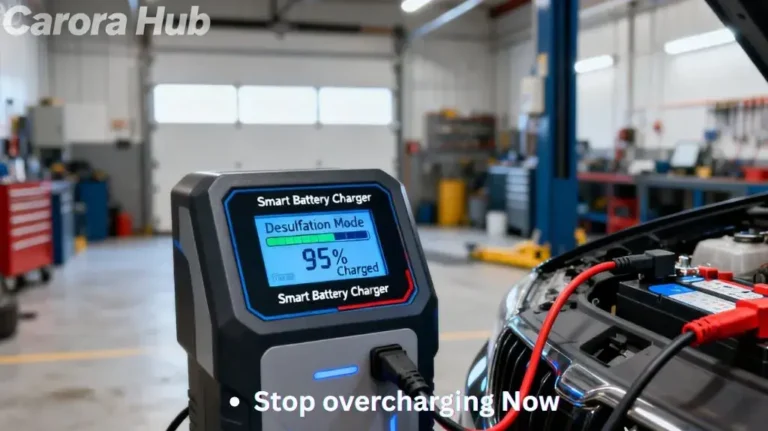
- Booster pack (optional): Safer for electronics than another vehicle’s battery. Many booster packs include spark-proof clamps, reverse-polarity alarms, and surge protection.
- Safety gloves: Insulated gloves protect your hands from acid and reduce shock risk.
- Eye protection: Batteries can spark or spray acid. Safety glasses are a simple, cheap safeguard.
- Owner’s manual: Check for special instructions. Some cars have dedicated jump points or procedures. Following the manual avoids warranty or damage issues.
Why Booster Packs Are Safer
A booster pack is a portable battery made for jump starting. It limits power and reduces spikes compared to another vehicle. Manufacturers often recommend booster packs for hybrids and luxury cars.
Booster packs are handy in tight spaces and if you’re alone. Many units have built-in surge protection and can be recharged at home. I keep one in my trunk—it’s saved me more than once on cold mornings.
Jumper Cables Vs Booster Packs
Compare the main differences between jumper cables and booster packs:
| Feature | Jumper Cables | Booster Pack |
|---|---|---|
| Risk of voltage spikes | High | Low |
| Ease of use | Requires another car | Portable, solo use |
| Suitable for sensitive electronics | No | Yes |
| Cost | Low | Medium to high |
Extra benefit: Many booster packs include USB ports and LED lights. They become a multi-use emergency tool beyond jump starting.
Quick pre-start checklist (my go-to)
- Park safely and apply parking brakes.
- Turn off all electronics in both cars.
- Inspect the dead battery for damage or leaks.
- Confirm correct terminal polarity (+ and -).
- Have your booster pack or cables and gloves ready within reach.
Step-by-step Guide: Jump Starting Without Damaging Electronics
Follow these steps carefully. Each one protects the ECU and other sensitive parts. I’ve written these from real-life experience and common dealer guidance.
1. Park Both Cars (or Place Booster Pack) Correctly
If you use jumper cables, park the working car alongside the dead car. Keep both vehicles off and make sure they don’t touch. Set parking brakes on both cars.
If you use a booster pack, place it near the battery. Avoid stretching cables over hot engine parts, moving belts, or exhaust components.
2. Switch Off All Electronics
Turn off headlights, radio, climate control, and accessories in both cars. This lowers the chance of a voltage surge damaging electronics.
Don’t forget interior lights and aftermarket devices (phone chargers, dash cams). Even a short connection to these can create a path for a spike. Wait a few seconds after switching off everything so systems fully power down.
3. Check Battery And Cable Condition
Look at the dead battery for cracks, leaks, swelling, or heavy corrosion. A damaged battery can explode. Inspect cables for rust, frayed insulation, or loose clamps.
If you see white or blue corrosion, clean it with a dry cloth. Don’t use water—moisture raises the risk of a short.
4. Identify Positive And Negative Terminals
Most batteries use red (positive) and black (negative) terminals. Look for a “+” or “-” sign. Never guess. Wrong connections can destroy electronics.
Some cars hide the battery or use remote jump posts under the hood. If unsure, check your manual or look for color-coded covers.
5. Connect Jumper Cables Or Booster Pack In Correct Order
For jumper cables:
- Attach the red cable to the dead battery’s positive terminal (“+”).
- Attach the other end of the red cable to the working battery’s positive terminal.
- Attach the black cable to the working battery’s negative terminal (“-”).
- Attach the other end of the black cable to an unpainted metal part (like a bolt) on the dead car’s engine block—not the dead battery’s negative terminal. This grounds the circuit and reduces electrical spikes.
For booster packs:
- Connect the red clamp to the dead battery’s positive terminal.
- Connect the black clamp to an unpainted metal part away from the battery.
If you hear buzzing or see a spark, stop and re-check your connections. Many modern booster packs beep or warn if you connect them incorrectly.
6. Wait 1–2 Minutes Before Starting
Give the dead battery time to accept a charge. This lowers the chance of a sudden spike that can harm electronics.
This “soak time” lets voltages stabilize. In very cold weather or with an extremely weak battery, wait 3–4 minutes for better results.
7. Start The Working Car (if Using Jumper Cables)
Start the donor car and let it idle for 2–3 minutes. Some mechanics suggest a small rev to help charge the dead battery, but do not over-rev.
Keep RPMs below 2,000. High revs can create large voltage swings, which stress electronics.
8. Start The Dead Car
Try to start the dead car. If it doesn’t start, wait a minute and try again. Never crank more than 5 seconds at a time—long cranking can harm the starter and electronics.
If it won’t start after three attempts, there may be a deeper problem. Stop and get help; repeated cranking can overheat wires or stress the ECU.
9. Remove Cables Or Booster Pack In Reverse Order
- Remove the black cable from the engine block.
- Remove the black cable from the working battery.
- Remove the red cable from the working battery.
- Remove the red cable from the dead battery.
Never let the clamps touch each other or any metal. Keep them separated and lay them down carefully to avoid accidental shorting.
10. Let The Jumped Car Run
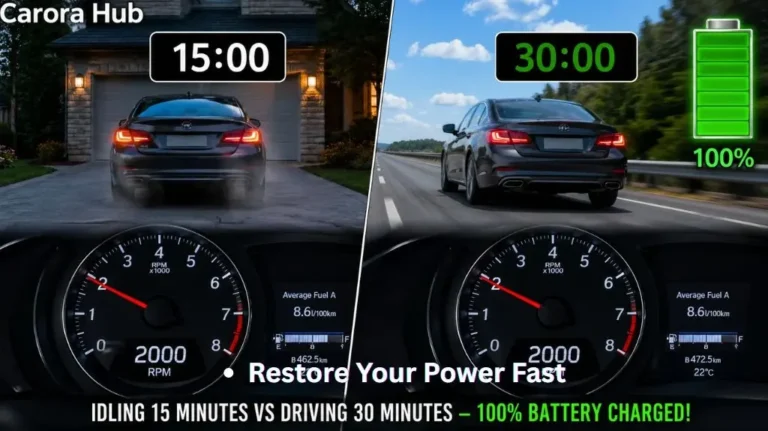
Let the car run for at least 20 minutes to recharge the battery and stabilize electronics.
If possible, drive rather than idle. Driving charges the battery faster. Avoid heavy electrical loads, like rear defrosters, until the battery shows healthy voltage.
Properly knowing How to Jump Start Car Without ECU Damage or Sensitive Electronics prevents the very electronic resets described in our guide on How to Fix a Car That Won’t Start After Replacing the Battery.
Special Tips For Hybrid And Luxury Cars
Hybrid and luxury cars have even more sensitive electronics. Some models use two batteries (main and auxiliary). Always check the owner’s manual. Some cars have specific jump points or special procedures.
Examples
- Toyota Prius: Jump from the fuse box jump point, not the 12V battery itself. This avoids damaging the hybrid system.
- BMW 7 Series: Use dedicated jump terminals under the hood as the manual specifies.
Jumping directly to the battery on these cars can damage the ECU or even electric drive components. Some Mercedes-Benz and Audi models place the battery in the trunk but provide jump points under the hood. Never access the trunk battery unless you follow the correct procedure. On hybrids, the wrong jump point can risk a high-voltage shock.
Common Jump Start Locations By Car Type
| Car Type | Jump Start Location | Special Instructions |
|---|---|---|
| Standard sedan | Battery terminals | Follow basic steps |
| Hybrid (e.g., Prius) | Fuse box jump point | Do not use battery |
| Luxury (e.g., BMW, Mercedes) | Dedicated jump posts | Check manual for location |
| Electric vehicle | Auxiliary battery | Follow EV-specific guide |
If you’re unsure, call your dealership or roadside assistance. Incorrect jump starting can void warranties and cause expensive repairs.
Hidden Risks: Why Many People Damage Electronics
Even if you follow most steps, subtle mistakes can still harm your car. Watch for these pitfalls:
1. Connecting Negative Cable To Battery
Many people connect the negative cable directly to the dead battery. This raises the risk of a spark near battery fumes, which can ignite and cause an explosion. More importantly, it allows a voltage spike to travel directly into the ECU. Grounding to the engine block keeps sparks away from the battery and routes any spike away from sensitive circuits.
Hydrogen gas from a charging battery can ignite with a single spark. I avoid attaching the final negative clamp to the battery whenever possible.
2. Jump Starting With Engine Running
Some drivers leave both cars running. This can feed high alternator voltage into the dead car and overwhelm electronics. The right method is to keep the donor car OFF until cables are attached, then start it after connections are secure and you’ve waited a minute.
3. Using Cheap Jumper Cables
Thin or low-quality cables may heat up or fail, causing uneven current flow. This can generate “dirty” power that confuses electronic modules. Some bargain cables use steel rather than copper, which conducts poorly. Always check cable material and gauge before buying.
4. Reversing Polarity
Connecting positive to negative (reversing polarity) can instantly destroy the ECU, sensors, and even the alternator. You may hear a loud pop, see sparks, or blow fuses immediately. Double-check color coding and terminal markings every time.
5. Ignoring Manufacturer Warnings
Some cars need special steps. Ignoring these instructions can void warranty and cause damage. For example, some European models require the key in a certain position or transmission in “PARK” during jump starting. Skipping this can trigger anti-theft or immobilizer systems.
Real-world Example: Ecu Damage Costs
A 2018 Mercedes-Benz owner jump started his car using basic cables and connected directly to the battery. The car started, but soon displayed engine warnings and failed to shift gears. The dealer found a damaged ECU and charged $2,400 for replacement. This could have been avoided by using dedicated jump points and following the manual.
I’ve also seen drivers lose dashboard functions or central locking after a bad jump. Fixing these systems can take days and require dealer-only parts. It’s not just the money—it’s the time and hassle.
Additional Precautions For Safety And Electronics Protection
For extra protection, consider these steps:
Install A Surge Protector
Some shops sell surge protectors that attach to the battery and absorb sudden spikes. These devices add an extra layer of defense for expensive electronics during a jump.
Surge protectors make sense if you have added aftermarket electronics or live in a dry climate where static and voltage variations are more common.
Use “smart” Jumper Cables
Smart cables contain electronics to detect correct polarity and control current flow. They cut power if they detect a problem. They often include LED guides and alarms, which are helpful if you’re not confident with traditional cables.
Features Of Standard Vs Smart Jumper Cables
| Feature | Standard Cables | Smart Cables |
|---|---|---|
| Polarity detection | No | Yes |
| Surge protection | No | Yes |
| User guidance | No | LED indicators |
| Cost | $20–$40 | $50–$120 |
Smart cables are a smart buy if you help others often or own a vehicle with expensive electronics. They reduce user error and provide peace of mind.
How To Choose The Best Jumper Cables Or Booster Pack
When shopping, look for these features:
Jumper Cables
- Gauge: Lower numbers mean thicker cables. 4–6 gauge is best. Thicker cables carry more current with less drop.
- Length: 12–16 feet is practical. Too short and you may not reach; too long and you lose power.
- Clamp quality: Solid, spring-loaded clamps with copper teeth are best. Weak clamps lose contact and make poor connection.
- Insulation: Thick, flexible coating protects against heat and wear. It also protects you from accidental shocks.
Booster Packs
- Peak amps: Pick a pack with at least 400 amps for most cars, 800+ for trucks. Some diesels need higher ratings.
- Smart protection: Surge and polarity protection prevent user errors.
- Battery type: Lithium-ion is lighter and holds charge longer. Lead-acid packs are heavier and self-discharge faster.
Common Buyer Mistakes
- Buying cables that are too thin or short. They may fail when you need them most.
- Skipping surge protection features. A small extra cost can prevent major repairs.
- Not checking compatibility with your vehicle (especially hybrids or luxury models). Some booster packs aren’t rated for large engines or special battery types.
When in doubt, ask your local auto parts store. Bring your car’s make, model, and year for the best recommendation.
What To Do After Successful Jump Start
Once your car is running, take these steps to avoid repeat problems:
- Drive for at least 20–30 minutes to recharge the battery. Short city trips may not restore the charge fully.
- Watch for warning lights or unusual behavior. If you see anything odd, have the car checked soon.
- Have the battery and alternator tested at a shop. Many parts stores offer free testing.
- Clean battery terminals with baking soda and water if corrosion is present. Proper cleaning improves charging and contact.
- If your radio or navigation locks, check the owner’s manual for reset codes. Some systems require a dealer to unlock.
If battery issues repeat, consider replacing the battery or checking for a parasitic drain or weak alternator.
Signs That Jump Starting May Not Be Safe
Sometimes jump starting isn’t the right call. Get professional help if you notice:
- Battery leaks or strong odors: Acid smells or visible leaks mean the battery is unsafe.
- Swollen battery case: Indicates severe internal damage and explosion risk.
- Loose terminals: May cause sparks or poor connections.
- Repeated dead battery: Could mean alternator failure or parasitic drain.
If you hear hissing or see bubbling, do NOT attempt to jump start. The battery may be about to fail.
Advanced Tips For Protecting Electronics
Beyond the basics, here are extra steps I use when I want maximum protection:
Disconnect Accessories Before Jump Starting
Remove USB chargers, phone mounts, or aftermarket electronics. These items can act as weak links and be damaged by a spike. Older alarm systems and remote starters are especially vulnerable. Disconnecting them reduces risk.
Use A Multimeter To Check Battery Voltage
Before jump starting, test the battery with a multimeter. If voltage is below 10V, the battery may be badly damaged and unsafe to jump.
A healthy 12V battery at rest reads about 12.4V or higher. Readings below 12V indicate a deep discharge.
Avoid Jump Starting In Wet Conditions
Water increases the risk of electrical shorts and sparks. If you must jump start in rain, use plastic mats and wear gloves. Try to find a covered spot if possible.
What If Your Car Has Start-stop Technology?
Start-stop systems turn the engine off at stops. These cars often use special AGM or EFB batteries and monitoring electronics. Jump starting can cause system errors if done wrong.
Always consult the manual. Some models require a dealer scan tool to reset start-stop faults after a jump. In many cases the system recalibrates after driving a few miles, but confirm with your manual or dealer.
How To Prevent Battery Failure
Jump starting is a temporary fix. To reduce the need for jumps, do this:
- Drive your car regularly (at least once a week). Long sit times kill batteries.
- Turn off lights and electronics when parked. A small interior light left on can drain a battery overnight.
- Replace batteries every 3–5 years. Even good batteries lose capacity over time.
- Check the alternator yearly. A weak alternator won’t keep the battery charged.
A trickle charger is useful if you don’t drive often. It keeps the battery topped up and avoids deep discharge.
Quick Reference: Safe Jump Start Steps
My short checklist for easy recall:
- Switch off all electronics.
- Check battery and cables.
- Connect positive cable to dead battery, then working battery.
- Connect negative cable to working battery, then engine block on dead car.
- Wait 1–2 minutes.
- Start working car, then dead car.
- Remove cables in reverse order.
- Let jumped car run for 20+ minutes.
Take your time—rushing causes mistakes.
Non-obvious Insights Most Guides Miss
Using Engine Block For Grounding
Many how-tos say “connect black cable to battery.” I prefer the engine block for the final negative clamp. It reduces explosion risk and keeps spikes away from the battery and electronics.
Find a thick bolt or unpainted bracket. Clean the spot if necessary. Avoid oily or painted surfaces for a solid connection.
Waiting Before Starting
Waiting after connecting cables gives the dead battery time to “wake up.” This lowers spike risk. Rushing increases danger—especially in cold weather or with older batteries.
Disconnecting Accessories
Unplug all accessories before jumping. Many people forget chargers or phone mounts. These can be fried by a surge—and they can transmit spikes into the car’s wiring.
Even modern USB ports in new cars can suffer internal damage if a surge passes through a connected device.
If You Accidentally Damage Electronics
If your car shows warning lights or acts strangely after a jump, don’t ignore it. Modern ECUs sometimes recalibrate after a few restarts, but real damage needs a professional diagnosis. Write down exactly what you did—this helps a mechanic find the fault. Check your insurance to see if electrical damage is covered.
Some faults—airbag or ABS lights—require a code reader to diagnose or reset. Don’t clear codes unless you understand them.
Where To Find Reliable Jump Start Instructions
Always check your car’s owner’s manual first. Manufacturers update procedures as technology changes. For more tips, you can visit automotive sites such as Dial-A-Battery for trusted guidance.
FAQs About Jump Start Car Without ECU Damage
How Can I Tell If My Car’s Electronics Were Damaged After Jump Starting?
Look for dashboard warning lights, loss of radio settings, or unusual engine behavior. If you see these signs, get inspected by a mechanic with diagnostic tools. Document your jump start steps to help them trace the cause.
Can I Use Any Jumper Cables For A Modern Car?
No. Use thick, high-quality cables with strong clamps. Cheap cables can cause voltage drops and spikes that may damage sensitive electronics.
Is It Safe To Jump Start A Hybrid Or Electric Car?
It depends. Many hybrids require special jump points. Electric vehicles typically use an auxiliary 12V battery. Always consult the manual or dealer before attempting a jump on a hybrid or EV.
What Happens If I Connect The Cables Incorrectly?
Reversing connections can instantly damage the ECU, sensors, and alternator. It may blow fuses and leave the car inoperable. Always verify polarity and terminal markings before connecting.
Are Booster Packs Safer Than Jumper Cables?
Yes. Booster packs limit voltage spikes and include protections designed for modern cars. They are generally safer for sensitive electronics and easier to use for one person.
Jump starting is easy if you follow the right steps. Modern cars need extra care, but a careful procedure and the right equipment protect the ECU and other electronics. Use quality cables or a booster pack, follow your manual, and check the battery and alternator afterward. Prevention is best: keep your battery healthy, use smart tools, and ask for help when you’re unsure.

I am Julian Drive, an automotive enthusiast and repair expert with over 7 years of hands-on experience in vehicle maintenance. At Carora Hub, I simplify complex car issues into easy-to-follow DIY guides to help drivers stay safe and save on repair costs.