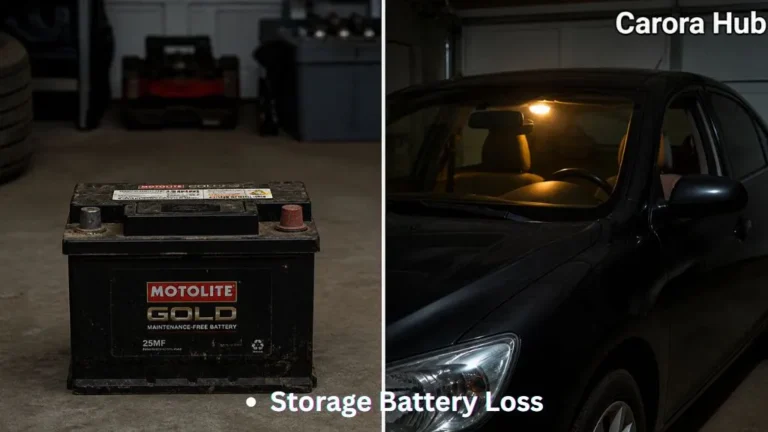
What is normal parasitic draw in a car? In most cars, a normal parasitic draw is usually between 20 and 50 milliamps (mA) once all systems have entered sleep mode. Modern vehicles use small amounts of battery power to keep memory settings, alarms, and electronic modules alive. That small, steady current is expected. But if the draw becomes excessive, it can slowly drain a healthy battery overnight or over several days.
I talk to drivers all the time who worry about their batteries going flat after a few days of sitting. One common cause is parasitic draw — the tiny electrical current that flows when the car is off. Not all battery drain is bad. Every modern car has a baseline parasitic draw for things like clocks, anti-theft systems, and ECUs. The real question is: what level is normal, and when should you worry?
Understanding parasitic draw helps you avoid buying batteries you don’t need. It also helps you spot hidden electrical problems early and keep your car reliable. In the sections below, I explain what normal parasitic draw looks like, how it works, safe numbers to expect, how to test it, and what signs point to trouble. I’ll also share practical fixes I’ve used in the shop and on my own cars.
What Is Parasitic Draw?
Parasitic draw is the current a vehicle battery supplies when the ignition is off. Unlike the power used while driving, this draw keeps certain systems awake so they don’t lose settings. Common items that draw standby current include:
- Digital clocks
- ECUs (Electronic Control Units) and modules
- Alarm and immobilizer systems
- Keyless entry and remote fobs
- Radio and infotainment memory
These systems need constant power to save settings, remain secure, and respond quickly when you unlock or start the car. The drain is usually tiny. But if a device is faulty or a module won’t sleep, the draw can climb and kill the battery faster than you expect.
Why Is Parasitic Draw Necessary?
Modern cars depend on electronics for safety and convenience. The ECU stores engine maps and fault codes. The alarm must be ready to protect the vehicle at any time. Memory circuits keep your radio presets and clock settings. All of these need small, continuous power.
Without a controlled parasitic draw, modules would lose data every time you shut the car off. That’s why manufacturers design systems to use a low, safe standby current. They balance battery life against convenience and security.
What Is Normal Parasitic Draw?
So what numbers are normal? Most technicians and shop manuals point to similar ranges:
- Normal range: 20–50 milliamps (mA)
- Higher end (modern vehicles): 50–60 mA is common on cars with more electronics
- Older vehicles: Often lower, around 20–30 mA
To put that in context, 1 amp (A) = 1000 milliamps (mA). So normal parasitic draw is well under 0.1 amp. That small current will not quickly kill a healthy battery.
Typical values by vehicle type:
| Vehicle Type | Normal Parasitic Draw (mA) | Key Systems Active |
|---|---|---|
| Older (pre-2000) | 20–30 | Clock, radio memory |
| Modern (2000–2020) | 30–50 | ECU, alarm, keyless entry |
| Luxury/Electric | 50–60 | Advanced computers, telematics |
Most batteries tolerate this level of draw for weeks. Problems start when the draw is much higher or the car sits unused for months.
How Is Parasitic Draw Measured?
You measure parasitic draw with a multimeter set to read current (mA). Here’s the typical process I use in the shop and recommend to DIYers:
- Turn off everything and lock the car. Let it sit so modules can enter sleep mode (usually 10–30 minutes).
- Disconnect the negative battery cable.
- Set the multimeter to milliamps (mA) or a low-amp range.
- Place the meter in series between the negative battery post and the disconnected cable.
- Read the steady current value on the meter.
If the reading sits within the 20–60 mA range, you’re generally fine. If it’s higher, you should investigate to find the offending circuit or device.
How to measure safely and avoid false readings
- Always use a meter rated for in-line current. Never try to measure large currents on a low-amp range.
- Be patient. Many cars take several minutes to fully sleep. Testing too soon shows higher numbers.
- Close doors, trunk, and glove box before measuring. Interior lights or trunk lights can give false high readings.
- If the reading fluctuates, note the average or wait for a stable number. Intermittent wake-ups (CAN bus, telematics) can cause spikes.

Credit: www.reddit.com
Why Do Some Cars Have Higher Parasitic Draw?
Newer cars have more electronics. Remote start, GPS tracking, advanced infotainment, telematics, and constant networked modules use extra standby power. Hybrids and EVs also manage battery systems and security in ways older cars don’t, which raises their baseline draw.
For example, a luxury SUV with telematics and constant remote monitoring might show around 60 mA. That’s normal for that model. But the same number would look high on a simple 1990s sedan.
How Long Can A Battery Survive Normal Parasitic Draw?
The survival time depends on battery capacity (Ah) and the parasitic current. Here are some ballpark numbers:
| Battery Capacity (Ah) | Parasitic Draw (mA) | Approximate Survival Time (Days) |
|---|---|---|
| 60 | 30 | 80 |
| 60 | 50 | 48 |
| 45 | 50 | 36 |
*Ah = amp-hours, a standard battery capacity measure.*
These examples show a healthy battery will last several weeks under normal parasitic draw. If you plan to park for longer than a few weeks, use a battery maintainer or disconnect the battery to protect it.
Signs Of Excessive Parasitic Draw
If parasitic draw climbs above normal, the battery can die overnight or within a few days. Watch for these warning signs:
- The car won’t start after a short period of sitting
- The battery is frequently low or dead
- You need jump-starts often
- Electrical glitches: clock resets, warning lights, strange module behavior
Faulty devices, poor aftermarket installs, or wiring shorts are common reasons for abnormal drains.
Common Causes Of Excessive Parasitic Draw
These issues typically push parasitic draw above safe levels:
- Faulty relays — a stuck relay can keep a circuit powered
- Aftermarket accessories — stereo, alarm, or lighting installations done poorly
- Glove box or trunk lights left on — an easy, common mistake
- Defective modules — ECUs, BCMs, or modules that fail to enter sleep mode
- Corroded or damaged wiring — which can cause current leaks or shorts
Mechanics often isolate the problem by pulling fuses one at a time while watching the meter for the draw to drop. That points them to the bad circuit.
How To Fix Excessive Parasitic Draw
Here are steps I use to diagnose and fix unwanted drains:
- Check for obvious lights left on (glove box, trunk, interior).
- Inspect any aftermarket devices and their wiring.
- Measure parasitic draw with a multimeter as described above.
- Remove fuses one at a time to find which circuit causes the draw to drop.
- Repair or replace faulty relays, modules, or wiring.
Fixing the root cause quickly saves batteries and prevents more expensive electrical failures later. If the problem is a required factory module, consult a dealer or a tech with OEM diagnostic tools.
When to call a pro
If you find a high draw but can’t isolate a specific fuse or if the faulty item is a complicated module (BCM, airbag module, ECU), I recommend professional diagnostics. Some modules require special sequences or programming to be replaced safely.
Practical Tips For Preventing Battery Drain
To reduce the chance of a dead battery:
- Drive regularly so the alternator keeps the battery topped up.
- Turn off accessories before leaving the car.
- Avoid cheap aftermarket electronics or have them installed by a professional.
- If you park long-term, disconnect the battery or use a battery maintainer (trickle charger).
Even a small light left on, like in a glove box, can drain a battery in a few days. A battery maintainer is cheap insurance if you don’t drive often.

Credit: www.youtube.com
Non-obvious Insights About Parasitic Draw
- Sleep mode timing matters: Many cars need 10–30 minutes to fully sleep after you turn them off. If you measure too early, the reading will be higher.
- Battery age affects tolerance: An older or weak battery can die from normal draw that a new battery handles easily. Always test battery health first.
- CAN bus wake-ups: Some modules wake the network periodically. Those brief wakes can cause spikes that confuse simple tests. Watch for steady current after the car has settled.
- Factory specifications vary: Manufacturers publish different limits. A BMW or Mercedes may allow higher draw due to more background systems.
When Should You Worry?
If you see a draw above 100 mA, that is almost always abnormal. Also worry if your battery dies after less than a week of sitting. But remember to test only after the car has fully “slept” and to confirm the battery itself is healthy. A weak battery can mimic a parasitic problem.
How Parasitic Draw Impacts Modern Car Ownership
Modern ownership means more electronics and slightly higher normal parasitic draw. That’s fine, but it makes battery health more important. If you travel or leave a car unused, consider a battery maintainer or disconnecting the battery.
If you add aftermarket systems, plan power management carefully. Poor installs are a leading cause of excessive draw. I’ve seen many cars saved by simply re-routing a stereo ground or swapping a bad relay.
Comparing Parasitic Draw To Other Battery Drains
Not every battery drain is a parasitic draw. Here’s how they differ:
| Type | Source | When Occurs |
|---|---|---|
| Parasitic Draw | ECU, clock, security | When car is off |
| Active Draw | Lights, radio, AC | When car is on |
| Accidental Draw | Lights left on, aftermarket devices | Anytime, usually by mistake |
Only parasitic draw is expected and normal. Active draws and accidental draws are avoidable and can cause rapid battery drain if left unchecked.
Testing Your Own Car For Parasitic Draw
You don’t need a shop to check parasitic draw. Here’s a simple, reliable process I use and teach:
- Shut the car off and close doors. Wait 30 minutes for sleep mode.
- Disconnect the negative battery cable.
- Set your multimeter to the mA range.
- Connect the meter between the negative cable and the battery terminal so the meter is in series.
- Read the steady current. If it’s under 60 mA, you’re generally safe.
If the reading is high, start pulling fuses one at a time while watching the meter. When the reading drops, you’ve found the circuit that’s pulling the extra current.
Common DIY mistakes
- Measuring too soon after shutting the car off.
- Using the wrong multimeter range (blown meter fuses are common).
- Leaving a door or hatch slightly ajar.
- Pulling the wrong fuse or touching metal while the meter is in series.
Understanding Manufacturer Specifications
Manufacturers publish recommended maximum parasitic draws for each model. Always check your owner’s manual or technical service information for exact numbers. Some brands with heavy telematics or remote services allow higher standby currents. For technical background, this Wikipedia article explains the underlying concepts.
FAQs Of What is Normal Parasitic Draw in a Car
What Is Considered A Safe Level Of Parasitic Draw In Most Cars?
A safe level is typically 20–50 mA for most vehicles. Modern cars may tolerate up to 60 mA due to added electronics. Anything above 100 mA usually signals a problem and should be investigated.
How Can I Test For Parasitic Draw At Home?
You can use a multimeter. Let the car sleep for 30 minutes, disconnect the negative battery cable, and measure the current between the cable and battery terminal. Compare the result to normal values and pull fuses to isolate the circuit if needed.
Will A_Normal_Parasitic_Draw_Drain_My_Battery_If_The_Car_Sits_For_A_Month
Usually not. Most healthy batteries can handle normal parasitic draw for several weeks. If the battery is old or weak, it may drain faster. Using a battery maintainer is a good idea for long-term storage.
What Is The Main_Cause_Of_Excessive_Parasitic_Draw?
The most common causes are faulty relays, defective modules that won’t sleep, or aftermarket devices installed incorrectly. Even a small lamp left on can drain a battery quickly.
Can I Reduce Parasitic Draw In My_Car?
You can’t eliminate necessary draw, but you can reduce unnecessary draw. Remove or upgrade aftermarket devices, fix wiring, and ensure modules can enter sleep mode. Regular battery checks and using a maintainer help too.
Closing Thoughts
Knowing what normal parasitic draw looks like can save you time and money. As cars add more electronics, understanding safe battery drain becomes more important. Keep your battery in good health, check parasitic draw if the battery dies unexpectedly, and address any faults early.
A small, steady drain is normal. Unexpected, large drains are the ones that cause headaches. If you find unusual draw and need help, a trained technician can isolate and fix the issue. In my experience, most problems are either a simple light left on or a poorly installed aftermarket device. Fixing those is usually straightforward and affordable.

I am Julian Drive, an automotive enthusiast and repair expert with over 7 years of hands-on experience in vehicle maintenance. At Carora Hub, I simplify complex car issues into easy-to-follow DIY guides to help drivers stay safe and save on repair costs.