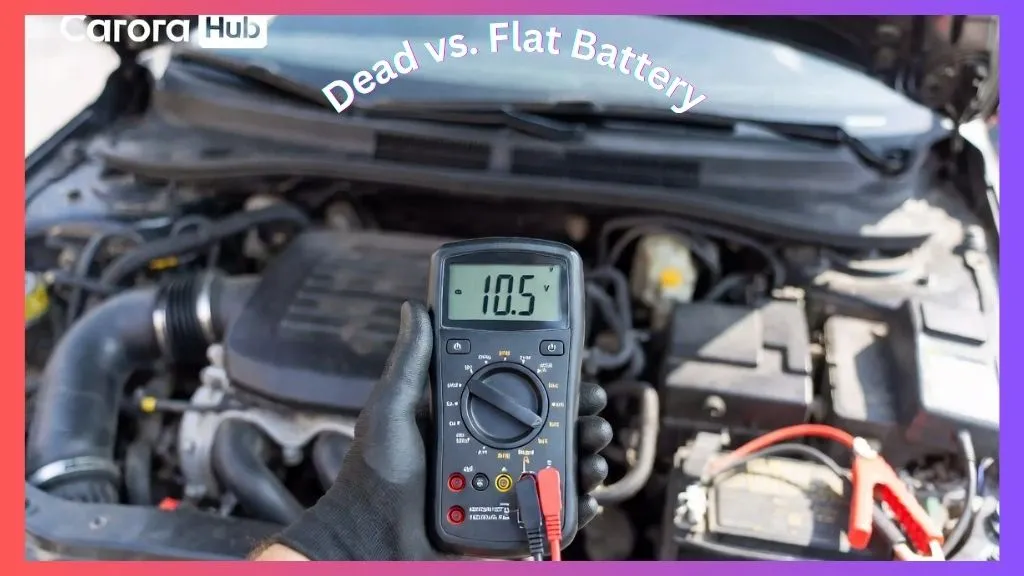
Trying to start your car and hearing only a click can make anyone worried. Is your car battery dead, or is it just discharged and needs a boost? Many drivers face this problem, especially in colder weather or when a car sits unused. Knowing the difference can save you money, time, and frustration. Replacing a battery that only needs charging is wasteful, but ignoring a dying battery could leave you stranded at the worst moment.
This guide helps you understand the signs, tests, and steps to figure out if your car battery is truly dead or just temporarily discharged. You’ll learn what causes each situation, which symptoms to watch for, and how to use common tools to check your battery’s health.
Even if you have little technical knowledge, these practical tips and real-world examples will give you confidence to handle battery problems smartly and safely.
Why Car Batteries Fail: Dead Vs. Discharged
First, it’s important to know the difference between a dead battery and a discharged battery. Many people use these terms interchangeably, but they are not the same.
A discharged battery means the battery is empty or low on charge but can be recharged and used again. This is usually caused by leaving lights on, extreme cold, or not driving your car for a long time.
A dead battery cannot hold a charge even after you try to recharge it. This usually happens because of age, repeated deep discharges, or internal damage. Once a battery reaches this state, it must be replaced.
Understanding this difference helps you decide whether to recharge, jump-start, or replace your battery.
Common Causes Of Battery Problems
It’s helpful to know why batteries lose charge or fail completely. Here are main reasons:
- Leaving lights or accessories on: Headlights, dome lights, or even phone chargers can drain the battery if left on overnight.
- Short trips: Driving for only a few minutes does not give the alternator enough time to recharge the battery.
- Extreme temperatures: Both hot and cold weather put extra stress on batteries.
- Old age: Most car batteries last 3–5 years. After that, they lose their ability to hold a charge.
- Faulty charging system: Problems with the alternator or voltage regulator can prevent proper charging.
- Parasitic drain: Electrical systems that stay on after the car is off can slowly drain the battery.
- Corroded or loose connections: Poor contact at the battery terminals can stop charging and discharging.
Knowing these causes can help you prevent problems and spot when a battery is likely to fail.
If you’re dealing with battery leaks, also read Why is my car battery leaking acid from the top to understand safety risks first.
Key Symptoms: Dead Battery Vs. Discharged Battery
Looking for clues can help you decide whether the problem is temporary or permanent. Here’s how to recognize each situation:
Signs Of A Discharged Battery
- Engine cranks slowly but eventually starts with a jump or after charging.
- Lights are dim but get brighter when the engine runs.
- Radio and electronics work but may seem weak.
- Battery warning light may come on, but the car runs after starting.
- No signs of corrosion or damage on the battery.
These symptoms usually mean the battery is just low on charge. It should work fine after recharging, unless the problem repeats quickly.
Signs Of A Dead Battery
- Engine won’t crank even with a jump-start, or starts but dies quickly.
- No lights or electronics work, even after charging.
- Visible swelling, leaks, or cracks on the battery case.
- Repeated need for jump-starts in a short period.
- Battery is more than 4–5 years old and fails often.
If you see these, the battery is likely at the end of its life and must be replaced.
First Steps: What To Do When Your Car Won’t Start
Before you test or replace anything, do a quick check. This can save time and sometimes fix the problem without tools.
- Check the battery terminals. Make sure they are clean and tight. Corroded or loose terminals can make a good battery act dead.
- Look for obvious damage. Swelling, leaks, or cracks mean the battery is unsafe—replace it right away.
- Turn on headlights and electronics. If nothing works at all, the battery may be deeply discharged or dead.
If the battery looks normal, try a jump-start. If the car starts, let it run for 15–30 minutes. Then turn it off and try to start again. If it starts easily, the battery was probably just discharged. If not, more testing is needed.
How To Test A Car Battery: Tools And Methods
Testing your battery is the best way to tell if it’s dead or just discharged. Here are reliable methods, from easiest to most accurate.
Using A Multimeter
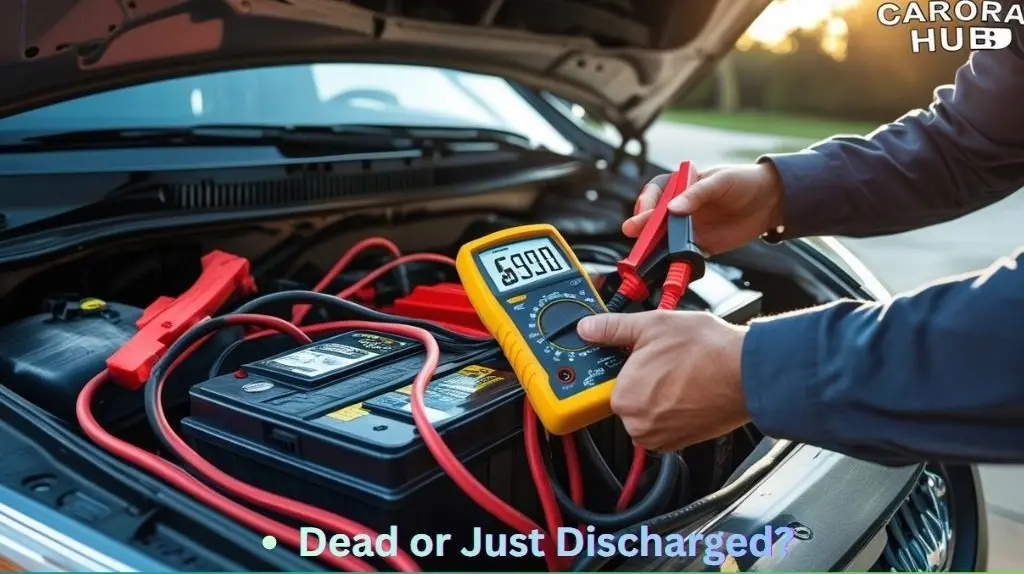
A multimeter is a simple tool that measures voltage. You can buy one for $10–$20.
- Turn off the car and all electronics.
- Set the multimeter to 20V DC.
- Touch the red probe to the positive (+) terminal and the black to the negative (–).
- Read the voltage:
- 12.6V or higher: Fully charged
- 12.4–12.6V: Good
- 12.2–12.4V: Low, but can be recharged
- 12.0–12.2V: Very low, likely discharged
- Below 12.0V: Possibly dead or deeply discharged
If the voltage is below 12. 4V, recharge the battery and test again. If it drops quickly or never rises, the battery may be dead.
Load Testing
A load tester applies a controlled load to see if the battery can deliver power.
- Connect the tester to the battery.
- Follow the instructions (usually pressing a button or switch).
- Read the result. Most testers show “Good,” “Recharge,” or “Replace.”
A battery that fails under load but has normal voltage is likely dead.
Professional Testing
Many auto parts stores will test your battery for free. They use advanced testers that check voltage, internal resistance, and charging ability. This gives a clear answer if you’re unsure.
Comparison Of Test Methods
Here’s how the main methods compare:
| Test Method | Accuracy | Cost | Skill Needed | Detects Dead Battery | Detects Discharged Battery |
|---|---|---|---|---|---|
| Multimeter | Medium | Low | Easy | Sometimes | Yes |
| Load Tester | High | Medium | Moderate | Yes | Yes |
| Professional Test | Very High | Free/Low | None | Yes | Yes |
Charging Vs. Replacing: What To Do Next
After testing, you must decide whether to try recharging the battery or replace it.
When To Recharge
- Battery is less than 3 years old.
- No visible damage or leaks.
- Starts after jump-start or charging.
- Holds charge for several days.
- Voltage is above 12.0V after charging.
When To Replace
- Battery is over 4 years old.
- Swelling, leaks, or cracks are visible.
- Won’t start even after charging or jump-starting.
- Voltage drops below 12.0V quickly after charging.
- Needs frequent jump-starts.
If you’re unsure, err on the side of caution. Old or damaged batteries can fail suddenly and leave you stranded.
How To Safely Jump-start A Car
Jump-starting is safe if done correctly. Here’s how:
- Get jumper cables and a working car.
- Park cars close but not touching. Turn off both cars.
- Connect cables in order:
- Red to dead battery positive (+)
- Red to good battery positive (+)
- Black to good battery negative (–)
- Black to metal part on dead car (not the battery)
- Start the good car and let it run for 2–3 minutes.
- Try to start the dead car. If it starts, let both run for a few minutes.
- Remove cables in reverse order.
Never let the clamps touch during the process. Wear eye protection for safety.
How To Charge A Car Battery
If you have a battery charger, you can recharge a discharged battery at home.
- Remove the battery or charge in place (follow the car’s manual).
- Set the charger to the correct voltage (usually 12V).
- Attach clamps: Red to positive, black to negative.
- Plug in and turn on the charger.
- Charge for 4–24 hours (depending on charger and battery size).
- Check the battery. A good battery will show 12.6V or higher when fully charged.
Never charge a frozen or damaged battery. If it gets hot or leaks, stop charging immediately.
Common Misconceptions About Car Batteries
Many drivers make mistakes because of myths or bad advice. Here are facts you should know:
- Myth: Driving will always recharge the battery. Fact: Short trips or weak alternators may not fully recharge a deeply discharged battery.
- Myth: New batteries last forever. Fact: Even new batteries can fail if there’s a charging system problem or if left discharged for too long.
- Myth: Jump-starting fixes everything. Fact: Jump-starting only helps if the battery is discharged, not if it’s dead or damaged.
- Myth: You can test a battery by looking at it. Fact: Most problems are internal and require testing tools.
How Temperature Affects Car Batteries
Both extreme heat and cold can damage batteries. Here’s what happens:
- In cold weather: Chemical reactions slow down, making it harder for the battery to deliver power. A weak battery may fail on a cold morning.
- In hot weather: Heat speeds up chemical reactions, which can shorten battery life and cause fluid to evaporate.
If you live in an area with extreme temperatures, check your battery before each season and keep it clean.
Parasitic Draw: The Hidden Battery Killer
Sometimes batteries die because something is draining them when the car is off. This is called a parasitic draw.
Common sources:
- Interior lights left on
- Faulty trunk or glove box switches
- Aftermarket alarms or electronics
- Bad wiring
To check for parasitic draw, you can use a multimeter to measure current with everything off. More than 50 milliamps can drain a battery overnight.
The Role Of The Alternator
A battery’s job is to start the car. After that, the alternator charges the battery and powers the car’s electrical systems. If the alternator is weak or broken, the battery will not recharge while driving.
Signs of alternator problems:
- Battery light on the dashboard
- Dim or flickering lights while driving
- Strange noises (whining or grinding)
- Car dies soon after jump-starting
If you suspect the alternator, have it checked by a mechanic. Replacing the battery will not fix the problem if the alternator is bad.
Agm Vs. Flooded Batteries: Testing Differences
Most cars use flooded lead-acid batteries, but some newer cars use AGM (Absorbent Glass Mat) batteries. AGM batteries are more durable but need special chargers and testers.
Key differences:
| Type | Common Use | Testing Needs | Lifespan | Price |
|---|---|---|---|---|
| Flooded | Most cars | Standard tester | 3–5 years | Low |
| AGM | High-end/Start-Stop | AGM-compatible tester | 4–7 years | High |
If you have an AGM battery, check your owner’s manual before charging or testing.
How To Maintain Your Car Battery
Simple steps can extend battery life and reduce problems:
- Keep terminals clean and tight.
- Check battery fluid if possible. Add distilled water if low.
- Drive regularly for at least 20 minutes to recharge.
- Secure the battery so it doesn’t move or vibrate.
- Test voltage every few months, especially before winter.
Regular checks can prevent sudden failures.
What To Do If Your Battery Keeps Dying
If your battery is always dead, even after replacement, something else may be wrong.
- Check for parasitic drains. Unplug phone chargers and devices when not in use.
- Test the alternator. Have a shop check charging output.
- Inspect battery cables for damage or corrosion.
- Ask a mechanic if you can’t find the cause.
Sometimes a recurring problem points to a hidden electrical fault.
The Environmental Cost Of Dead Batteries
Batteries contain lead and acid, which are hazardous to the environment. Always recycle old batteries at a certified center. Do not throw them in the trash or leave them outside.
Recycling helps recover materials and keeps toxins out of the soil and water. Most auto parts stores accept old batteries for safe disposal.
When To Call For Professional Help
If you feel unsure, it’s best to get help. Professional mechanics and battery shops have tools to diagnose problems quickly and safely. If your battery fails far from home or in bad weather, call for roadside assistance.
Never try to open, repair, or refill a sealed battery. It can be dangerous.
Real-world Examples
Seeing real situations can make it easier to understand.
- Case 1: Jane’s car won’t start after two weeks of sitting. The headlights are dim, and it starts after a jump. After a 30-minute drive, it starts fine the next day. Her battery was just discharged.
- Case 2: Mike’s car needs a jump every morning, even after a new battery. The alternator is bad, so the battery never gets charged. Replacing the alternator fixes the issue.
- Case 3: Ana’s battery is five years old, swollen, and leaks acid. It won’t start even after charging. She needs a new battery right away.
Learning from these examples can help you decide what to do in similar situations.
Tips For Buying A New Battery
If you need a new battery, pay attention to:
- Correct size and terminal type for your car.
- Cold cranking amps (CCA) – choose a battery with enough power for your climate.
- Warranty – longer is better.
- Date code – buy the freshest battery possible (less than 6 months old).
- Brand reputation – avoid cheap, unknown brands.
Buying the right battery ensures reliability and longer life.
Summary Table: Dead Vs. Discharged Battery
Here’s a quick summary to help you decide:
| Feature | Discharged | Dead |
|---|---|---|
| Starts with jump/charge | Yes | No |
| Holds charge | Yes | No |
| Visible damage | No | Often |
| Voltage after charge | 12.4–12.6V | Below 12.0V |
| Age | New/Young | Old |
Practical Insights Most Beginners Miss
Many first-time car owners do not realize that a battery can be deeply discharged by short trips or long periods of inactivity, even if the car is only a year or two old. Also, not all jump-starts are equal—a weak alternator or poor cable connection can make it seem like the battery is dead when it’s not.
Testing both the battery and the charging system together is the only way to be sure.
Another detail: batteries can “recover” some voltage after sitting for a few hours, but this does not mean they are healthy. Always test a battery both before and after charging to see if it holds power.
FAQs Of How to Tell If a Car Battery is Dead or Just Discharged Fast
What Is The Main Difference Between A Dead Battery And A Discharged Battery?
A dead battery cannot hold or deliver power, even after charging. It usually needs replacement. A discharged battery is just empty and can be recharged and used again.
How Long Does A Car Battery Last On Average?
Most car batteries last 3 to 5 years. Extreme temperatures, frequent short trips, or electrical problems can shorten their life.
Can I Use A Battery From Another Car To Test Mine?
Yes, you can jump-start your car with another battery. If your car starts and runs after a jump, your battery was likely discharged. If it dies again quickly, the battery or alternator may be bad.
Is It Safe To Recharge A Dead Battery?
If the battery is just discharged and undamaged, it’s safe to recharge. If the battery is swollen, leaking, or very old, do not attempt to recharge—it could be dangerous.
Where Can I Recycle My Old Car Battery?
Most auto parts stores and recycling centers accept old batteries for free. Never throw car batteries in the trash. For more details, see EPA guidance.
Knowing how to tell if your car battery is dead or just discharged will help you avoid costly mistakes and keep your car running smoothly. With these tips and tools, you’ll handle battery troubles like a pro and drive with confidence.

I am Julian Drive, an automotive enthusiast and repair expert with over 7 years of hands-on experience in vehicle maintenance. At Carora Hub, I simplify complex car issues into easy-to-follow DIY guides to help drivers stay safe and save on repair costs.