I’ve learned the hard way that leaving a vehicle unused for weeks or months often leads to a dead battery. The culprit is usually one of two things: battery self discharge or parasitic loss. Both drain your battery during storage, but they act very differently. I’ll walk you through what each one is, how to tell them apart, and practical steps I use to keep batteries healthy. Whether you’re storing a classic car, RV, motorcycle, or your daily driver while on vacation, these tips will help you avoid a flat battery and unexpected costs.
What Is Battery Self Discharge?
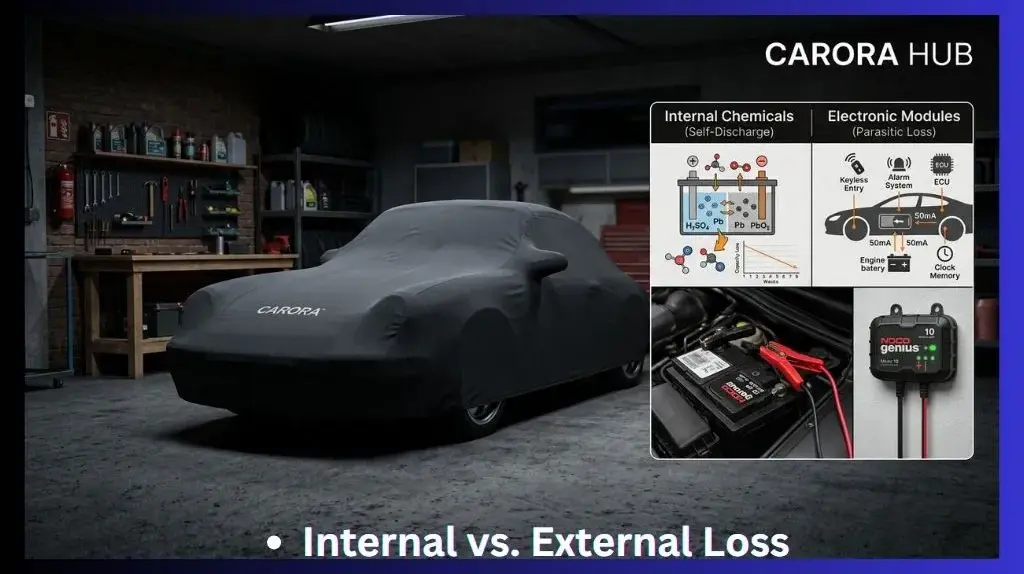
When a battery sits unused, it slowly loses charge even with no load attached. This natural loss is called self discharge. It’s caused by internal chemical reactions inside the battery. All battery chemistries show self discharge, including the lead-acid batteries used in most cars.
The rate of self discharge depends on several factors:
- Battery type: Lead-acid batteries typically lose about 3–5% of their charge per month at room temperature. Lithium-ion batteries are better, losing about 1–2% per month.
- Age: Older batteries self discharge faster because of internal corrosion and higher internal resistance.
- Temperature: Heat speeds up chemical reactions. At 77°F (25°C) rates are normal, but at 104°F (40°C) lead-acid batteries can lose up to 10% per month.
You can’t stop self discharge completely, but you can slow it. Proper storage, keeping the battery fully charged, and using the right maintenance equipment all help preserve battery health and extend usable life.
Why Does Self Discharge Matter?
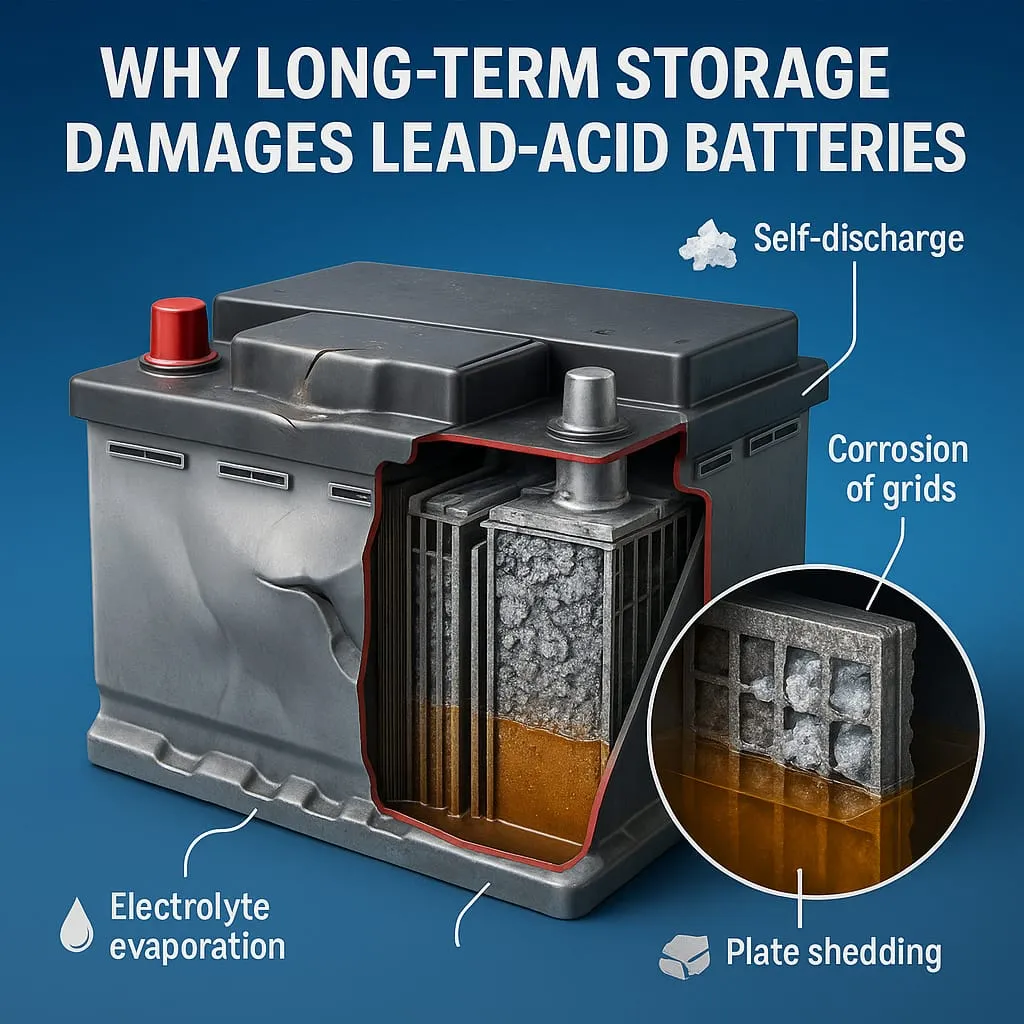
If a battery sits for months, self discharge can leave it below the voltage needed to start your vehicle. Low state-of-charge (SoC) increases the risk of sulfation in lead-acid batteries. Sulfation is a chemical change that permanently reduces capacity. I’ve seen batteries that looked fine at first but would not hold a charge after several months of storage in a hot garage. That is usually sulfation at work.
Key Data: Self Discharge Rates
Here’s a comparison of self discharge rates for common battery types:
| Battery Type | Self Discharge Rate (per month) | Typical Storage Life (before recharge needed) |
|---|---|---|
| Lead-Acid (car) | 3–5% | 4–6 months |
| Lithium-Ion | 1–2% | 8–12 months |
| Nickel-Metal Hydride | 10–15% | 2–3 months |
| AGM (Absorbent Glass Mat) | 1–3% | 6–10 months |
What Is Parasitic Loss?
Parasitic loss (also called parasitic draw) happens when devices in your vehicle pull current while the engine is off. Modern cars have many systems that stay awake: alarms, clocks, telematics modules, keyless entry receivers, and ECUs. Each device draws a small amount of power. Together they can drain a battery over days or weeks.
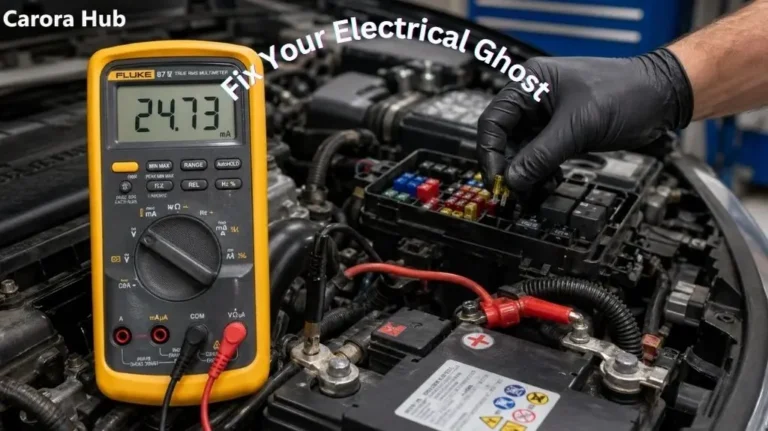
Parasitic loss becomes a real problem if the draw is higher than normal. A serious fault or an aftermarket device left on can kill a battery in days. I’ve used a meter many times to track down a culprit fuse and save a battery from repeated failures.
Typical Parasitic Draw In Vehicles
- Normal range: 20–50 milliamps (mA)
- High draw (problematic): Over 100 mA
- A standard car battery (about 45 amp-hours) can be drained in roughly 45 days with a 40 mA draw.
As an example, a trunk light stuck on that draws 500 mA will drain a battery in less than a week. That’s why small wiring faults matter.
Common Causes Of Parasitic Loss
Some causes are obvious, others hidden:
- Alarm systems and remote starters
- Aftermarket stereos or amplifiers
- Faulty switches (like glove box or trunk lights)
- Corroded wiring or damaged connectors
- ECUs not shutting down properly
Even a phone charger left plugged in can add to parasitic loss. I always unplug accessories before long storage.
Parasitic Loss Vs Self Discharge: Key Differences
Here are the main differences:
| Feature | Self Discharge | Parasitic Loss |
|---|---|---|
| Origin | Chemical process inside battery | External devices or wiring |
| Speed | Slow (months) | Variable (days to months) |
| Prevention | Cool storage, battery maintenance, maintainers | Disconnect battery, fix wiring, remove devices |
| Symptoms | Gradual loss of charge | Sudden battery failure |
Impact Of Long-term Storage On Batteries
When you leave a vehicle unused for long periods, both self discharge and parasitic loss act together. The combined effect can be worse than most owners expect. I always plan for both when I prepare a car for storage.
How Long Is “long-term”?
- Short-term storage: Up to 2 weeks
- Medium-term: 2–8 weeks
- Long-term: Over 8 weeks
Even after 8 weeks, batteries can lose a meaningful amount of charge. After 3–6 months a battery may be completely dead — especially if storage conditions are hot or if there’s high parasitic draw.
Real-world Example
A 3-year-old sedan sits in a hot climate for three months. Self discharge runs about 6% per month because of heat. Parasitic draw is 50 mA from the alarm and clock.
- Total self discharge: 18%
- Parasitic loss: 3.6 amp-hours per month, or 10.8 amp-hours in 3 months (about 25% of battery capacity)
- Combined, the battery loses over 40% of its charge. If it started at 80% SoC, it may not start the car when you return.
Additional Factors
- Humidity: High humidity can corrode terminals and connectors, which raises resistance and can increase parasitic loss.
- Battery age: Older batteries lose capacity faster and are more vulnerable to sulfation and failure.
- Vehicle electronics: Luxury or modern vehicles often have higher parasitic draws because of advanced telematics, alarms, and convenience features.
If your car sits for months, the issue isn’t always a Hidden Parasitic Drain Causing Battery Discharge Within 48 Hours; often, it’s the combined effect of battery self discharge vs parasitic loss during long term vehicle storage. I recommend checking both before you store and before you return the vehicle to regular use.
How To Minimize Battery Self_Discharge
You can’t fully stop self discharge, but you can slow it a lot with these practical steps:
- Store in cool conditions: Every 10°F rise roughly doubles the self discharge rate. Aim for a cool, dry place.
- Fully charge before storage: Start at 100% SoC. A full battery resists sulfation and holds up better over time.
- Disconnect the battery: Removing the negative cable stops parasitic loads and slows net discharge.
- Use a battery maintainer: Also called a trickle charger or float charger. These keep the battery topped up without overcharging.
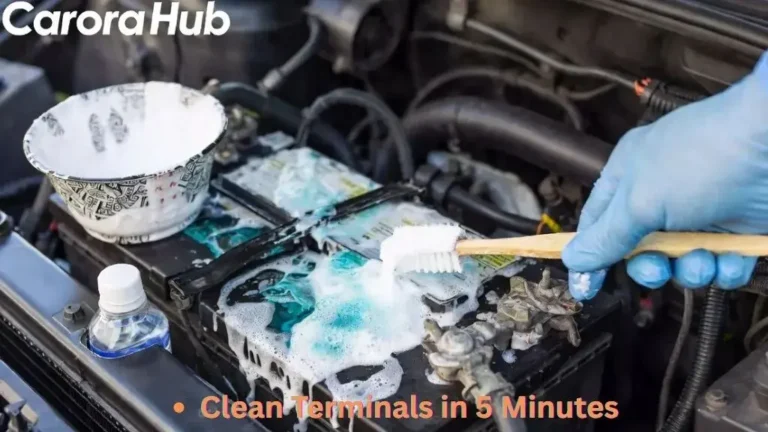
- Clean terminals: Corrosion increases resistance and can worsen both self discharge and parasitic problems.
Storage Tips
- For vehicles stored more than 2 months, remove and store the battery indoors if possible. Indoors you control temperature and humidity better.
- If you use a battery maintainer, ensure it’s compatible with your battery type. Some chargers are not safe for AGM or lithium-ion batteries. Look for maintainers with proper float or maintenance modes and automatic voltage control.
Data Table: Battery Storage Methods And Effectiveness
| Method | Reduction in Self Discharge | Ease of Use |
|---|---|---|
| Cool indoor storage | Up to 50% | Medium |
| Battery maintainer | Up to 90% | Easy |
| Disconnect battery | Up to 70% | Medium |
| Clean terminals | Up to 10% | Easy |

Credit: www.recnationstorage.com
How I Choose a Battery Maintainer (New Subsection)
I prefer maintainers with an automatic float mode. They switch to a low float voltage once the battery is full. That prevents overcharge and is safe for most lead-acid and AGM batteries. For lithium batteries, use a maintainer specifically rated for lithium chemistry. Look for these features:
- Auto-switching float/maintenance mode
- Over-voltage and reverse-polarity protection
- Outputs or settings for AGM, GEL, flooded, or lithium
- Low-current trickle mode for long-term connection
A good maintainer is a small investment that often saves you from replacing a battery.
How To Minimize Parasitic_Loss
Reducing parasitic loss is about managing the vehicle’s electronics and wiring:
- Disconnect the negative battery cable: This stops almost all electrical draw. Label cables before removing so you can reconnect correctly.
- Remove aftermarket devices: Unplug stereos, amplifiers, dash cams, and USB chargers.
- Check for faulty switches: Confirm trunk, glove box, and door lights turn off correctly.
- Inspect wiring: Look for corroded, frayed, or loose wires and connectors. Repair or replace damaged wiring.
- Use a multimeter: Measure parasitic draw before storage. If above 50 mA, investigate and fix the cause.
Advanced Tips
- Use a battery isolator on RVs or boats to prevent accessories from draining the starting battery.
- Check your owner’s manual for recommended storage procedures or a factory “storage mode” that can reduce parasitic draw on high-end vehicles.
- Install an inline disconnect switch on the negative cable if you store frequently. It’s quicker than removing the cable each time.
Practical Example
If a battery is always dead after one week, that’s almost certainly parasitic loss. I would use a multimeter to measure draw. If it’s above 100 mA, I pull fuses one at a time to isolate the circuit that stays on. Once I find the fuse, I inspect that subsystem and either repair or disable the offending device.
How To Diagnose Battery Drain: Step-by-step
Here’s a simple test I use to decide whether self discharge or parasitic loss is the main problem:
- Charge the battery fully.
- Disconnect the battery from the vehicle.
- Let it sit for 2 weeks in a cool place.
- Measure voltage and charge level.
- If the battery lost a lot of charge, self discharge is high—battery may be old or damaged.
- If the battery holds charge, reconnect it and let it sit in the car for 2 weeks.
- Check again.
- If the battery is now drained, parasitic loss is the problem.
This method tells you whether to replace the battery, change storage habits, or hunt for a parasitic draw. I always follow up with a battery health test (CCA and internal resistance) before replacing a battery.
Common Mistakes During Vehicle Storage
Many owners make avoidable errors that increase battery failure risk:
- Leaving electronics plugged in: Even small devices can cause big drains over extended periods.
- Storing in hot garages: Heat speeds up self discharge and accelerates battery aging.
- Not checking battery age: Older batteries should be replaced before long storage. Check the date code or service history.
- Ignoring warning signs: Slow cranking, dim headlights, or jump starts before storage are red flags.
- Trusting only self discharge: Even a new battery can be killed by parasitic loss if something is faulty.
A less obvious mistake is assuming self discharge and parasitic loss can’t add together. Two small drains together can quickly add up to a dead battery. I check for both before I store a vehicle.
Battery Testing And Monitoring Tools
Using the right tools helps prevent battery problems during storage:
- Multimeter: Measures voltage and parasitic draw. Essential for diagnosis.
- Battery tester: Tests health, state of charge, cold cranking amps (CCA), and internal resistance.
- Battery maintainer: Keeps charge steady during storage. Look for automatic float mode.
These tools are affordable. Checking your battery before and after storage saves money on replacements and avoids being stranded. I carry a handheld battery tester and multimeter in my garage for quick checks.
Credit: suzukibattery.sg
Battery Types And Their Behavior During Storage
Different battery chemistries behave differently in storage:
- Lead-Acid: The most common. Vulnerable to sulfation if left discharged.
- AGM: Lower self discharge and better for long-term storage. More resistant to sulfation but more expensive.
- Lithium-Ion: Excellent for storage with low self discharge. Sensitive to deep discharge and requires correct charging profiles.
- Nickel-Metal Hydride: High self discharge, rarely used in automotive starting batteries.
If you can choose, AGM or lithium batteries are best for vehicles that will sit for more than a few months. However, they need the right charger and monitoring to avoid damage.
Real-life Insights: What Beginners Often Miss
Two common misunderstandings can cause trouble:
- Many think disconnecting the battery prevents all loss. It stops parasitic draw, but self discharge still happens, so periodic topping up is required.
- Others believe a new battery is immune. New batteries resist drain better, but both self discharge and parasitic loss can affect them.
Another overlooked point is regular maintenance during storage. Check a stored battery every 1–2 months. A quick voltage check or a short charge can prevent sulfation and extend life.
Quick Comparison: Battery Self Discharge Vs Parasitic_Loss
For easy reference:
- Self discharge: Always happens, slow, affected by temperature and age.
- Parasitic loss: Depends on vehicle electronics, can be fast, often caused by faults or aftermarket gear.
Both can drain your battery during storage. In my experience, parasitic loss is often easier to prevent because it usually requires a simple fix.
Expert Recommendations For Long-term Vehicle Storage
To keep your battery healthy during storage, follow these practical steps:
- Charge the battery fully before storing your vehicle.
- Disconnect the battery or use a battery maintainer with proper float mode.
- Store the vehicle in a cool, dry place to slow chemical aging.
- Check parasitic draw with a multimeter before storage. Fix any abnormal draws.
- Inspect and clean battery terminals and connections to prevent corrosion and poor contact.
- Monitor battery charge every 1–2 months and top up with a maintainer if needed.
For a broader overview, you can also review the Wikipedia Car Battery page. It’s a good technical reference on battery chemistry and specifications.
FAQs Of Battery Self_Discharge vs Parasitic_Loss
What’s The Fastest Way To Kill A Car Battery During Storage?
Leaving a vehicle parked in a hot climate with electronics (like alarms or chargers) connected is the fastest way to kill a battery. High temperatures increase self discharge, and parasitic loss can drain the battery in days.
Can A Battery Die Even If The Car Is Not Used At All?
Yes. Both self discharge and parasitic loss can drain a battery even if the car is not started. Self discharge happens inside the battery, and parasitic loss comes from electronics.
Should I Remove The Battery For Long-term Storage?
Removing the battery and storing it indoors (in a cool, dry place) is the best option for storage longer than 2–3 months. This reduces both self discharge and parasitic loss.
How Can I Check For Parasitic Draw In My Vehicle?
Use a multimeter set to measure current. Disconnect the negative cable and connect the meter between the cable and battery post. A draw above 50 mA means there’s a parasitic loss that should be fixed.
Is A Battery Maintainer Better Than Disconnecting The Battery?
A battery maintainer is often better. It keeps the battery fully charged and healthy. Disconnecting the battery stops parasitic loss but does not charge the battery, so self discharge still happens.
Storing your vehicle with care can save you headaches and money. Follow the steps above and you’ll return to a healthy battery and a vehicle that starts first time. If you want, I can walk you through a step-by-step checklist tailored to your vehicle type—just tell me what you drive and how long you’ll store it.

I am Julian Drive, an automotive enthusiast and repair expert with over 7 years of hands-on experience in vehicle maintenance. At Carora Hub, I simplify complex car issues into easy-to-follow DIY guides to help drivers stay safe and save on repair costs.