Can a faulty ECU drain car battery? Yes. A faulty ECU (electronic control unit) can drain a car battery if it fails to go to sleep or keeps electrical systems awake after the engine is off. Software bugs, damaged circuits, moisture, or communication errors can cause a parasitic battery drain. That often shows up as repeated overnight dead batteries or a car that won’t start in the morning.
When a battery dies with no obvious cause, an ECU issue can be hiding behind the scenes. Modern cars use many ECUs (engine, transmission, airbags, body control, infotainment). If one module malfunctions, it can keep drawing current while the car is parked. Catching ECU-related drains early saves you time, avoids repeated jump-starts, and stops unnecessary battery replacements.
What Is An ECU And How Does It Work?
An ECU (sometimes called ECM or control module) is the brain for a specific system in your car. It controls fuel injection, ignition timing, emission systems, and more. Newer cars have many ECUs: engine, transmission, ABS, airbag, climate, and infotainment. Each module needs power to read sensors and talk to other modules.
I’ve worked on cars where a single faulty control module caused repeated battery failures. In practice, the ECU should enter a low-power sleep mode when you turn the key off. That sleep state keeps draw very low so the battery stays healthy while parked.
How The ECU Communicates
ECUs read sensors (temperature, speed, door position) and send commands to actuators (fuel pump, relays). They also exchange data over vehicle networks like CAN bus or LIN bus. When everything works right, modules sleep and only wake for specific triggers, like unlocking the doors.
If messages keep circulating on the network, modules can stay awake. That continuous communication is a common route to parasitic draw.
ECU Power Consumption
A healthy ECU uses very little current when the car is parked. Industry guidance and most service manuals target under 0.05 amps (50 milliamps) in sleep mode. Even that small draw will slowly discharge a battery if the car sits unused for weeks, but it’s perfectly fine for daily driving.
I always compare measured sleep current to the manufacturer spec. If a module draws much more, it’s a red flag for parasitic drain or a software problem.
Can A Faulty ECU Drain The Battery?
Yes — a faulty ECU can absolutely drain your battery, though it’s not the most common cause. Here’s how that happens and what to look for:
Common Ways An ECU Causes Battery Drain
- Failure to Enter Sleep Mode: When an ECU won’t go to sleep it behaves like the car is still running. That can consume tens to hundreds of milliamps or more. On a typical 45–70 Ah battery this can drain the battery in a day or two if the draw is high enough.
- Continuous Communication: A stuck sensor or bus error can keep an ECU sending messages. The network traffic wakes other modules, so the overall draw grows and the battery empties faster.
- Short Circuits or Internal Faults: A physically damaged ECU can short internally. That can pull very high current — 0.5 to 2 amps or more — and flatten a battery in hours.
- Wake-Up Loops: Software bugs or bad programming can cause an ECU to repeatedly wake from sleep. Each wake uses power. Over many cycles, the cumulative effect is significant.
Real-world Example
Here’s a case I remember well: A 2015 Toyota Corolla came in with the battery dead every morning. The owner had replaced the battery twice. We measured parasitic current and saw 0.7 amps with the car “off.” Normal sleep draw for that vehicle was around 0.05 amps. The ECU was the culprit. After replacing the module and reprogramming it, the draw fell to normal and the battery stopped dying overnight.
You May Like This Guide Interior Detailing: How to Remove Mold Smell from Car Interior
Signs Your ECU Is Draining The Battery
How do you tell if an ECU is the problem? Look for these clues. I use them as a quick filter when diagnosing parked-battery issues.
- Battery dead after the car sits overnight with no obvious lights on.
- Dim dashboard lights or electrical glitches at startup.
- Mechanic can’t find alternator or battery faults, yet the problem returns after a battery swap.
- Repeated no-starts that resolve temporarily after a jump-start but come back the next day.
Diagnostic Steps
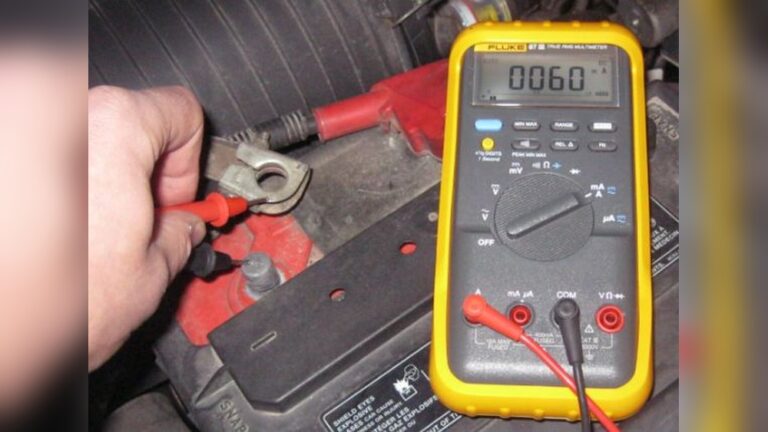
- Measure parasitic draw: Use a digital multimeter to check current flow from the battery with the car off. Anything above ~0.05 amps (50 mA) is worth investigating.
- Listen and observe: Clicking relays, repeating sounds, or lights that stay lit can point to an active module.
- Disconnect suspect ECUs: Safely unplugging a suspected ECU or pulling its fuse and watching the current drop helps isolate the problem. If the draw falls drastically after removing the ECU fuse, the unit is likely the cause.
Tools You’ll Need (Quick)
- Digital multimeter with amp range and ability to read milliamps
- OBD-II scanner to read diagnostic trouble codes
- Service manual or fuse box diagram for your car
- Basic hand tools to access fuses and modules
Other Causes Of Battery Drain
Before blaming the ECU, check these common culprits. I always rule them out first because they’re easier to fix:
- Interior or trunk lights left on
- Faulty door or trunk switches that don’t signal closed
- Poorly installed aftermarket alarms, stereos, or remote starters
- Bad alternator diodes allowing reverse current when the car is off
Here’s a quick comparison of common battery drain sources:
| Source | Typical Draw (Amps) | Battery Drain Time |
|---|---|---|
| ECU Fault | 0.5–2.0 | Hours to 1 day |
| Interior Light | 0.4–1.0 | Hours to 1 day |
| Alarm System | 0.05–0.3 | Days to 1 week |
| Normal Draw | 0.01–0.05 | Weeks |

Credit: ultrabrightlightz.com
Diagnosing ECU-related Battery Drain
Finding the exact cause takes patience. Here’s a clear, practical guide I use in the shop and recommend to DIYers who are comfortable with basic electrical testing.
Step-by-step Diagnosis
- Turn off the car and lock it. Let it sit 20–30 minutes so modules enter sleep mode. Some cars need longer—check the manual.
- Open the fuse box and locate the ECU fuse or the fuses for likely modules (body control, infotainment, etc.).
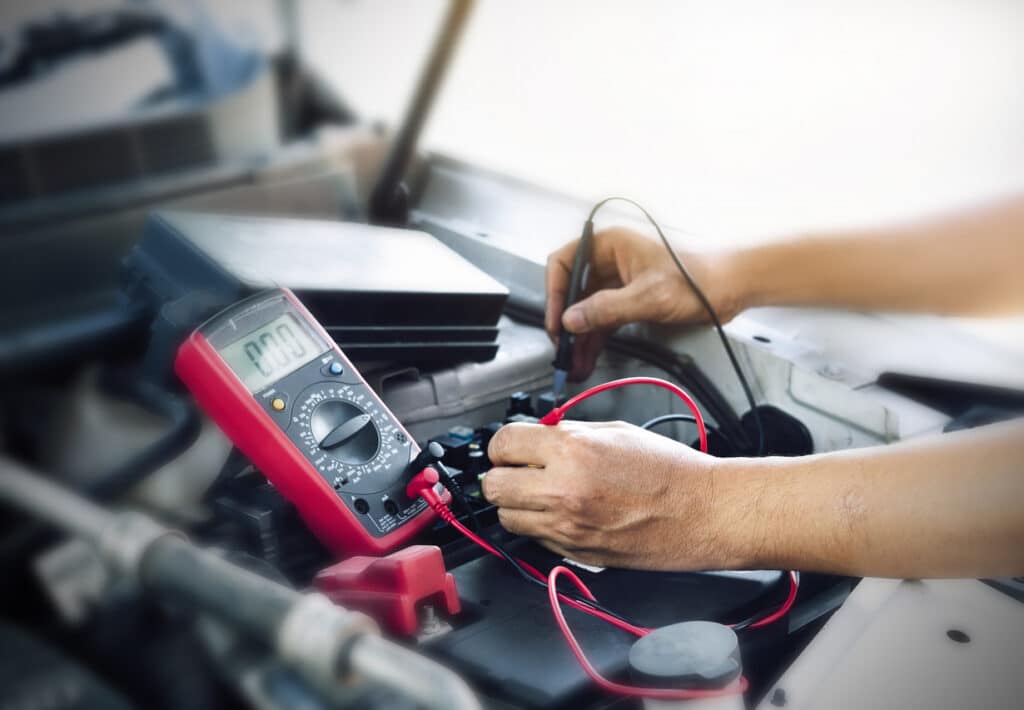
- Set a digital multimeter to the appropriate amp range. Put the meter in series with the negative battery cable to measure parasitic draw. Safety tip: use clamps or an inline meter lead rated for the expected current.
- Pull fuses one at a time while watching the meter. When removing a fuse causes a big drop in current, you’ve isolated the circuit. If the ECU fuse reduces the draw, the ECU or its wiring is suspect.
- Scan the car with an OBD-II scanner for stored trouble codes. Faulty ECUs often log errors even if the check-engine light is off.
- If you suspect software issues, check for Technical Service Bulletins (TSBs) or recalls for your vehicle that mention ECU updates.
Comparison: Normal Vs Faulty ECU
| State | Current Draw (Amps) | Battery Life (Parked) |
|---|---|---|
| Normal ECU | 0.02–0.05 | 2–4 weeks |
| Faulty ECU | 0.5–2.0 | 1 day or less |
Non-obvious_Insight
A few ECU issues only show under certain conditions. Cold weather, battery voltage sag, or recent software updates can trigger an otherwise hidden fault. That’s why problems sometimes appear intermittently and are hard to reproduce.
Safety Tips for Diagnosis
- Disconnecting modules or fuses can change vehicle state. Avoid removing airbag-related fuses unless you know the risks.
- Always disconnect the multimeter and reconnect battery terminals safely. Follow the meter manufacturer’s instructions.
- If unsure, have a professional do the parasitic draw test and isolation steps.
Repairing Or Replacing A Faulty ECU
Once you confirm the ECU is the issue, you have three main options: repair, replace, or reprogram. Each has pros and cons.
Repair
Minor faults — like corroded connectors, water damage, or failed capacitors — can sometimes be repaired. Repairs are usually cheaper up front. But they can be temporary. I recommend repair only when done by a specialist who can test the module thoroughly.
Replacement
Most shops prefer replacement for reliability. A new or reconditioned ECU ranges from about $200 to $1,200, depending on the vehicle and module. After replacing the unit, you’ll usually need reprogramming and pairings (key programming, immobilizer sync) so the car recognizes the new module.
Reprogramming
Sometimes the fault is software. Dealers or specialist shops can update ECU firmware or reflash parameters. A software update can fix wake loops, incorrect sleep timers, and other power-management bugs. Check for Technical Service Bulletins and recalls before replacing hardware.
Preventing Battery Drain From ECUs
Prevention is worth the effort. These habits reduce the chance of ECU-related battery problems.
- Drive regularly: Modules and batteries stay healthy with regular use. Short, infrequent trips cause more electrical wear.
- Avoid poor aftermarket installs: Alarms, stereos, or remote starters that aren’t installed correctly can confuse ECUs and create parasitic draws.
- Check for recalls and TSBs: Manufacturers sometimes issue software fixes for known ECU issues.
- Keep terminals clean: Corroded battery terminals cause voltage drop and can make ECUs behave erratically.
- Use a battery maintainer: If you store your car, a maintainer keeps the battery topped up and prevents repeated low-voltage events that stress ECUs.
ECU Battery Drain Vs Other Electrical Issues
It helps to compare ECU drain to other faults so you focus your diagnosis in the right place.
| Issue | Symptoms | Repair Cost |
|---|---|---|
| ECU Drain | Repeated battery death, no obvious lights | $200–$1,200 |
| Alternator Fault | Battery dies while driving | $150–$800 |
| Starter Motor Fault | Car won’t start, battery fine | $200–$600 |
| Parasitic Draw (other) | Battery dies after parking | $50–$300 |
Expert Tips For Managing Battery Drain
- Test the battery before replacing ECUs. A weak battery can hide the real issue.
- If your car has many modules, check secondary ECUs too. Infotainment or telematics units sometimes cause draws.
- Keep a maintenance log. Tracking battery changes, repairs, and software updates helps spot patterns.
Hidden Mistakes Beginners Make
Don’t make these common mistakes:
- Ignoring battery age: Old batteries can’t hold charge. Even a perfect ECU won’t fix that.
- Jump-starting repeatedly: Jumping gets you going but hides the underlying draw.
- Trusting only visual checks: An ECU can look fine but behave badly. Measure current and read codes.
Credit: www.holtsauto.com
When To Seek Professional_Help
If you suspect an ECU fault, see a trusted mechanic. Modern ECUs are complex and sensitive to improper handling. Ask the shop to run a full parasitic draw test and provide a written report showing which circuit caused the draw. If they recommend replacement, request cost and warranty details.
For deeper reading about ECUs and battery drain, this Autoevolution article is a useful reference.
FAQs Can a Faulty ECU Drain Car Battery?
How Long Can A Car Battery Last If The ECU Is Faulty?
A battery can drain completely in hours to a day if an ECU draws high current. With normal sleep draw, batteries typically last weeks while parked.
Can A Software Update Fix ECU Battery Drain?
Yes. A software update or reprogramming can fix battery drain caused by ECU bugs or bad sleep logic. Dealers and specialist shops have the tools to reflash firmware and reset module parameters.
Is It Safe To_Drive_With_A_Faulty_ECU
It can be risky. Some ECU faults only cause battery drain. Others affect engine performance, emissions, or safety systems. Drive cautiously and fix ECU problems promptly.
How Do Mechanics Test For ECU Battery Drain?
Mechanics run a parasitic draw test. They measure current from the battery with the car off, then isolate circuits using fuses and relays. They may also use advanced tools that record bus traffic to spot wake events and faulty messages on the CAN bus.
Can I Replace An ECU Myself
Yes, if you have the right tools and technical skill. But many ECUs require programming and pairing after installation. That often needs dealer-level tools or a reputable repair shop, so most DIYers leave it to professionals.
A faulty ECU is a less common but important cause of battery drain. Knowing how ECUs work, how to test for parasitic draw, and when to involve a professional will save you time and money. If simple fixes don’t stop your battery from dying, include the ECU in your checklist.
Act early, ask targeted questions, and keep your car’s electrical system healthy for reliable starts every day.

Credit: www.mangoautomotive.com

I am Julian Drive, an automotive enthusiast and repair expert with over 7 years of hands-on experience in vehicle maintenance. At Carora Hub, I simplify complex car issues into easy-to-follow DIY guides to help drivers stay safe and save on repair costs.