When you turn your car’s key on a cold morning and the engine struggles or fails to start, it’s natural to ask: is this a cold start voltage drop or an alternator problem? Both can leave you stranded. But they come from different parts of the charging and starting system. Knowing which one you’re facing saves time, money, and stress. I’ll walk you through how to spot each issue, what to test, and what to fix—using plain language and real-world tips I’ve learned from working on cars and helping friends on the roadside.
Understanding Cold Start Voltage Drop
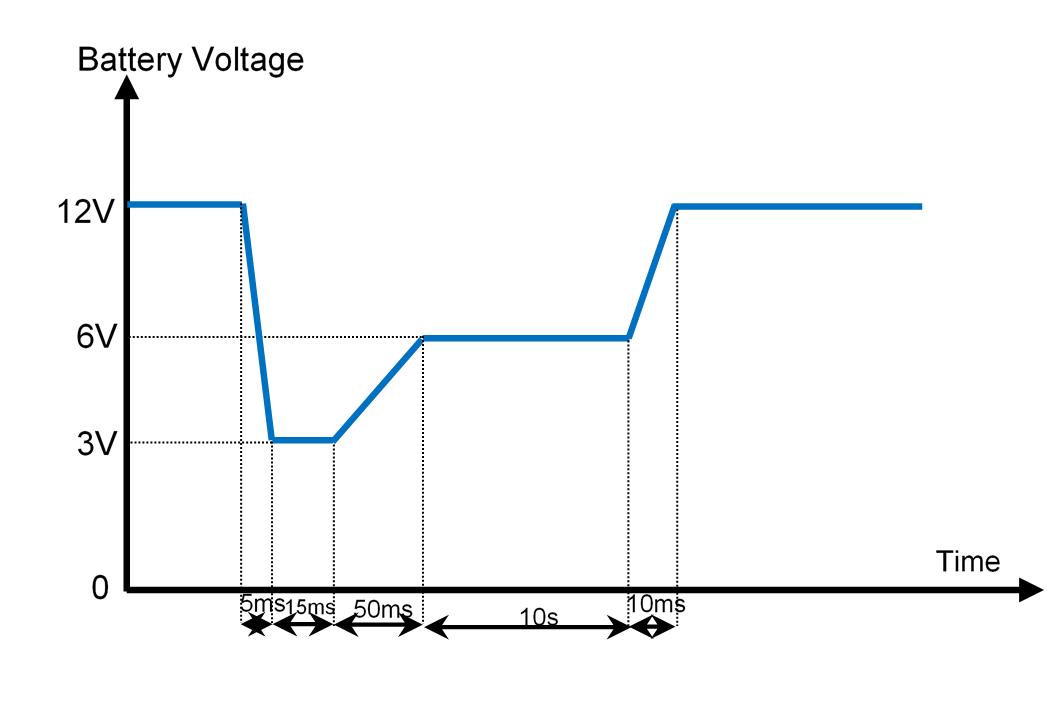
A cold start voltage drop happens when the battery can’t deliver enough power to the starter motor during a cold engine start. It’s most common in winter or cold climates. But it can also happen any time the battery is weak, connections are poor, or cables are undersized. The starter draws a large current. If the battery or wiring can’t supply that current, the voltage falls. The engine then turns over slowly or not at all.
In my experience, this is the number one “morning no-start” problem most drivers see. It’s often easy to fix—if you diagnose it right.
Why Does Cold Affect Voltage?
Batteries make electricity through chemical reactions. Cold slows those reactions. That means less available current and lower voltage under load. For example, a typical lead-acid car battery at 0°F (-18°C) may only deliver about 40–60% of the power it gives at room temperature. That’s a big loss when the starter needs a lot of amps.
Cold also thickens engine oil. A harder-to-turn engine demands more starter current. That combo—lower battery output plus higher starter load—causes the voltage to drop.
Signs Of Cold Start Voltage Drop
- The engine cranks slowly, especially after the car sits overnight.
- Headlights dim noticeably when you crank the engine.
- You hear rapid clicking or only silence when turning the key.
- The problem gets worse as temperatures fall.
- After a jump start, the car runs fine—at least for a while.
If you see these signs, the battery, the battery cables, or a parasitic draw is the likely cause—not the alternator (most of the time).
What Causes This Problem?
- Weak Battery: Batteries age and lose capacity. Cold exposes their weakness. See my note below on battery age.
- Corroded Terminals: Corrosion increases resistance. That causes voltage to drop across the terminal instead of at the starter.
- Loose or Frayed Cables: Damaged or loose cables can’t carry the high cranking current.
- Undersized Battery: A battery with too-low Cold Cranking Amps (CCA) for your engine will struggle in cold starts.
- Parasitic Drain: Small drains (trunk light, alarm, aftermarket gadget) can leave the battery low overnight.
How To Test For Voltage Drop
You can use a multimeter to check battery voltage. Before starting, a healthy, fully charged battery reads about 12.6 volts. While cranking, the voltage should not fall below 9.6 volts. If it does, you likely have a cold start voltage drop.
Here are practical steps I use when diagnosing:
Tools you’ll need
- A digital multimeter (DC volts and amps).
- Battery terminal brush or wire brush.
- Basic wrench set to remove battery cables.
Step-by-step meter check
- With the engine off, measure battery voltage at the battery posts. Expect ~12.6V if fully charged.
- Turn on headlights (not high beam) and note any dimming. Then crank the engine and watch the voltage. If it dips below 9.6V during crank, the battery or connections are suspect.
- After the engine starts, measure voltage again. If the engine runs, battery voltage should rise to 13.8–14.5V (this checks the alternator).
Here’s a useful table comparing battery voltage conditions:
| Battery Voltage (Engine Off) | Condition |
|---|---|
| 12.6V or higher | Fully Charged |
| 12.4V – 12.5V | 75–90% Charged |
| 12.2V – 12.3V | 50–75% Charged |
| 12.0V or below | Discharged/Needs Charging |
Remember: if your battery is below 12.4V before you try to start, you may have problems—especially in cold weather.
Non-obvious Insight: Battery Age Matters More Than You Think
Most car batteries last 3–5 years. In very cold or very hot climates they often fail sooner. I always ask drivers how old their battery is when they tell me their car won’t start in the cold. If it’s older than 3 years, plan to test and likely replace it before winter.
Buy a battery with the right Cold Cranking Amps (CCA) for your vehicle. A higher CCA rating helps cold starts.
Non-obvious Insight: Small Parasitic Drains Add Up
Small draws—like a glove box light, trunk light, GPS tracker, or poor aftermarket wiring—can slowly drain a battery. Those drains are easy to miss. They reduce state-of-charge and make cold starts harder.
My rule: rule out battery health and wiring before deep-diving into parasitic drain tests. If the battery and connections are good, then use the guide on Diagnosing Parasitic Battery Drain Using Multimeter Step by Step.

Alternator Problems Explained
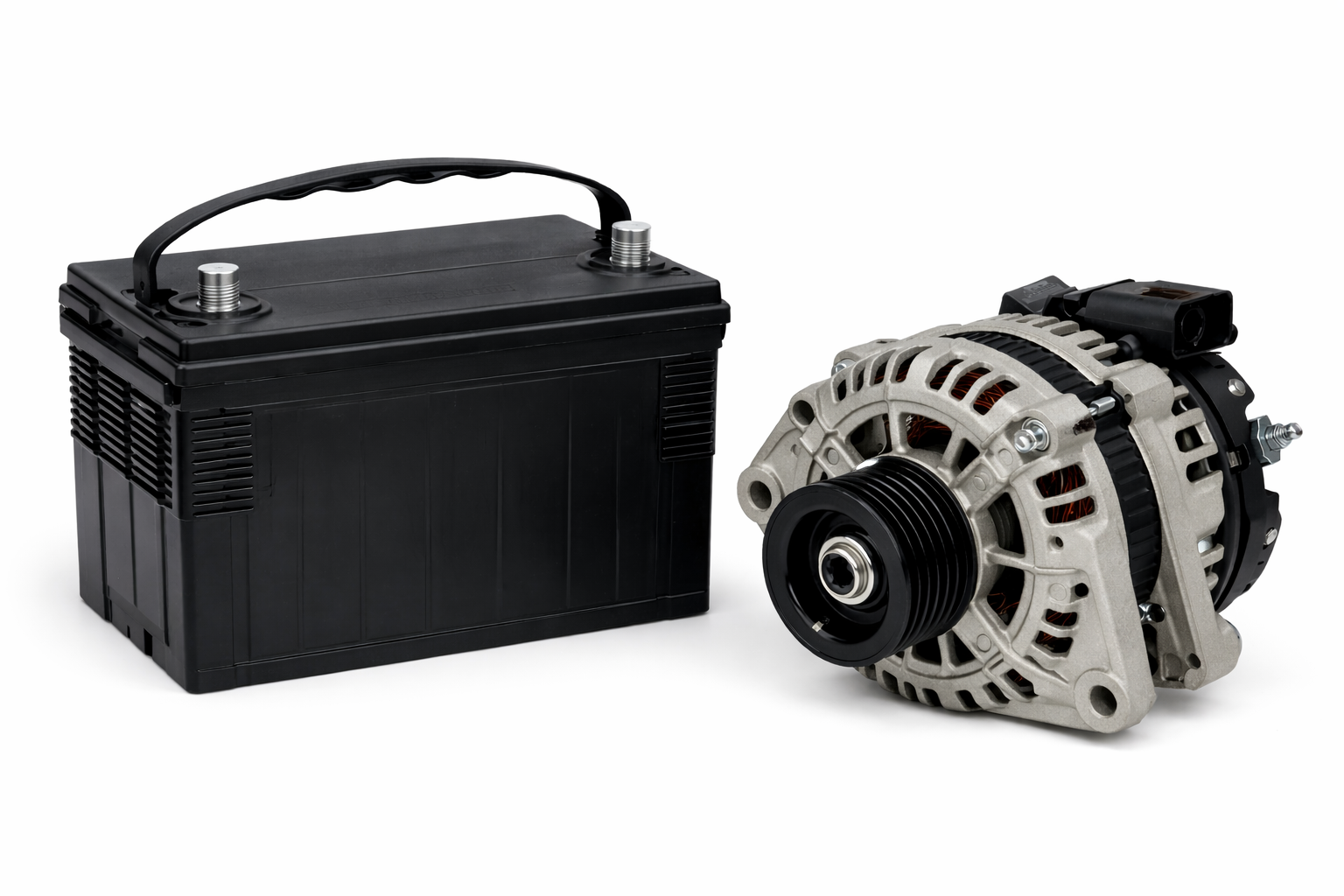
The alternator keeps the battery charged and powers the car’s electronics while the engine runs. If it fails, the battery won’t recharge. That can cause the car to die while driving—even with a new battery.
I’ve seen alternator failures present as intermittent electrical gremlins. Sometimes a failing alternator hides behind odd noises or dim lights.
What Does The Alternator Do?
- Generates electricity as the engine runs.
- Charges the battery.
- Powers lights, radio, climate control, and other electronics.
It includes components like the rotor, stator, diodes (rectifier), and the voltage regulator. Modern cars may use an external or internal regulator and smart charging controlled by the ECU.
Signs Of Alternator Problems
- Warning light (battery-shaped or “ALT”) on the dashboard.
- Dim or flickering headlights, especially at idle or when revving.
- Electrical accessories (power windows, radio) work slowly or stop.
- Engine stalls or runs rough.
- Battery repeatedly dies, even after a jump start.
- A whining or grinding noise from the engine bay.
If the alternator fails to charge, you may see low voltage while driving and then a dead battery after the car sits.
Common Alternator Failure Causes
- Worn-out Bearings: Cause noise and failure over time.
- Broken Diodes: Prevent proper rectification and charging.
- Loose or Broken Belt: No belt drive means no alternator output.
- Faulty Voltage Regulator: Can undercharge or overcharge the battery.
Also consider overloads from aftermarket audio, lights, or winches. Those draw extra amps and can cause premature alternator wear.
How To Test The Alternator
Start the car and measure battery voltage. A healthy alternator will hold the system at about 13.8–14.5 volts while running. If voltage is lower, the alternator may be weak. If it’s above 15V, the regulator could be overcharging.
Here’s a quick comparison table for alternator output:
| Engine Running Voltage | What It Means |
|---|---|
| 13.8V – 14.5V | Normal alternator output |
| Below 13.5V | Weak or failing alternator |
| Above 15V | Faulty voltage regulator (overcharging) |
| Voltage varies wildly | Poor alternator or regulator connection |
Non-obvious Insight: Accessory Belt Issues Mimic Alternator Failure
If the drive belt that spins the alternator is slipping, glazed, or loose, you’ll see low output and hear squeal. Often replacing or tightening the belt fixes symptoms that look like alternator failure.
Non-obvious Insight: Aftermarket Electronics Can Overload The Alternator
Adding high-power stereos, extra lights, or other accessories without upgrading the alternator can overload the charging system. If you have many add-ons, size the alternator and battery accordingly.
Credit: duaparts.com
Key Differences Between Cold Start Voltage Drop And Alternator Problems
It’s easy to mix up these problems because both can cause a no-start. The table below highlights the main differences so you can test faster and avoid replacing the wrong part.
Symptoms Comparison
| Symptom | Cold Start Voltage Drop | Alternator Problem |
|---|---|---|
| Hard to start after sitting overnight | Common | Possible, if battery drained by bad alternator |
| Runs fine after jump start | Yes (but problem returns next cold morning) | No (car may stall again soon) |
| Dashboard battery/ALT light on | No | Yes |
| Dim headlights while driving | No | Yes |
| Voltage below 12.6V (engine off) | Yes | Can happen if alternator isn’t charging |
| Voltage below 13.8V (engine running) | No | Yes |
Practical Example
If the car cranks slowly in the morning but runs fine after a jump, that points to a cold start voltage drop. If the car dies while driving or the battery/ALT light appears, think alternator. I recommend doing a simple multimeter check first—engine off, during crank, and engine running—to confirm.
Common Mistakes When Diagnosing
- Replacing the battery when the alternator is bad (wastes money).
- Ignoring corroded or loose connections—they cause both problems.
- Not checking the alternator belt condition.
- Assuming a new battery solves starting problems without testing charging output.
How To Fix Cold Start Voltage Drop
Here’s a practical repair path I use. Follow these steps in order to avoid replacing parts that don’t need replacing.
Step 1: Check Battery Age And Health
- If your battery is older than 4 years, consider replacement—especially in cold areas.
- Test the battery with a battery tester or multimeter. Charge if needed. If voltage falls quickly under load or does not recover, replace it.
I often recommend a battery test at an auto parts store. They will load-test it and give you a clear pass/fail result.
Step 2: Clean And Tighten Connections
- Remove battery cables and clean both the terminals and cable ends with a wire brush or terminal cleaner.
- Reconnect and tighten the cables securely. Ensure the clamp is tight and the connection is metal-to-metal.
A poor clamp can add significant resistance and cause a voltage drop right at the terminals.
Step 3: Inspect And Replace Cables If Needed
- Look for broken, frayed, or corroded wires.
- If cables are damaged, replace them. It’s a relatively low-cost fix that prevents voltage drop.
Also inspect ground straps from the engine and chassis. A bad ground produces odd electrical symptoms.
Step 4: Check For Parasitic Drains
- Turn everything off. Remove the negative battery cable and connect a multimeter in “amps” mode between the cable and the battery post.
- A draw of more than 50 milliamps (0.05A) can drain the battery overnight. Find the source by pulling fuses one at a time.
If you find a parasitic draw, isolate the circuit with the fuse pull method. That helps pinpoint the faulty module or accessory.
Step 5: Upgrade Battery If Necessary
- If you run many electronics or live in a cold climate, choose a battery with a higher CCA rating.
A higher-quality battery with proper CCA improves cold starting reliability. Match the group size and terminals to your car.
Credit: www.monolithicpower.com
How To Fix Alternator Problems
Step 1: Check The Belt
- Inspect the alternator belt for cracks, glazing, or looseness.
- Replace or tighten the belt as needed.
A quick belt check often fixes what looks like alternator failure.
Step 2: Test The Alternator
- With the engine running, measure the voltage at the battery.
- If voltage is below 13.8V, have the alternator tested at an auto parts store or by a mechanic.
Some shops offer free alternator testing. They can also test diodes and the regulator.
Step 3: Inspect Wiring And Connections
- Make sure the alternator wiring is secure and free from corrosion. Check the main output lug and any control wires.
A loose main charging wire can make a perfectly good alternator look bad.
Step 4: Replace The Alternator
- If the alternator fails testing, it will need replacement. The job is usually straightforward, but tight engine bays can make it harder.
When replacing, choose a quality remanufactured or OEM unit. Check warranties.
Step 5: Check The Voltage Regulator
- Some cars have a separate voltage regulator. If you see overcharging or erratic voltage, the regulator could be bad and should be replaced.
On many modern vehicles, the regulator is internal to the alternator. On older cars, it may be separate.
Preventing Electrical Problems In The Future
Taking care of your car’s electrical system is easier than you might think. Here are practical tips I use and recommend:
- Replace your battery every 4–5 years, or sooner if you notice slow cranking.
- Clean battery terminals and check cables at every oil change.
- Turn off all lights and electronics before leaving the car, especially overnight.
- Listen for warning signs like dim lights, dashboard warnings, or unusual noises.
- Don’t overload your system with aftermarket electronics unless you upgrade your alternator and battery.
- Test your alternator and battery before winter starts to avoid cold-weather surprises.
Routine checks are cheap insurance. I check battery voltage and clean terminals each fall.
When To See A Mechanic
Some issues need a professional. See a mechanic if you:
- Smell burning plastic or see smoke near the battery or alternator.
- Keep having electrical problems after replacing the battery or alternator.
- Aren’t comfortable working with car electronics or lack tools.
Don’t risk further damage or injury—get help from a trusted shop.
Real-world Data: Battery And Alternator Failure Rates
A 2021 study found that battery failure is the top reason for roadside assistance calls in the US, accounting for over 50% of all no-start situations. Alternator failure is less common but still significant, responsible for about 5–8% of electrical breakdowns. In cold climates, battery failures spike after the first major freeze.
This data matches what I see in practice: batteries fail more often and suddenly in cold weather.
The Role Of Modern Electronics
Modern cars have far more electronics than older models. Heated seats, infotainment systems, heated steering wheels, and driver-assist features increase load on the battery and alternator. A modern SUV with everything running can draw over 100 amps. That’s why keeping your charging system healthy matters more than ever.
If you add aftermarket gear, plan for a higher-capacity alternator and battery with the right CCA and reserve capacity.
FAQs On Cold Start Voltage Drop or Alternator Problem
What Is A Cold Start Voltage Drop?
A cold start voltage drop happens when the battery voltage drops below the level needed to start the engine, usually in cold weather. This is often caused by a weak battery, poor connections, or excessive draw from the starter motor.
How Do I Know If My Alternator Is Bad?
Common signs include a dashboard warning light (battery or ALT symbol), dim or flickering headlights, electrical accessories working poorly, or the engine stalling. Testing the voltage at the battery with the engine running (should be 13. 8–14. 5V) can confirm alternator health.
Can A Bad Alternator Cause Battery Drain?
Yes. If the alternator isn’t charging the battery while the engine is running, the battery will drain. Over time, the battery may be too weak to start the car, even if it’s new.
How Often Should I Replace My Car Battery?
Most car batteries last 3–5 years. In very cold or hot climates, they may fail sooner. Replace your battery at the first signs of slow cranking, corrosion, or unexplained electrical problems.
Where Can I Find Reliable Information About Car Batteries And Alternators?
A good source for technical details and maintenance tips is the Wikipedia automotive battery page, which covers battery types, care, and troubleshooting.
Final Thoughts
Understanding the difference between a cold start voltage drop and an alternator problem will help you keep your car reliable. Both can leave you stranded, but the fixes are different. Regular battery checks, clean connections, the right CCA rating, and watching for warning signs stop most electrical problems before they start.
When in doubt, don’t guess—test. A simple voltage check at the battery (engine off, during crank, and engine running) usually tells the story. Take care of your charging system, and your car will start strong, every time.

I am Julian Drive, an automotive enthusiast and repair expert with over 7 years of hands-on experience in vehicle maintenance. At Carora Hub, I simplify complex car issues into easy-to-follow DIY guides to help drivers stay safe and save on repair costs.