A dead car in the morning is one of those small disasters that ruins my day fast. I turn the key and hear nothing—or a slow, sad click. Most people blame the battery first. I did, too. But over time I learned that the real culprit is often the alternator. So I get asked a lot: Can a bad alternator drain a car battery overnight? The real answer depends on the kind of alternator failure. Knowing how the battery and alternator work together — and what to look for when they don’t — will save you time, money, and stress. In this article I break it down plainly: how the charging system works, how a bad alternator can drain a battery, how to diagnose it, and what to do to fix or prevent the problem.
How The Car Charging System Works
Before we dig into battery drain, let’s cover the basics. Most cars use a 12-volt battery plus an alternator. The battery gives the big burst of power needed to crank the starter and start the engine. Once the engine runs, the alternator makes electricity to run the lights, radio, ignition, and to recharge the battery.
The alternator is spun by a belt tied to the engine. Inside it are coils, diodes (a rectifier), and a voltage regulator. The coils make AC power. The diodes convert AC to DC. The regulator keeps voltage in a safe range for the battery and electronics.
If the battery or alternator fails, the car’s electrical system acts up. A bad alternator can do two things: stop recharging the battery, or — sometimes — create a parasitic drain that empties the battery while the car is off.
What Does A Bad Alternator Do?
A good alternator keeps the battery topped up. A bad one causes two main problems:
- Not charging the battery: The alternator fails to put energy back into the battery while you drive. Over time the battery loses charge and may not start the car.
- Draining the battery: If the alternator develops an internal fault — often a shorted diode or damaged rectifier — it can draw current from the battery even when the car is off. That’s a parasitic drain.
Both outcomes can leave you stranded. One happens slowly while driving. The other can be fast, even overnight.

Credit: shop.advanceautoparts.com
Can A Bad Alternator Drain A Car Battery Overnight?
Short answer: Yes — but it depends.
Most alternator problems mean the unit stops charging. In that case, the battery won’t recharge during driving, and it dies over time. That usually doesn’t empty a healthy battery overnight unless the battery is already weak.
However, if the alternator has an internal electrical fault — like a shorted diode or a failed rectifier — it can cause a parasitic drain. That lets current leak from the battery through the alternator even when the car is off. That leak can be large enough to flatten a healthy battery in hours — sometimes overnight.
Common Signs Your Alternator Is Draining The Battery
Here are clear clues I look for when I suspect the alternator:
- Dead battery after sitting overnight: The car starts fine during the day but won’t start in the morning.
- Battery warning light: A battery-shaped light on the dash or a code indicating charging system trouble.
- Dim or flickering lights: Headlights or dash lights dim or blink when idling or at night.
- Odd electrical behavior: Radio, power windows, or climate controls act inconsistently.
- Weird noises: Whining, grinding, or squealing from the alternator area, which can indicate failing bearings or internal issues.
These signs don’t always prove the alternator is to blame. But they are strong reasons to test the charging system.
How Alternator Problems Cause Overnight Battery Drain
Let’s get specific about how a faulty alternator can kill your battery while you sleep.
What Is Parasitic Drain?
Parasitic drain means something draws current from the battery when the car is off. Small drains are normal — clocks, alarm memory, and computers use tiny amps. But a bad alternator with a failed diode can act like a leaky valve. It lets current flow back into the alternator and to ground. That extra draw speeds up battery discharge.
How Much Power Can A Bad Alternator Drain?
Typical background drain is about 20–50 milliamps (0.02–0.05 amps). A cabin light is roughly 500 milliamps (0.5 amps). A shorted alternator diode can draw 1–3 amps or more. A typical car battery is around 48 amp-hours. At 2 amps, you could lose nearly 24 amp-hours in 12 hours — enough to go flat overnight.
Example Scenario
Say you park at 8 p.m. with a full charge. By 8 a.m. the next day it’s dead. A shop measures a 2-amp parasitic draw and traces it to the alternator. That’s 24 amp-hours lost in 12 hours. A new alternator fixes it.
Not Every Alternator Problem Causes Overnight Drain
Many alternators simply stop charging. Those don’t cause a big parasitic draw. Instead, the battery drains slowly as you use electronics and drive less. That leads to frequent dead batteries, but usually not a full overnight drain unless the battery is old.
Symptoms Of A Failing Alternator
Not every dead battery points to the alternator. Here’s what I check if I suspect alternator trouble:
1. Dashboard Battery Light
The battery-shaped light (or “ALT”/“GEN”) usually shows charging system trouble. Don’t ignore it.
2. Dim Or Flickering Headlights
Lights that dim at idle or flicker tell me the alternator can’t keep up with load.
3. Weak Or Dead Battery
If the battery is relatively new and you still need jump-starts, the alternator may not be charging it properly.
4. Electrical Failures
Features like windows, seats, or infotainment systems acting up can point to voltage instability from the alternator.
5. Strange Sounds
Whines, grinding, or squeals near the alternator often mean worn bearings or internal damage.
6. Burning Smell
A hot alternator can emit a burned rubber or wiring smell. That’s a sign to stop driving and check it.
7. Stalling Engine
Modern engines rely on steady electrical power. If the alternator fails while driving, the car can stall.
Other Causes Of Overnight Battery Drain
Besides the alternator, common causes include:
- Interior lights left on
- Faulty trunk or glove-box light
- Aftermarket accessories (alarms, stereos, dash cams) drawing current
- Worn-out battery that can’t hold charge
- Faulty wiring, bad ground, or stuck relays
If your battery dies overnight, have a mechanic check the whole electrical system before replacing parts. You might save money and avoid repeat failures.
Diagnosing Alternator-related Battery Drain
Finding whether the alternator is the drain takes a few tests. I’ll walk you through the practical checks professionals use.
Step 1: Check Battery Voltage
Use a multimeter on the battery terminals with the car off. A healthy, fully charged battery reads about 12.6 volts.
Step 2: Start The Car And Measure Again
With the engine running, voltage should rise to about 13.7–14.7 volts. If it stays near 12.6 or drops, the alternator isn’t charging.
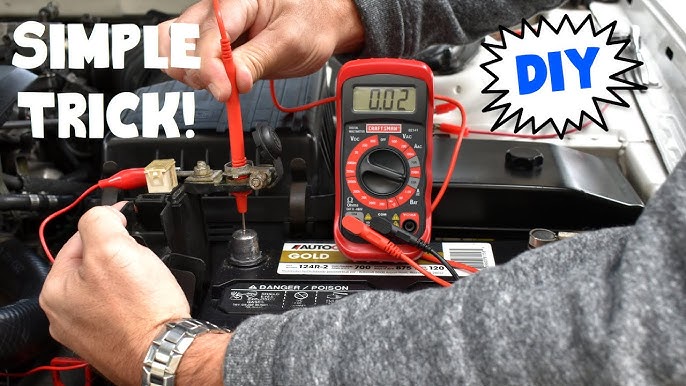
Step 3: Check For Parasitic Draw
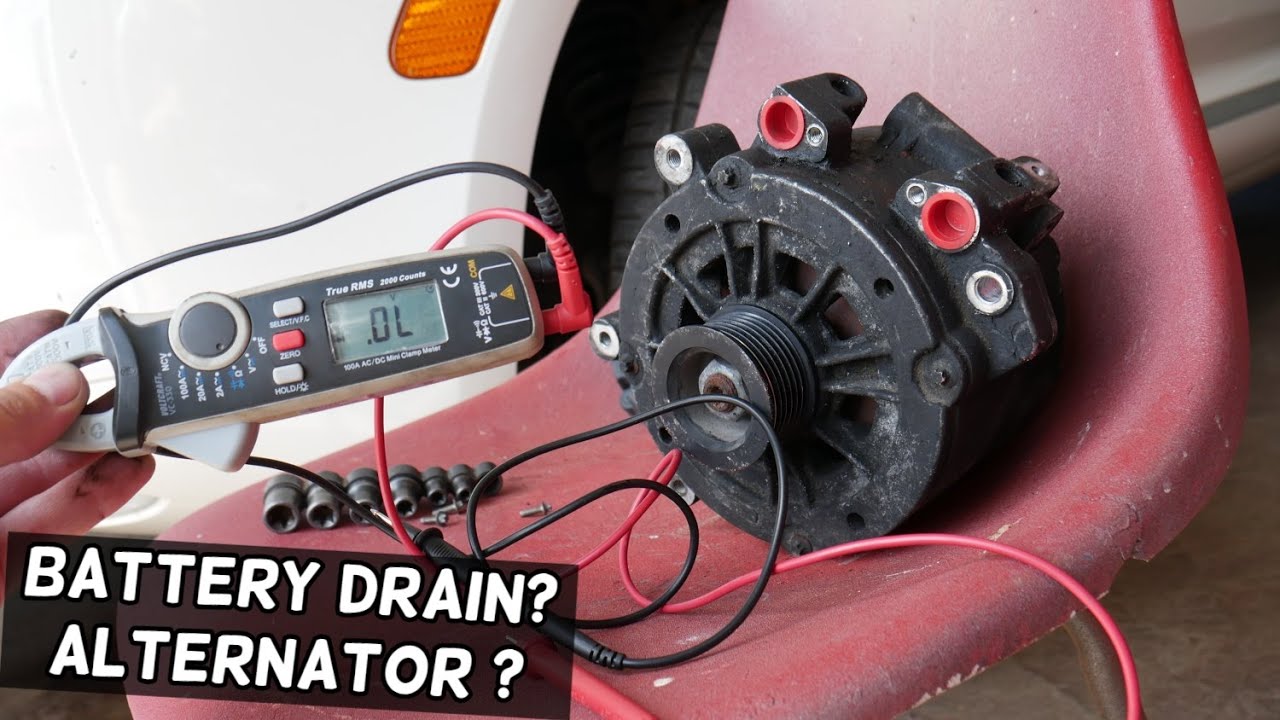
With the car off and doors closed, connect an ammeter between the battery negative terminal and the cable. Read the idle current. Then pull fuses one at a time. If the current drops when you pull the alternator fuse or disconnect its wiring, the alternator is likely the source.
Step 4: Test Alternator Diodes
A diode test can detect a short to ground. Many shops use a bench tester or a special meter to check diodes and the rectifier. Bad diodes often show up as AC ripple on the DC output.
Step 5: Check For Other Drains
If the alternator is clean, continue pulling fuses to find which circuit holds the parasitic draw. Aftermarket devices and alarm systems often hide on accessory circuits.
Tools And Safety Tips For DIY Diagnosis
I always recommend basic safety: wear eye protection and remove metal jewelry. Use a reliable digital multimeter with an amp clamp or inline ammeter rated for automotive current. Never connect a multimeter set to volts in series for current — you can short the meter and the battery.
How To Fix A Bad Alternator
If the alternator causes the drain, your main options are:
1. Replace The Alternator
Replacing with a new or quality rebuilt alternator is often the best fix. That solves charging and most parasitic drain issues.
2. Repair The Alternator
Sometimes the alternator can be rebuilt by replacing bad diodes, bearings, or the voltage regulator. This can work if parts and labor are reasonable.
3. Remove The Alternator Fuse (temporary)
Pulling the alternator fuse can stop overnight drain temporarily. Don’t drive this way. The battery won’t recharge while driving, and you risk being stranded again.
4. Professional Service
A skilled mechanic will diagnose the charging system correctly and recommend the most cost-effective fix. If your car has a smart alternator or complex electronics, go to a shop with the right tools.
Preventing Alternator-related Battery_Drain
Good habits help prevent both battery and alternator problems:
- Keep battery terminals clean and tight; corrosion reduces charging efficiency.
- Replace worn belts. A slipping alternator belt cuts output.
- Avoid overloading with aftermarket electronics. High-power stereos or extra lights add stress.
- Have battery and alternator tested regularly. Many auto parts stores run free tests.
- Fix noises, warning lights, or odd electrical behavior early. Small issues get bigger fast.
Real-world Examples And Data
To show how common alternator issues are, here are useful data points and examples:
- AAA reports about 10% of roadside calls involve battery and charging system problems.
- Alternators typically last 5–7 years or 80,000–150,000 miles, but conditions vary.
- Mechanics often rank alternator-related drains among the top causes of “mystery” dead batteries.
Case Study: Alternator Short Drains Battery
A driver in Chicago told me his car died every morning. The battery was new. During the day, the car ran fine. A shop measured a 2.5-amp parasitic draw with the car off. Pulling fuses pointed to the alternator. Replacing it fixed the nightly drain.
Why Do Some Alternators Fail Early?
Modern cars have more electronics, so alternators work harder. Heat, vibration, moisture, and poor-quality replacement parts can shorten life. Rebuilt units vary in quality; cheap parts often fail earlier.
Comparing Battery Drain Scenarios
Here’s a comparison that helps put drain rates in perspective:
| Situation | Typical Drain (Amps) | Battery Dead Time |
|---|---|---|
| Normal (car off) | 0.02–0.05 | Weeks |
| Interior light left on | 0.5 | 1–2 days |
| Bad alternator (shorted diode) | 1–3+ | 6–24 hours |
| Old battery + no charging | Depends | 2–3 days |
A shorted alternator can drain a battery far faster than most other issues. That’s why testing for parasitic draw is important when batteries die overnight.
When To Suspect The Alternator Vs. The Battery
Here’s a simple guide I use to decide which part to check first:
| Symptom | Likely Cause |
|---|---|
| Car dies while driving | Alternator |
| Car won’t start after sitting | Battery or alternator |
| Dim headlights only when stopped | Alternator |
| No power accessories | Alternator or battery |
| Clicking sound, no crank | Battery |
If you’re unsure, test both parts. Most stores can run a free battery and charging check.
Common Myths About Alternators And Battery Drain
Let’s clear up a few myths I hear all the time:
- Myth: If the battery is dead, the alternator must be bad.
- Fact: Many things kill batteries — age, heat, or leaving lights on.
- Myth: A new battery will fix all problems.
- Fact: If the alternator is bad, a new battery will also die quickly.
- Myth: You can drive forever with a good battery and bad alternator.
- Fact: The battery will run out and the car will stop.
- Myth: Alternators can fully recharge a dead battery.
- Fact: Alternators are designed to maintain a battery, not to fully recharge a fully dead battery quickly.
Know these facts before replacing parts or paying for unnecessary service.
Cost Of Alternator Problems
How Much Does It Cost To Fix An Alternator Problem?
- New alternator: $300–$700, including parts and labor
- Rebuilt alternator: $150–$400
- Labor: $50–$200 depending on the car
- Battery replacement (if damaged): $100–$250
Fixing alternator issues early can prevent battery damage and higher bills later.
Tips To Avoid Getting_Stranded
Simple habits that have saved me from getting stuck:
- Pay attention to warning lights. Don’t ignore the battery or alternator light.
- Watch lights and electronics. Dim or flickering lights are a red flag.
- Get regular checks. Many shops will test battery and alternator for free.
- Keep jumper cables or a jump starter in the car for emergencies.
- Don’t overload the electrical system with unneeded accessories.
How To Test Your Alternator At Home
I do this quick test before calling a shop. It’s simple and tells you a lot:
- With the engine off, measure battery voltage. It should be about 12.6V.
- Start the engine. Voltage should rise to 13.7–14.7V. This shows the alternator is charging.
- Turn on headlights, radio, and A/C. Voltage should stay above 13V. If it drops, the alternator may be weak under load.
- If voltage falls below 12V while the engine is running, stop driving — the alternator is not supplying enough power and the battery will drain.
- To check parasitic drain, measure current with the car off using an ammeter in series with the battery negative cable. Typical idle draw is 20–50 mA. Anything over about 100–200 mA should be investigated.
If you’re uncomfortable with these tests or lack tools, a shop can do them quickly and safely.
The Role Of The Battery In Alternator Problems
A weak or old battery can make alternator issues worse. A battery that won’t hold charge forces the alternator to work harder. That extra stress can shorten alternator life. When replacing an alternator, check the battery health too. If the battery was driven flat repeatedly, replace it along with the alternator to avoid repeat failures.
Environmental Factors That Affect Alternator And Battery Health
Heat, cold, and humidity affect both battery and alternator life. In hot climates batteries lose water and age faster. In cold weather batteries lose cranking power and the alternator works harder. Moisture or road salt can corrode connections and internals.
- In summer: Park in shade and keep battery terminals clean.
- In winter: Keep the battery fully charged and avoid many short trips that don’t allow the alternator to recharge the battery.
Aftermarket Electronics And Battery Drain
Adding extras like high-power stereos, alarms, or dash cams increases the load on the alternator. Poorly installed devices can cause parasitic drain or wiring faults. Use a professional installer and ask them to test your charging system after installation.
How Mechanics Diagnose Charging System Problems
Shops use a set of tools I also rely on when diagnosing:
- Multimeter: Measures voltage and current.
- Load tester: Tests battery under load.
- Scan tool: Reads error codes from the car’s computer (ECU).
- Current clamp: Measures parasitic drain without disconnecting the battery.
These tools speed up diagnosis and reduce guesswork.
How Long Should An Alternator Last?
Most alternators last 5–7 years. Some fail earlier from heat, abuse, or poor parts. Some last 10 years or more. To extend life, use quality replacement parts and fix electrical problems early.
Should You Replace Battery And Alternator At The Same Time?
If the battery is old or has been driven flat repeatedly, replacing both the battery and alternator at the same time makes sense. A weak battery stresses a new alternator. Replacing both reduces the chance of a repeat failure.
Credit: www.youtube.com
Environmental Impact Of Battery And Alternator Disposal
Batteries and alternators contain materials that should be recycled. Most shops accept old parts for recycling. Never toss car batteries in the trash — they contain toxic chemicals and heavy metals.
Car Models And Years Most_Prone_To_Alternator_Problems
Some makes and models have more alternator issues than others. Older cars and those with lots of electronics generally face higher risk. If your model has a known history, consider more frequent checks.
Technology Changes: Smart Alternators And Battery Management
Modern vehicles use “smart” alternators and battery management systems. They help fuel economy and battery life but add complexity. Smart systems can vary charging based on load, temperature, and battery state of charge. Because they are more complex, diagnosis and repairs are best left to shops with the right scan tools.
Battery Drain And Alternator Issues In Hybrid And Electric_Cars
Hybrids and EVs still have a 12V system for lights, infotainment, and accessories. Parasitic drains can still happen, but their charging systems differ from conventional cars. Repairs and diagnosis require specialists familiar with high-voltage systems.
Credit: www.youtube.com
Data Table: Common Charging System Faults And Their Effects
Summary of common faults and their effects:
| Fault | Symptom | Battery Drain Overnight? |
|---|---|---|
| Bad alternator (diode short) | Dead battery, parasitic drain | Yes |
| Bad alternator (no charge) | Battery dies while driving | Sometimes |
| Old battery | Won’t hold charge | Yes (if very weak) |
| Interior/trunk light on | Battery dies overnight | Yes |
| Wiring fault | Random electrical issues | Maybe |
The Bottom Line: What You Should Do
If you find a dead battery after your car sat overnight, don’t just replace the battery and hope for the best. Always check the alternator and the rest of the charging system. A bad alternator can drain a healthy battery in hours, but not all alternator faults cause that. If you notice warning lights, dim lights, strange noises, or need frequent jump-starts, have a mechanic test both the battery and alternator. Fix small problems early to avoid bigger headaches and higher repair bills.
For more technical detail on alternators, you can read further at Wikipedia.
A healthy alternator and battery keep your car reliable and ready. Watch for warning signs, and don’t ignore small electrical problems—they can become big trouble overnight.
FAQs Of Can a Bad Alternator Drain a Car Battery Overnight
What Is The Most Common Cause Of A Car Battery Draining Overnight?
The most common causes are parasitic drain from things like interior lights left on, faulty alternator diodes, or aftermarket electronics that keep drawing power when the car is off. A bad alternator is a top suspect if the battery is new and other causes are ruled out.
Can You Test An Alternator Without Removing It From The Car?
Yes, you can use a multimeter to check voltage at the battery terminals with the engine running. If the voltage is below 13.7V or above 14.7V, the alternator may be faulty. For a more complete test, a mechanic can check for parasitic drain and bad diodes.
Will A New Battery Fix A Car With A Bad Alternator?
No. A new battery will work for a short time, but if the alternator is not charging or is causing a drain, the new battery will also die quickly. Always fix the alternator first.
How Can I Tell If My Battery Is Dead Or Just Discharged?
A dead battery usually won’t hold a charge even after being recharged or jump-started. A discharged battery will work again after recharging. Most auto parts stores can test your battery for free.
How Often Should I Check My Car’s Charging System?
Check the charging system every year or before long trips, especially if your car or battery is more than three years old. Regular checks can catch problems early and prevent being stranded.

I am Julian Drive, an automotive enthusiast and repair expert with over 7 years of hands-on experience in vehicle maintenance. At Carora Hub, I simplify complex car issues into easy-to-follow DIY guides to help drivers stay safe and save on repair costs.