Why Does Battery Die Only When Car is Parked on Slope? A car battery may die only when parked on a slope because battery acid (electrolyte) can shift, exposing weak internal plates or poor internal connections. Parking at an angle can also make loose cable ends, ground straps, door switches, or other electrical parts sit differently and draw current. Over hours this can slowly drain the battery or prevent a reliable start the next morning.
I’ve seen this myself: a car that starts fine on flat ground but won’t crank after an overnight park on an incline. In most cases the root cause is a hidden battery weakness, a marginal terminal connection, or an electrical component that behaves differently when tilted. Find the cause early and you will avoid an annoying dead-battery surprise.

Credit: www.sewell.com
What Happens to a Car Battery?
A car battery stores electrical energy. It gives the starter motor a high burst of current to turn the engine. It also feeds lights, the alarm, and small systems when the engine is off. When the engine runs, the alternator recharges the battery. That is the normal cycle.
When that balance is upset — by age, a bad alternator, or a slow drain — the battery loses charge. Then the car may not start. A battery that fails only when parked on a slope usually has one or more angle-sensitive issues that tip the balance toward failure.
What is a Slope Parking Spot?
A slope parking spot is simply any place where the car sits tilted. One side is higher than the other. The tilt can be slight or steep. When the vehicle sits on an angle, fluids and loose parts shift. That movement can change how the battery and electrical parts behave.
Why Does Battery Die Only on a Slope?
This is the key question. There are several common reasons. I’ll walk through each one and explain what to look for and what to do.
1. Battery Acid Moves Inside The Battery
Traditional lead‑acid batteries contain liquid electrolyte (sulfuric acid + water). On a slope that liquid can pool to one side. If the electrolyte no longer covers the plates evenly, parts of the plates can get exposed or stressed. That can lower capacity and cause intermittent failure when the car is angled.
Sealed AGM or gel batteries are less likely to show large fluid shifts. But older flooded batteries with low electrolyte levels are the most at risk. If your battery is older than 3–5 years or the case looks warped or swollen, the acid-movement problem becomes more likely.
2. Poor Battery Connections
Loose, corroded, or dirty battery terminals are a very common cause. When a car tilts, a marginal clamp or frayed cable can shift just enough to break good contact. That raises resistance and reduces the current the starter can draw.
What I do: clean the terminals, remove any white or green corrosion, and tighten the clamps until snug. Also check the battery-to-chassis ground and the engine-ground strap. Even a slightly loose ground can show angle-dependent symptoms.
3. Fuel And Oil Levels Affect Starting
When your car sits on a slope, fuel can move away from the pickup inside the tank. Likewise, oil and fluids can sit unevenly. On some engines this makes chasing a start harder because the fuel pump or feed works less efficiently. The starter then needs to work harder and for longer, which pulls more current from the battery.
Tip: if your fuel gauge is low, try to keep the tank at least half full. Lower fuel levels make angle-related start problems more likely, especially in older or modified fuel systems.
4. Starter Motor Strain
Starting on a slope can put extra mechanical load on the engine. If the car is on a steep incline or the transmission is engaged, the starter may need more torque to spin the engine. A weak battery can be drained trying to deliver that extra torque.
If your starter is old, has worn brushes, or a high internal resistance, it may draw excessive amps. That will quickly sag battery voltage and lead to a no-crank condition after parking on a hill.
5. Electrical System Drain
Modern cars have many systems that stay awake when the car is off: alarms, telematics modules, aftermarket devices, and convenience features. Some of these can change behavior when the car is tilted. For example, a stuck door switch, a misaligned trunk latch switch, or a sensor for hill-start assist might remain active and draw power.
A small steady drain that is fine on flat ground can push an old battery over the edge when the car sits on an incline for many hours.
Signs Your Battery is Weak on a Slope
Look for these signs to tell if your battery is the likely culprit:
- Car struggles or does not start after being parked on a hill, but starts fine on flat ground.
- Lights (interior or headlights) are dim when the car is tilted.
- The battery warning or charge light flickers, especially when angled.
- Repeated jump-starts are needed after parking on inclines.
How to Fix Battery Problems on Slopes?
If your battery dies only on slopes, try these fixes. I include simple DIY steps and when to see a pro.
| Problem | Solution |
|---|---|
| Battery acid moves inside | Check battery position; replace battery if old or damaged |
| Poor battery connections | Clean and tighten battery terminals |
| Fuel and oil issues | Keep fuel tank at least half full; check oil levels |
| Starter motor strain | Have starter motor checked by a mechanic |
| Electrical system drain | Turn off extra devices when parked; check sensors |
Below I add practical diagnostic steps and tips you can use right away.
How to diagnose battery drain on slopes (new)
Diagnosing angle-sensitive battery problems requires a few simple checks. I recommend doing them in this order so you can find the issue fast.
Step 1 — Visual and quick checks
- Inspect the battery for cracks, bulges, or leaking fluid.
- Look for corrosion on posts (white or green crust).
- Check that terminal clamps and battery hold-downs are tight and secure.
Step 2 — Voltage and health checks
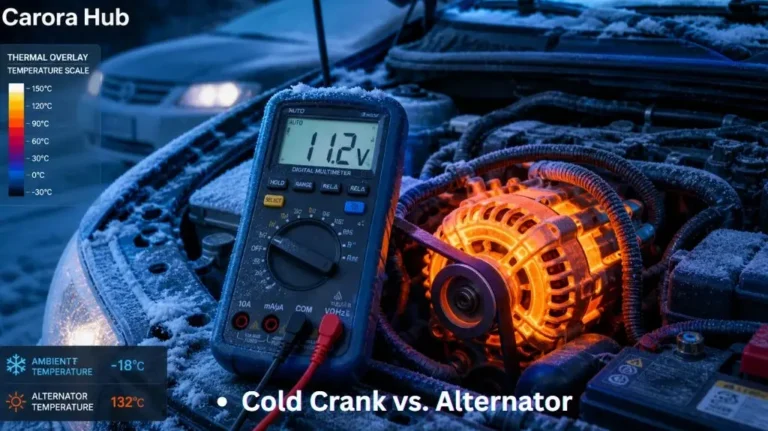
Measure the battery voltage with a multimeter. A healthy, fully charged 12V battery reads about 12.6–12.8 V at rest.
If resting voltage is below ~12.4 V, the battery might be weak. A failing or sulfated battery will often show lower voltage and will drop quickly under load.
Step 3 — Parasitic drain test
Use a multimeter set to amps to measure parasitic draw with the car off. Modern cars typically draw 20–50 mA at rest. If you see hundreds of milliamps, find the circuit drawing power by pulling fuses one at a time.
Step 4 — Simulate the angle
If safe, tilt the battery slightly or raise one side of the car gently (use ramps or jack stands correctly) and re-check voltage and connections. If the battery or terminal behavior changes with angle, you’ve found a clue: mechanical movement matters.
Step 5 — Professional testing
Have a workshop do a load test and check battery specific gravity (for non-sealed cells) or run a battery capacity test. Also have the starter and charging system tested (alternator output should be ~13.7–14.6 V while running).
Tools and simple gear I use (new)
- Basic multimeter (voltage and current).
- Battery terminal brush and cleaner.
- Dielectric grease to protect cleaned terminals.
- Basic socket set to tighten clamps and hold-downs.
- Battery charger / maintainer for slow charging and desulfation cycles.
How to Take Care of Your Battery on Slopes?
To reduce slope-related failures, follow these practical tips I use regularly:
- Park on flat ground when possible. Even a small change in angle can help.
- Keep the battery terminals clean and tight. Use a terminal brush and a little baking soda solution if needed.
- Check battery health yearly after 3 years of use. Replace batteries older than 4–5 years as a preventative step.
- Turn off aftermarket devices before leaving the car. These often cause parasitic drain.
- If you park on slopes a lot, consider upgrading to a higher‑quality AGM battery that tolerates vibration and angle changes better than a weak flooded battery.
- Use a trickle charger or battery maintainer if the car sits unused for long periods.
- Have your car’s electrical system inspected yearly, especially if you notice odd electrical behavior.
Why Old Batteries Die Faster on Slopes?
Old batteries have reduced capacity and internal damage like sulfation and plate loss. They also often have lower electrolyte levels. On a slope the remaining electrolyte can shift away from some plates. That raises internal resistance and reduces available current. In short: older batteries have less margin, so the tilt pushes them past the limit.
What If Your Battery Dies on a Slope?
If your battery dies on a slope, stay safe and follow these steps:
- Push the car to flat ground if it is safe to do so (use helpers and blocks to secure wheels).
- Try to jump-start the car using jumper cables and a donor vehicle or a jump pack. Follow proper jump-start safety steps.
- Call roadside assistance if you can’t start the car or cannot safely move it.
- As soon as you can, test and inspect the battery and charging system to prevent a repeat.
Summary
Car batteries can die on slopes for a few clear reasons. The top ones are electrolyte shift in older flooded batteries, loose or corroded terminals, starter load increases, and angle-sensitive electrical drains. Often the issue is a combination of age plus a marginal connection or drain. Fixes range from cleaning and tightening terminals to replacing the battery or servicing the starter and charging system.
Keep your battery well maintained, park on flat ground when possible, and diagnose promptly if you notice trouble after parking on an incline. Small checks now prevent a lot of frustration later.
FAQs Of Why Does Battery Die Only When Car is Parked on Slope
Why Does My Car Battery Die On A Slope Only?
Parking on a slope can cause fluids to shift inside the battery. This may lead to poor electrical contact and faster battery drain. Also, loose terminals or tilt-activated switches can draw power. I recommend checking terminals first, then testing the battery under load.
Can Parking On A Hill Damage My Car Battery?
Yes, parking on a steep hill repeatedly can contribute to damage over time. Uneven acid distribution, vibration, and repeated hard starts all reduce battery life. The effect is strongest on older flooded batteries with low electrolyte or weak plates.
Does Car Battery Drain Faster When Parked Uphill Or Downhill?
Battery drain can happen when parked uphill or downhill. The important factor is the angle and which way fluids and parts shift. Both uphill and downhill parking can worsen weak batteries or marginal connections.
How Does Gravity Affect A Car Battery On Slopes?
Gravity pulls electrolyte toward the lower side of the battery when the vehicle is tilted. This can cause uneven acid coverage of the plates. That changes internal resistance and how the battery supplies current. In older or low‑fluid batteries this effect can cause startup failure.
Extra tips from my experience (new)
- If you park on a slope every day, consider a higher‑quality battery type like AGM. They handle orientation and vibration a bit better.
- Use dielectric grease on clean terminals to slow corrosion and reduce angle-related contact loss.
- If an electrical component (trunk, glove box, or door light) is staying on when parked angled, trace it quickly — these are easy sources of parasitic drain.
- When in doubt, have a pro run a charging-system and parasitic-draw test. That often finds the issue in one visit.
This Guide May Help You More: Why Does My Car Smell Musty Inside

I am Julian Drive, an automotive enthusiast and repair expert with over 7 years of hands-on experience in vehicle maintenance. At Carora Hub, I simplify complex car issues into easy-to-follow DIY guides to help drivers stay safe and save on repair costs.