Is your Toyota Sienna’s engine shaking and leaving you worried? You’re not alone.
That unexpected vibration under the hood can be more than just annoying — it can point to an issue that needs attention. I’ve worked on and diagnosed many Siennas, and in this guide I’ll share practical steps I use, the likely causes, and what to try before you pay a shop. Read on — these tips can save you time and money.
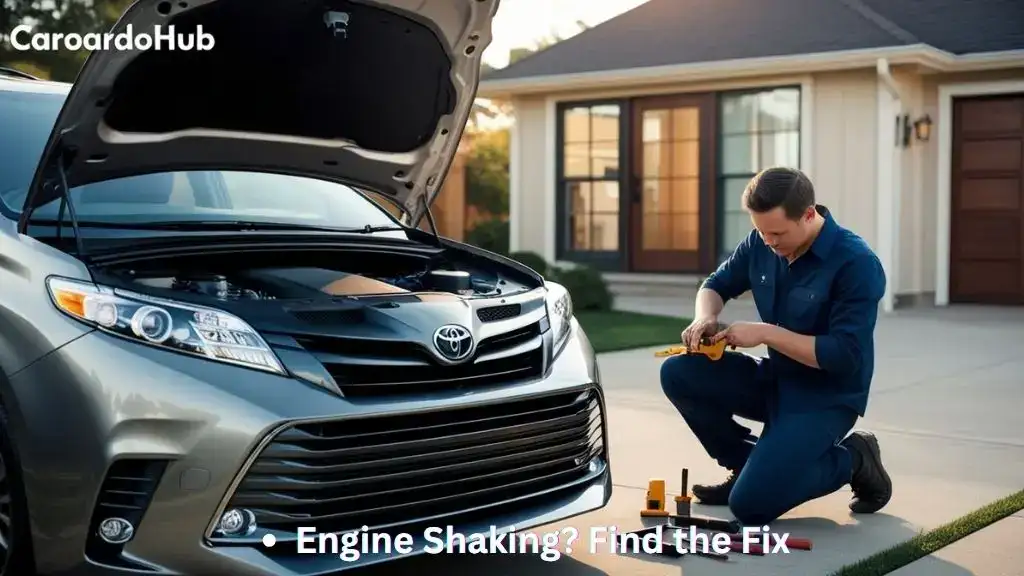
A Sienna owner checking engine vibration problems under the hood.
Common Causes Of Engine Shaking
Engine shaking in your Toyota Sienna can feel alarming. It usually signals a problem that affects combustion, engine balance, or how the engine is mounted to the chassis. Below are the most common causes I see, with extra context to help you diagnose and explain fixes.
Ignition System Issues
The ignition system creates the spark. When ignition coils, spark plug wires, or related parts fail you get misfires. Misfires make one or more cylinders underperform, so the engine runs unevenly and shakes. Common ignition-related items to check:
- Faulty ignition coils (coil-on-plug failures).
- Damaged spark plug wires (where applicable).
- Worn or fouled spark plugs (see the spark plug section below).
Regular inspection of coils and plugs prevents rough running and misfires.
Fuel System Problems
Fuel delivery problems cause lean or rich conditions and uneven combustion. Typical culprits:
- Dirty or clogged fuel injectors.
- Clogged fuel filter.
- Weak fuel pump or low fuel pressure.
- Contaminated fuel.
When injectors spray unevenly, cylinders run at different power levels. That creates vibration and poor throttle response. Cleaning injectors or restoring fuel pressure often restores smooth running.
Engine Mount Wear
Engine mounts hold the engine steady. Over time the rubber or hydraulic mounts crack, separate, or leak. Worn mounts let the engine move more under load. The result is strong, noticeable vibration transmitted to the cabin — especially during acceleration or when revving the engine.
Exhaust System Blockages
A blocked exhaust — commonly a clogged catalytic converter — raises back pressure. That reduces engine breathing and can cause misfires or poor idle, producing shaking. A partially blocked exhaust often produces heat and performance loss before it noticeably vibrates.
Dirty Or Faulty Spark Plugs
Spark plugs ignite the air/fuel mix. Old or fouled plugs make weak sparks and misfires. Clean or replace plugs per the recommended interval. For reference see: https://carorahub.com/when-to-replace-spark-plugs-in-a-toyota-prius/ — the guidance is useful across Toyota engines.
Other Possible Causes (added for completeness)
- Vacuum leaks (intake manifold gaskets, cracked hoses) causing lean idle and rough running.
- Faulty sensors (MAF, MAP, or oxygen sensors) that lead to incorrect fuel trims.
- Timing or compression issues (worn timing components or low compression) — less common but serious.
- Transmission or driveline problems (if vibration comes from undercarriage rather than directly from engine).
- Harmonic balancer or accessory pulley failure.
Symptoms Linked To Engine Shaking
Recognizing the pattern of symptoms helps pinpoint the cause. Here are common signs and what they usually mean.
Rough Idling
If the Sienna shakes while parked or at stop lights, the problem often involves misfires, vacuum leaks, or fuel delivery issues. The engine may feel like it wants to stall and RPMs may fluctuate.
Acceleration Vibrations
If shaking increases when you press the gas, think engine mounts, misfires under load, or fuel delivery problems. Mount failures become obvious under torque. Fuel or ignition problems often get worse at higher throttle.
Unusual Engine Noises
Knocking, pinging, or rattling alongside vibration can indicate:
- Pre-ignition/detonation (bad fuel, timing issues).
- Loose components or failing accessories.
- Worn internal parts (valvetrain issues).
Never ignore abnormal noises — they often indicate a problem that will worsen quickly.
Dashboard Warning Lights
A lit Check Engine Light (CEL) is a key clue. The car’s ECU stores Diagnostic Trouble Codes (DTCs) that point to misfires, sensor faults, or emissions issues. Other lights—oil, temperature, traction—can show related problems. Always read codes with an OBD-II scanner.
How to Tell Where the Vibration Comes From (new)
- If the steering wheel vibrates, check tires, wheels, and front-end components.
- If the seat or body vibrates but steering is steady, engine or transmission mounts are likely.
- If vibration is present only at certain RPM ranges, note those RPMs — they help narrow down misfire patterns or harmonic issues.
Quick Fixes To Stop Engine Shaking
Start with the basics. These are practical checks and fixes I recommend before booking expensive repairs. They are safe and effective for many common causes.
Checking And Replacing Spark Plugs
Inspect plugs for carbon build-up, oil fouling, or worn electrodes. Replace with the correct heat-range and gap for your model. Fresh plugs often stop misfires and stabilize idle. Use OEM or high-quality replacements.
Cleaning Fuel Injectors
Use a quality fuel injector cleaner and follow the product instructions. For stubborn deposits, a professional ultrasonic cleaning or an in-rail cleaning can restore spray patterns. Clean injectors produce even combustion across cylinders.
Inspecting Engine Mounts
Look for cracked rubber or oil-soaked mounts (oil can degrade rubber). With the engine idling in neutral (or safely supported), watch for excessive engine movement while revving slightly. Replace mounts showing separation or excessive flex.
Addressing Vacuum Leaks
Listen for hissing near the intake manifold and vacuum hoses. Spray soapy water or carb cleaner around suspected spots while the engine idles (exercise caution and follow safety precautions). Replace brittle hoses and faulty gaskets.
Using Fuel System Cleaners
Add a recommended fuel system cleaner to the tank to remove varnish and deposits. Regular use (per product instructions) helps keep injectors, intake valves, and fuel rails cleaner and can improve drivability.
Step-by-Step DIY Diagnostic Checklist (new)
- Scan for engine codes with an OBD-II tool; record codes.
- Check oil level and look for contamination.
- Inspect and, if needed, replace spark plugs.
- Visually inspect ignition coils and connectors; swap coils to isolate a bad one.
- Check air filter and clean MAF sensor if dirty.
- Listen for vacuum leaks; inspect hoses.
- Inspect engine mounts for cracks or fluid leaks.
- If misfire codes persist, consider fuel pressure and injector flow tests.
Tools You’ll Need (new)
- OBD-II scanner (code reader).
- Multimeter (for coil and sensor checks).
- Fuel pressure gauge (if testing pressure).
- Vacuum gauge or hand-held smoke tester (to find leaks).
- Basic hand tools and socket set.
- Safety gloves and eyewear.
When To Seek Professional Help
Some problems need a trained technician and shop-level tools. Don’t delay on these signs.
Persistent Vibrations After Fixes
If vibrations continue after the basic checks above, the root cause may be internal (valves, piston rings, compression) or transmission-related. These require professional diagnosis.
Warning Light Diagnoses
A steady or flashing Check Engine Light with stored misfire codes demands a mechanic’s attention. Flashing CELs indicate active misfires that can damage the catalytic converter.
Complex Engine Repair Needs
Internal engine issues, timing-chain/timing-belt failures, severe fuel-system faults, or exhaust restrictions (like a catastrophic catalytic converter blockage) require mechanics with specialized tools. Trust a certified technician for these repairs.
What to Expect at the Shop (new)
- The tech will connect an OBD-II scanner and read live data.
- Compression or leak-down tests may be done for suspected internal engine damage.
- Fuel pressure and injector balance tests reveal delivery problems.
- A road test and visual inspection verify mount issues and drivability.
Questions to Ask Your Mechanic (new)
- What trouble codes are stored and what do they mean?
- Which tests were run to identify the issue?
- Can I see the faulty parts and a written estimate?
- How long will the repair take and what warranty applies?
Preventing Future Engine Shaking
Small maintenance steps go a long way. I follow a few simple habits that keep Siennas running smoothly.
Regular Maintenance Schedule
Follow the Toyota Sienna’s recommended maintenance schedule closely. Change engine oil, oil filter, air filter, and fuel filter on schedule. Inspect ignition components and belts. Keeping service up to date is the best prevention.
(See: https://carorahub.com/how-to-reset-maintenance-light-on-toyota-sienna/ for maintenance reset and schedule tips.)
Using Quality Fuel
Use good-quality fuel from reputable stations. Poor fuel or contaminated fuel can cause knocking and deposits. For older engines, consider occasional higher-octane or a stabilizer if recommended.
Timely Replacement Of Engine Components
Replace worn parts—spark plugs, coils, hoses, mounts—before they fail. Delaying replacement can convert a small issue into a costly repair.
Routine Engine Inspections
Visually inspect for leaks, cracked hoses, loose clamps, or oil around mounts. A quick monthly check under the hood can catch problems early.
Maintenance Checklist (new)
- Oil & filter: every 5k–10k miles per your oil type and driving.
- Spark plugs: replace per the owner’s manual (or sooner if misfiring).
- Air filter: inspect at every oil change.
- Fuel system cleaner: every few tanks if driving under dusty or stop-and-go conditions.
- Engine mounts: inspect after 60k miles or when vibration starts.
Credit: www.youtube.com
Frequently Asked Questions
Why Is My Toyota Sienna Engine Shaking While Idling?
Engine shaking at idle often indicates misfiring or dirty spark plugs. It may also be caused by vacuum leaks or worn engine mounts. Regular maintenance and timely inspections help identify and fix these issues quickly.
Can A Faulty Ignition Coil Cause Engine Shaking?
Yes. A faulty ignition coil disrupts spark timing and causes misfires. Replacing the defective coil usually resolves shaking and restores smooth engine performance.
Does Low Engine Oil Cause Toyota Sienna To Shake?
Low engine oil can lead to increased friction and overheating. That may cause noise, rough running, and in severe cases, vibration. Check oil levels regularly and top up as needed.
How Do Dirty Fuel Injectors Affect Engine Shaking?
Dirty injectors deliver fuel unevenly. This causes some cylinders to run lean or misfire. Cleaning or replacing injectors improves fuel flow and significantly reduces shaking.
Bottom Line
A shaking engine in your Toyota Sienna is a warning. Don’t ignore it. In my experience, many causes are simple and inexpensive to fix if caught early: plugs, coils, injectors, vacuum leaks, or mounts. Use an OBD-II scanner first to pull codes. Then follow the checklist above. If the problem persists, get a professional diagnosis.
Trust regular maintenance and quick action. Your Sienna will thank you with smoother drives and fewer costly repairs. Don’t wait — act on signs of engine shaking today.

Hello, I’m Norman. I work as a car researcher. I am the voice behind CaroraHub. I have over 15 years of experience. I give simple and useful car advice. I help with car care, cleaning, and small repairs. My goal is to help you keep your car healthy. I want car care to be easy and cheap for you. You can trust my tips to keep your car working well for a long time.