For U.S. drivers comparing used hybrids, the key difference is how each car connects its gas engine to the wheels. The Toyota Prius uses a power-split system that can blend engine and electric power. The 2019–2022 Honda Insight uses two electric motors and can also connect its engine directly to the wheels during some highway driving.
Both systems recover energy when slowing down and can run on electric power in certain conditions. The Prius has the longer-running hybrid design and is still sold in the U.S.; the Insight’s last U.S. model year was 2022. The right choice depends less on a claim that one system is always better and more on the model year, trim, driving conditions, and the car’s condition.
The key difference: power-split versus two-motor hybrid
The Prius and Insight both use a gasoline engine, electric motors, a battery, and regenerative braking. Their main difference is how they send power to the wheels.
| Feature | Toyota Prius | Honda Insight, 2019–2022 |
|---|---|---|
| Main hybrid layout | Power-split hybrid | Two-motor hybrid |
| Engine’s role | Can help drive the wheels while also working with the generator and motor | Often generates electricity; can connect to the wheels directly in some driving conditions |
| Electric motor’s role | Helps propel the car and recovers energy | Usually provides wheel power in electric and hybrid operation |
| Transmission description | Electronic power-split system, often called an e-CVT | Multi-mode hybrid system; not a conventional belt-and-pulley CVT |
| U.S. model status | Still sold; system details vary by model year | Discontinued after the 2022 model year |
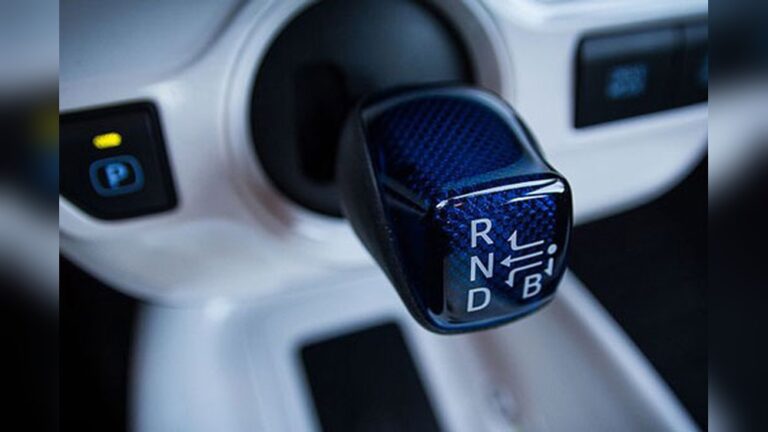
An e-CVT is an electronically controlled system that varies the relationship between engine speed and wheel speed. It may feel like a continuously variable transmission, but it is not the same as a conventional belt-and-pulley CVT.
Toyota describes its hybrid system as using a planetary power-split device to link the engine and motor-generators. Honda’s two-motor system, called i-MMD in this generation, uses a traction motor and a generator motor. Honda later used the name e:HEV for related hybrid technology. The exact parts and control logic vary by model year, so check the manual for the specific car.
How the Toyota Prius hybrid system works
The Prius uses a power-split device to manage power from its gasoline engine and electric motor-generators. This lets the car use electric power, engine power, or both, depending on speed and demand.
One motor-generator can start the engine and generate electricity. A second motor helps turn the wheels and can act as a generator when the car slows down. The planetary gearset links these parts, so the system can change how engine power is divided without a conventional set of fixed gears.
In everyday driving, the system may:
- Use electric power at low speeds or when demand is light.
- Start the engine when more power is needed or conditions call for it.
- Blend engine and electric power during acceleration.
- Recover some energy during braking or coasting and store it in the hybrid battery.
The driver does not need to choose each mode. The car’s control system decides how to use the engine, motors, and battery. Toyota’s hybrid technology overview explains the basic power-split approach; equipment and tuning differ across Prius generations and trims. Toyota hybrid technology
What this means on the road: The Prius can adjust the balance of engine and electric power across a wide range of driving. Engine speed may not rise and fall in the same way as it does in a traditional geared automatic, which some drivers notice as a steady or “rubber-band” sound during hard acceleration. That sound alone does not show that something is wrong.

How the 2019–2022 Honda Insight hybrid system works
The third-generation Insight uses two electric motors and a gasoline engine. In many situations, the traction motor turns the wheels while the engine runs a generator to make electricity. When conditions suit it, a clutch can connect the engine to the wheels for direct drive.
Honda describes the system as using distinct operating modes. In broad terms, the car can drive on electric power, use the engine to generate electricity for the motor, or use the engine’s direct connection to the wheels. The car selects the mode; the driver does not need to shift between them.
This design can make the Insight feel much like an electric car during some acceleration, even though it still uses gasoline and is not a plug-in hybrid. The engine may run at a speed that does not match the car’s road speed, particularly when it is generating electricity. That can be normal.
Honda’s owner information is the best place to confirm how a particular year’s hybrid system works and what its warning lights mean. Honda owner information for the 2022 Insight
What this means on the road: The Insight often relies on its traction motor to move the car, while the engine’s role can shift between making electricity and directly helping propel the car. The arrangement differs from the Prius power-split design, but both systems manage their parts automatically to balance power and efficiency.
Read More: Toyota Prius Vs Honda Civic Hybrid Battery Reliability
A model-year warning: “Insight hybrid” does not mean one system
The Insight name covers more than one hybrid design. A comparison is useful only when it identifies the generation.
- First-generation Insight (2000–2006): Used Honda’s Integrated Motor Assist, or IMA, system. The electric motor assisted the gasoline engine; it was not the same two-motor layout used in the 2019–2022 Insight.
- Second-generation Insight (2010–2014): Also used an IMA-based system, with different hardware from the first generation.
- Third-generation Insight (2019–2022): Used Honda’s two-motor i-MMD hybrid system.
The Prius has also changed across generations. Its core power-split idea has continued, but engines, batteries, motors, controls, and available all-wheel drive have varied. Do not use a description of a 2023 Prius to assume that every used Prius has the same battery chemistry or equipment.
When shopping, confirm the model year, trim, drivetrain, and service history. A comparison between a 2020 Insight and a 2023 Prius, for example, involves both different hybrid systems and different model years. Their fuel economy, features, and condition may differ for reasons beyond the system layout.
Which system is more fuel-efficient?
Neither system guarantees better real-world fuel economy in every situation. Compare EPA ratings for the same model year and relevant trim, then consider how and where you drive.
For example, the EPA’s 2022 listings show that some Prius and Insight trims have similar combined ratings, while other trims differ. A Prius trim designed for higher fuel economy may not be comparable to a more heavily equipped Insight Touring. Ratings also vary with drivetrain and equipment. Check the exact vehicle on FuelEconomy.gov rather than relying on a single number for the model name.
Your results can also change with:
- Driving pattern: Short trips, frequent cold starts, and high speeds can reduce fuel economy.
- Weather and climate controls: Cold weather and heavy heating or air-conditioning use can affect hybrid operation.
- Tires and maintenance: Tire pressure, alignment, and the car’s general condition matter.
- Battery condition: A warning light or unusual change in performance calls for diagnosis, not guesswork.
A helpful comparison is to use the EPA rating as a common baseline, then track fuel use over several fill-ups. One trip or one dashboard reading is not enough to establish how a used car will perform for you.
Which one should you choose?
Choose based on your driving needs and the exact car, not on the hybrid layout alone.
The Prius may suit you better if:
- You want a model that is still sold new in the U.S.
- You are comparing several Prius model years or trims.
- You want to consider available all-wheel-drive versions, where offered.
- You value the flexibility of Toyota’s power-split approach.
The 2019–2022 Insight may suit you better if:
- You are shopping for a used sedan from those model years.
- You prefer its driving feel and find a well-maintained example.
- Its price, condition, equipment, and history compare favorably with the Prius you are considering.
Treat fuel economy ratings as one part of the decision. A pre-purchase inspection, maintenance records, a clean title history, and a hybrid-system diagnostic can matter more than small differences in EPA estimates. For either car, ask a qualified shop familiar with hybrids to inspect the vehicle if its history is unclear or warning lights are on.
Battery life, maintenance, and repair questions
A hybrid battery is designed for repeated charging and discharging, but its condition depends on age, use, climate, and the specific vehicle. There is no sound basis for declaring every Prius battery or every Insight battery likely to fail at a fixed mileage.
Before buying, check the car’s maintenance records and have warning lights investigated. Ask the seller whether any hybrid-system work has been done, and request receipts. If a battery or inverter repair is needed, get a written diagnosis and quote from a qualified hybrid repair shop before deciding.
Warranty terms can depend on the model year, original sale date, location, and applicable emissions rules. Do not assume that a used car has a particular amount of battery warranty left. Confirm coverage with the manufacturer using the vehicle identification number (VIN) and the warranty booklet for that vehicle.
The owner’s manual can help explain normal displays and warning messages, but it is not a substitute for diagnosis. Do not touch high-voltage cables or components. If the car shows a hybrid-system warning, follow the manual’s instructions and seek qualified service.

Key takeaways
- The Prius uses a power-split hybrid system; the 2019–2022 Insight uses Honda’s two-motor i-MMD system.
- Both can use electric power, gasoline power, or a combination, and both recover some energy while slowing down.
- The Insight name spans multiple generations, so verify the model year before comparing systems.
- Fuel economy depends on trim and driving conditions. Compare exact EPA listings and the actual car’s condition.
- Have a used hybrid inspected by a qualified shop, and confirm any remaining warranty by VIN.
FAQs About Toyota Prius Vs Honda Insight Hybrid System
Is the Honda Insight a full hybrid or a mild hybrid?
The 2019–2022 Insight is a full hybrid: its electric motor can propel the car, and it does not need to be plugged in. Older Insights used different IMA systems, so check the model year before applying that description.
Does the Prius use a regular automatic transmission?
The Prius uses an electronically controlled power-split system, commonly described as an e-CVT. It does not use the same belt-and-pulley arrangement as a conventional CVT, even though the driving feel can be similar.
Can a Prius or Insight drive using only electricity?
Both can use electric power in some conditions, but neither is a plug-in hybrid in the model years discussed here. Electric-only operation depends on factors such as battery charge, speed, temperature, and power demand.
Is the Prius always more fuel-efficient than the Insight?
No. EPA ratings vary by year, trim, and equipment, and real-world results depend on driving conditions. Compare the specific versions you are considering on FuelEconomy.gov.
Is the Insight still sold new in the United States?
No. The Insight’s last U.S. model year was 2022. The Prius remains available, but its features and hybrid-system details vary by model year and trim.
Conclusion
The Prius and the 2019–2022 Insight take different engineering routes to hybrid driving. Toyota splits power through a planetary gearset, while Honda’s two-motor system often uses an electric motor to drive the wheels and can connect the engine directly at times.
For a U.S. buyer, the practical next step is to compare the exact model years and trims, check EPA ratings, and inspect the specific vehicle’s service and hybrid-system history. A healthy, well-maintained car is a better bet than choosing by system name alone.

I am Julian Drive, an automotive enthusiast and repair expert with over 7 years of hands-on experience in vehicle maintenance. At Carora Hub, I simplify complex car issues into easy-to-follow DIY guides to help drivers stay safe and save on repair costs.