Your Toyota Prius runs smoothly because every part works just right—especially your brakes. But have you ever thought about the brake fluid?
Brake fluid is a small item that plays a big role in your safety. If the fluid level is low or the fluid is old, your brakes can feel soft, take longer to stop, or trigger warning lights. I check my Prius regularly. It takes minutes and prevents bigger problems.
Below I walk you through how to check the brake fluid in a Toyota Prius step-by-step. I share what to look for, which fluid to use, and when to call a pro. Read on to keep your hybrid’s braking system healthy and reliable every time you drive.
Locate The Brake Fluid Reservoir
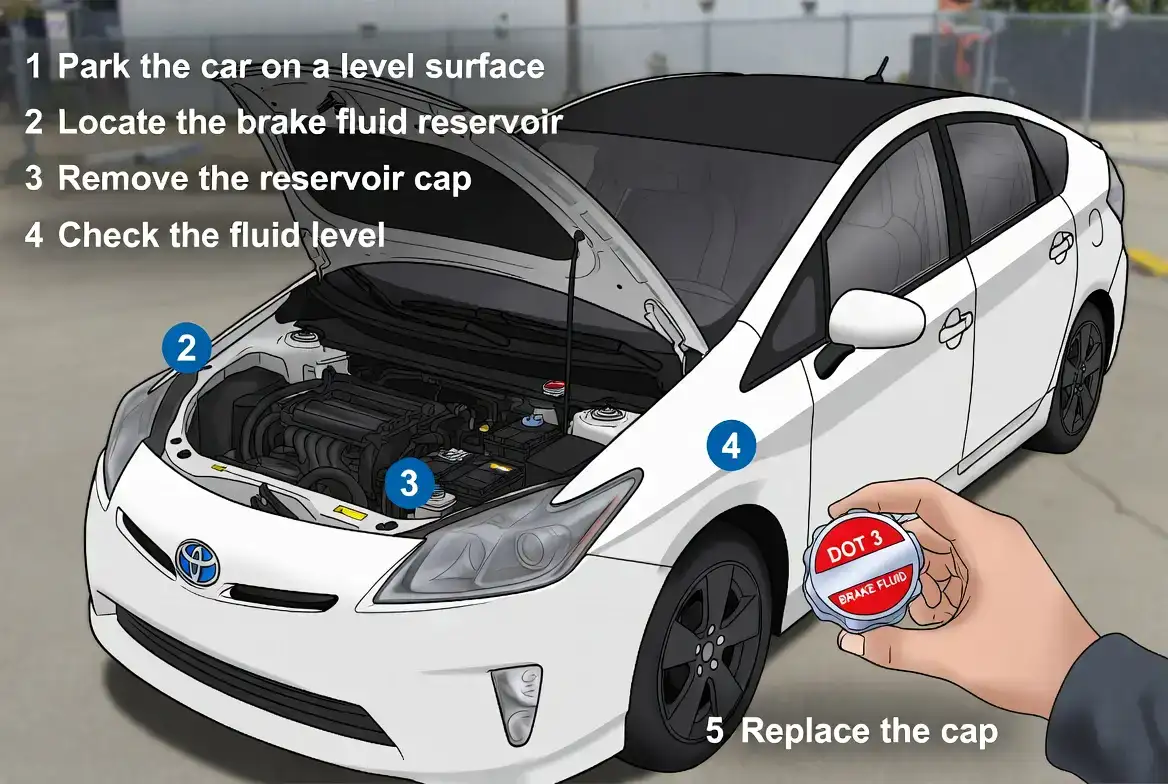
Locating the brake fluid reservoir in a Toyota Prius is the first step to check brake fluid levels. This component stores the brake fluid that makes your brakes work. Knowing its location saves time and helps prevent brake problems before they get worse.
Open The Hood Safely
Stand at the front of your Prius. Find the hood release lever inside the cabin near the driver’s side. Pull it to unlock the hood. Walk to the front of the car. Lift the hood slightly and find the safety catch. Press or lift the catch to open the hood fully. Use the hood prop rod or the built-in struts to keep the hood open. Make sure the hood is secure before you lean in.
Identify The Reservoir
Look near the back of the engine bay, close to the windshield on the driver’s side. The brake fluid reservoir is a small, translucent plastic container. It usually has a round cap labeled “Brake Fluid.” You can see the fluid level through the walls. The level should sit between the “MIN” and “MAX” marks. Don’t open the cap unless you need to add fluid. Always check the reservoir in a clean, dry area to avoid contamination.
Check The Fluid Level
Checking the brake fluid level in your Toyota Prius is a quick way to keep your braking system in good shape. Brake fluid transmits the force from the pedal to the brakes. Low or contaminated fluid reduces stopping power and can damage ABS components. The whole check takes a few minutes and no special tools.
Read The Minimum And Maximum Marks
With the hood open, locate the reservoir and read the side marks. You will see “MIN” and “MAX” lines on the translucent plastic. The fluid level should sit between those lines when the car is on level ground. If it is below “MIN,” add fluid or inspect for leaks. Do not overfill above “MAX.” Overfilling can cause pressure problems in the brake system.
Inspect The Fluid Clarity
Look at the color through the reservoir. Fresh brake fluid is clear to light yellow. Dark, brown, or cloudy fluid means it is oxidized or contaminated. Dirty fluid holds moisture and can reduce boiling point. That raises the chance of brake fade, especially during hard braking or towing. If the fluid looks dark or cloudy, plan a brake fluid flush soon.
Read More: Best Brake Fluids For Toyota Prius
Add Brake Fluid If Needed
Only add brake fluid if the level is below the “MIN” mark. If the level drops often, find and fix the leak. Adding fluid is simple, but you must use the right fluid and keep the system clean.
Choose The Correct Fluid Type
Brake fluids differ by spec. Most Toyota Prius models use DOT 3 or DOT 4. Check your owner’s manual to confirm the exact spec for your model and year. I always buy fresh, sealed brake fluid from a reputable brand. Using the wrong fluid or contaminated fluid can damage seals and ABS components.
Pour Fluid Carefully
Open the reservoir cap slowly. Brake fluid will damage paint on contact. Use a clean funnel and pour in small amounts. Stop when the level reaches “MAX.” Wipe any spills immediately with a damp cloth. Tighten the cap securely. Avoid introducing dirt or water into the reservoir—these reduce brake performance and invite corrosion.
Close The Hood Securely
Closing the hood properly is the last step. A hood that is not latched can open while driving. That is dangerous and can damage the car. Make sure the hood locks fully before you drive away.
Lower The Hood Gently
Lower the hood slowly. Stop when it is about a foot above the latch. Let it drop the rest of the way. Dropping it from a height can bend the latch or dent the hood.
Press Down Firmly On The Hood
Press the front center of the hood until you hear a click. That click means the latch engaged. If you don’t hear it, repeat the step or inspect the latch for obstructions.
Test The Hood For Security
Lift the hood gently to confirm it stays locked. It should not open unless you release the interior latch. If it moves, close and latch it again firmly.
Tips For Brake Fluid Maintenance
Keeping brake fluid in good condition protects your brakes and ABS. These practical tips help you maintain fluid health and spot problems early.
Check Regularly
Make it a habit to check the brake fluid every few months. I check mine at oil-change intervals. Regular checks catch drops in level before they become dangerous.
Watch For Leaks
Brake leaks will lower fluid and reduce stopping power. Check around the wheels, under the vehicle, and near brake lines for drips or stains. Also watch the brake pedal. A soft or sinking pedal can indicate a leak or air in the system. Fix leaks immediately—brake system repairs affect safety and cost more if delayed.
Replace Fluid Periodically
Brake fluid absorbs moisture over time. That lowers boiling point and shortens brake life. Toyota recommends changing brake fluid about every two years. If you drive in wet or coastal areas, consider changing it sooner. A full brake fluid flush and bleed keeps the system dry and responsive.
When to Get Professional Help
If you find dark fluid, repeated low levels, or a soft pedal, get a mechanic to inspect the system. Problems with the master cylinder, ABS unit, or brake lines need specialized tools and training. I recommend calling a trusted shop if you are unsure. Safety is not the place to guess.
Common Brake Fluid Problems and How They Affect Your Prius
- Contamination: Moisture or dirt lowers performance and causes corrosion.
- Air in the lines: Causes a spongy pedal and poor braking force.
- Leaks: Lead to sudden fluid loss and reduced braking power.
- Old fluid: Oxidized fluid has a lower boiling point and reduces effectiveness in heavy use.

Credit: www.youtube.com
Conclusion
Checking brake fluid in your Toyota Prius keeps you safer on the road. The check is fast and requires no special gear. Low or dirty fluid can cause serious braking issues. Regular checks help you spot leaks, damaged parts, or worn fluid before they become costly repairs.
Keep the reservoir between the “MIN” and “MAX” marks. Use the correct DOT 3 or DOT 4 fluid for your model. If things seem off, have a professional inspect the system. A small bit of attention now keeps your brakes reliable and gives you peace of mind when you drive.
FAQs Of How to Check Brake Fluid Levels in a Toyota Prius
How Often Should I Check Brake Fluid In A Toyota Prius?
Where Is The Brake Fluid Reservoir Located In A Prius?
What Type Of Brake Fluid Does A Toyota Prius Use?
How Do I Know If Brake Fluid Is Low In My Prius?

Hello, I’m Norman. I work as a car researcher. I am the voice behind CaroraHub. I have over 15 years of experience. I give simple and useful car advice. I help with car care, cleaning, and small repairs. My goal is to help you keep your car healthy. I want car care to be easy and cheap for you. You can trust my tips to keep your car working well for a long time.