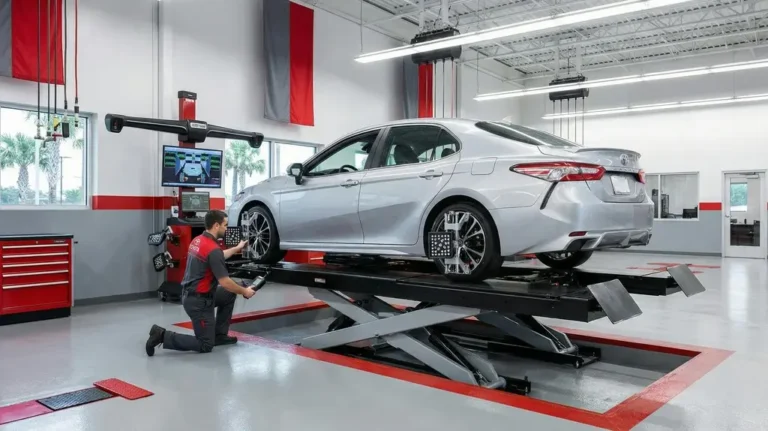
You can test Toyota Prius inverter cooling system components in about five minutes by switching the car to “READY” mode, removing the inverter reservoir cap, and looking for strong liquid movement inside the tank. If the pink fluid churns like water at a gentle boil, your dedicated electric pump is moving coolant through the power electronics. If the liquid sits flat and still, the pump has stopped working or lost power, putting the expensive inverter assembly at immediate risk of overheating.
How the Inverter Cooling System Works
The hybrid system relies on two separate cooling loops that never share fluid: one loop cools the gasoline engine and transaxle, while a dedicated secondary loop cools the electric inverter.
An electric water pump pushes pink fluid from the small reservoir through aluminum cooling plates beneath the high-voltage transistors, then out across a dedicated section of the front radiator. This electric pump runs continuously whenever the car sits in “READY” mode, completely independent of the gas engine. This setup protects the hybrid power converter from high thermal stress during heavy regeneration and hard acceleration.
| Cooling Loop | Primary Purpose | Pump Type | Normal Operating Trigger |
|---|---|---|---|
| Inverter Loop | Cools inverter, converter, and transaxle | 12-volt dedicated electric pump | Runs constantly in READY mode |
| Engine Loop | Cools gasoline combustion block | Belt-driven or mechanical electric | Cycles with engine block temperature |
Signs of a Failing Inverter Cooling System
When circulation drops, heat builds up rapidly in the hybrid electronics during normal street driving. Watch for digital warnings on the dashboard and strange sounds coming from the driver side of the engine bay.
Common Warning Lights and Error Codes
A failing loop usually triggers the red triangle master warning light on the dash, often joined by the check engine icon. Diagnostic trouble code P0A93 (Inverter Cooling System Performance) is the most frequent code you’ll pull with an OBDII scanner. If the car detects a thermal spike, it cuts hybrid power to protect the computer board, dropping the car into a low-speed “limp home” mode.
Identifying Unusual Pump Noises
Under the front hood, an electric inverter pump should emit a faint, steady hum when running. A dying unit often produces an audible buzzing, grinding, or high-pitched squeal near the driver-side headlight. If you place a clean wooden dowel or a mechanic stethoscope against the pump body with the vehicle in READY mode, rough vibrations indicate internal bearing failure.
Visual Inspection of the Cooling Loop
Before touching any electrical plugs or hoses, perform a quick visual inspection of the exterior parts. This step spots physical leaks before you run operational tests.
Checking Coolant Levels in the Reservoir
Locate the small translucent tank labeled “Hybrid” or “Inverter” mounted near the passenger-side strut tower. The pink liquid must sit squarely between the molded “LOW” and “FULL” lines when the car is cold. Never open this cap when the vehicle is hot, because built-up pressure can spray hot liquid onto your skin.
Inspecting Hoses for Leaks and Cracks
Trace the black rubber hoses running from the bottom of the reservoir down toward the radiator and over to the aluminum inverter block. Look for chalky, dried pink residue around hose clamps, which signals slow weeping. If you squeeze the cold hoses, they should feel firm and pliable rather than brittle, swollen, or soft.
Testing the Inverter Water Pump Flow
Flow verification is the fastest way to confirm whether the electric motor is physically turning the internal impeller.
Observing Fluid Turbulence in the Reservoir
Switch your Prius to READY mode and leave it parked. Unthread the cap on the inverter tank and shine a bright flashlight straight down into the fluid.
You should see clear, rolling surface turbulence that looks like a miniature whirlpool or gentle bubbling. If the surface is as calm as a mirror, the pump isn’t circulating fluid. If fluid moves strongly, the pump passes the basic mechanical test; if the liquid stays flat, move immediately to electrical diagnostics.
Using an OBDII Scanner for Real-Time Data
Plug a scan tool into the port under your steering column to read live hybrid data blocks. Monitor the parameter for “Inverter Temperature” while the car runs.
Under light loads, inverter temperature typically stays well below 140°F (60°C). If the reading climbs steadily past 175°F (80°C) during a short idle period, circulation has stopped. For safety reasons, official federal defect investigations conducted by the National Highway Traffic Safety Administration documented that sudden pump failures in these hybrid systems can cause the car to shut down without warning while driving.
Electrical Testing of the Pump Circuit
If the fluid is completely still, you must find out whether the electric motor burned out or simply lost its 12-volt power feed.
Checking Fuses and Relays
Open the main black fuse box under the hood on the driver side. Locate the fuse marked “INV W/P” or similar and the inverter water pump relay. Pull the AM2 fuse out using the plastic clip stored inside the box lid. Inspect the clear center window of the fuse; if the metal strip inside is broken or charred black, a short circuit blew the fuse.
Measuring Voltage at the Pump Connector
If the fuse is healthy, test the harness connection directly:
- Turn the ignition off and remove the hybrid key fob from the dash.
- Disconnect the plastic two-wire harness clipped to the side of the electric inverter pump down beside the passenger-side headlamp.
- Set a digital multimeter to measure DC Volts.
- Insert the red meter probe into the power pin of the wiring harness and touch the black probe to bare chassis metal.
- Have an assistant turn the car to READY mode.
If your meter displays a reading indicating a power issue, the wiring harness delivers good power, meaning the pump motor is internally dead and must be swapped by a technician. If the meter reads zero, look for damaged wiring, a faulty relay, or an open circuit upstream.

Common Causes of Cooling System Failure
Electric inverter pumps simply wear out over time. The internal electric motor brushes break down, or the wet-rotor shaft binds up after thousands of hours of operation.
Air pockets are another common culprit. When people change hybrid fluid without bleeding the air, trapped bubbles stop circulation entirely. This diagnostic routine isn’t for owners who can’t safely work around moving engine components or high-voltage lines. While the inverter pump runs on regular 12-volt battery power, it sits inches away from bright orange cables that carry dangerous high voltage.
Best Practices for Maintaining Hybrid Cooling Systems
Inspect the fluid level at every oil change, and check for that telltale swirling inside the tank regularly. Catching a sluggish pump early prevents permanent damage to the expensive inverter board.
Trade-offs exist between quick repairs and long-term reliability. Aftermarket replacement pumps often cost half as much as original manufacturer units, but cheap impellers may fail within a single year of hard driving. Spending more on an original-equipment pump avoids repetitive roadside breakdowns. Always take your time when refilling the loop, using a clear vinyl bleed tube connected to the small service valve on the inverter casting to pull every air bubble out of the system.
FAQs About Test Toyota Prius Inverter Cooling System
Can I drive the car if the inverter pump fails?
No, you shouldn’t continue driving. Without active coolant flow, the power inverter can overheat and destroy its internal transistor modules within ten to fifteen minutes of city driving. Replacing a pump costs a fraction of the price of sourcing and installing an entire hybrid inverter assembly.
How often should the inverter coolant be replaced?
The factory maintenance schedule recommends changing the inverter fluid at 100,000 miles. However, this varies by model — check the label on your reservoir and your official owner manual for exact schedules. Severe driving in hot climates warrants earlier changes.
What type of coolant is required for the inverter loop?
You must use Toyota Super Long Life Coolant (SLLC) or an equivalent pre-diluted, non-silicate, phosphate-based organic acid technology (OAT) pink fluid. Never pour standard green glycol or plain tap water into the inverter loop, because conventional formulas leave mineral scale that blocks narrow internal heat-sink channels.
Does a failing pump cause a drop in fuel economy?
Yes, a sluggish pump often lowers fuel economy. When the inverter computer detects rising internal temperatures, it restricts high-voltage battery usage and forces the gas combustion engine to run constantly to propel the vehicle.
Final Thoughts
If you don’t see that steady flow, don’t drive the vehicle until you’ve replaced the pump. You shouldn’t risk damaging the inverter, which is an expensive repair. Check your local auto parts store for a replacement unit today, as it’s a straightforward fix you can handle in your own garage.

I am Julian Drive, an automotive enthusiast and repair expert with over 7 years of hands-on experience in vehicle maintenance. At Carora Hub, I simplify complex car issues into easy-to-follow DIY guides to help drivers stay safe and save on repair costs.