Comparing Toyota Prius regenerative braking vs regular braking shows that the Prius uses an electric motor to slow the car down and charge its battery, while standard brakes clamp metal parts together to create friction. Both systems stop the car safely, but they manage energy and mechanical wear in very different ways.
How Toyota Prius Regenerative Braking Works
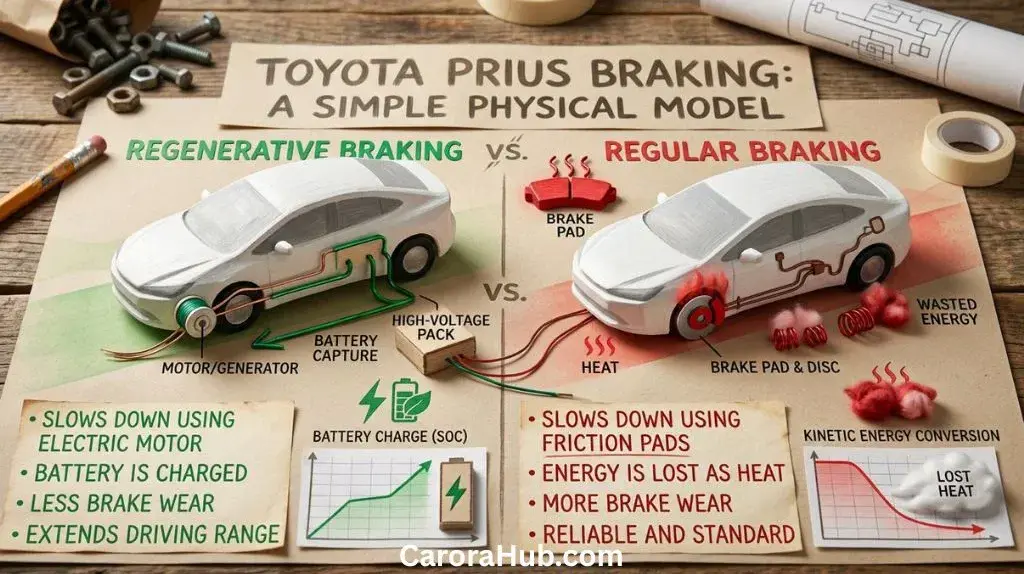
When you take your foot off the gas pedal or press the brake pedal, the car’s computer turns the primary electric motor (known as Motor Generator 2) into an electrical generator. The spinning wheels drive the generator, which pushes electricity back into the hybrid traction battery. This resistance slows the car down without relying immediately on the standard brake pads.
The driver feels a steady pulling force as the car captures motion that would otherwise disappear as waste heat.
Key Differences Between Regenerative and Friction Braking
Both mechanisms slow the wheels, but their internal parts, functions, and working conditions are entirely separate.
| Feature | Regenerative Braking | Friction Braking |
|---|---|---|
| Primary Mechanism | Electric motor resistance | Hydraulic calipers squeezing pads onto metal rotors |
| Energy Result | Turns motion into high-voltage electricity | Turns motion into lost heat |
| Wear on Brake Pads | None | Steady, physical thinning of the pad material |
| Performance at 5 mph | Shuts off; produces almost zero stopping power | Full stopping and holding power |
| Emergency Stops | Secondary support only | Primary, maximum stopping force via ABS |
Energy Recovery and Battery Charging
Standard car brakes take moving energy and turn it into hot air around your wheels. Regenerative brakes capture that energy instead, running it through an inverter and storing it in the hybrid battery. The main trade-off is pedal feel: stopping power feels smooth on long, gradual slows, but the pedal can feel slightly uneven or grabby when you brake over a sudden bump.
Mechanical Wear and Component Longevity
Because the electric motor does most of the light stopping, the physical pads and rotors touch far less often. This brings an honest limit: pad life varies by model and driving environment—check the label on your service records. A highway commuter’s pads might last past one hundred thousand miles, while a driver in a wet, salty region might need new rotors sooner simply due to rust from lack of use.
When the Vehicle Switches to Conventional Friction Brakes
A hybrid’s brake computer constantly blends electric slowing and hydraulic clamping so the stop feels continuous to your foot.
Low Speed and Emergency Stopping
Regenerative braking can’t bring a vehicle to a complete stop because an electric motor creates very little resistance at single-digit speeds. Below roughly seven miles per hour, the computer silently applies the hydraulic friction brakes to bring the car to a full rest. If you slam the pedal down for an emergency stop, the car skips full regeneration entirely and bites with the standard hydraulic pads to keep your stopping distance as short as possible.
Full Battery Capacity Scenarios
Your hybrid battery can’t take charge past its safe limit. If you drive down a long mountain pass and the dashboard battery meter fills up, the car stops regeneration to protect the cells from overcharging. The friction brakes then take on all the work. Here is an easy decision rule: if the battery is full on a steep downgrade, shift the transmission lever into B mode; if the battery has room to charge on flat roads, leave it in standard D mode. Shifting to B uses the gas engine’s compression to slow you down, which keeps your regular brakes from overheating.
Maximizing Efficiency Through Driving Habits
Aggressive driving destroys the benefits of a hybrid braking setup. Slamming the pedal hard forces the hydraulic calipers to engage, which dumps your kinetic energy as heat instead of storing it.
To collect the most power, brake early and gently over a longer distance. This simple habit keeps the stop inside the electric motor’s charge limits. This technique isn’t for aggressive highway drivers who tailgate and brake late, because those sudden stops always trigger the friction pads.
Common Maintenance Requirements for Hybrid Braking Systems
Hybrid brakes last a long time, but they aren’t maintenance-free. Because the pads touch the rotors less often, moisture and road salt don’t scrape off regularly. Rotors can pit or rust, and brake slide pins can seize inside the calipers if they sit dry.
The brake fluid also needs testing for water content. The electronic brake actuator on a Prius requires specialized diagnostic software to bleed air properly, so never attempt a traditional two-person pedal-pump brake bleed at home.
FAQs Of Toyota Prius Regenerative Braking vs Regular Braking
Does regenerative braking make a grinding noise?
No, the regenerative system produces a high-pitched electric whine or faint hum, not a grind. If you hear a grinding noise, rust has built up on the metal rotors, or your friction pads have worn down to their steel backing plates.
Can I drive a Prius if the regenerative system fails?
The car will still stop using its hydraulic friction brakes, but you shouldn’t drive it normally. The dashboard will show warning lights (ABS, Brake, and Triangle), stopping distances may feel longer, and you should take the vehicle directly to a certified hybrid repair shop.
Do hybrid brake pads last longer than standard car brakes?
Yes, they often last two to three times longer than standard car brakes. Because the electric generator absorbs most of the vehicle’s momentum during daily driving, the physical friction pads experience far less heat and friction.
How does cold weather affect regenerative braking performance?
A cold battery can’t accept high electric currents quickly. When you start driving in freezing temperatures, the Prius computer limits regeneration to protect the high-voltage pack, relying more heavily on the friction brakes until the battery warms up.
Final Thoughts
You’ll find that driving with a gentle touch helps you get the most out of your car’s hybrid system. Try easing off the gas pedal a bit earlier as you approach stop signs; it’s a simple way to save energy and keep your brake pads in great shape for years to come.

I am Julian Drive, an automotive enthusiast and repair expert with over 7 years of hands-on experience in vehicle maintenance. At Carora Hub, I simplify complex car issues into easy-to-follow DIY guides to help drivers stay safe and save on repair costs.