A Toyota Prius catalytic converter holds a high scrap price because its ceramic honeycomb carries more platinum, palladium and rhodium than the part in almost any gas-only car. The hybrid engine turns off often, so exhaust stays cooler, requiring extra precious metal inside to clean it. Thieves cut them off for those metals, not the steel shell.
Parts inside a Prius catalytic converter
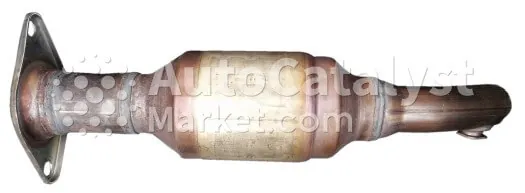
The converter is a sealed steel canister welded into your exhaust pipe. Inside it, a few specific parts handle all the chemical work. If one piece fails, the whole unit stops cleaning your exhaust properly. You can’t open it safely at home, but knowing what’s inside explains where the money sits.
| Part or input | What it does | What you notice when it goes wrong |
|---|---|---|
| Ceramic honeycomb | Holds the precious metal coating | Rattling noise under the car |
| Platinum | Oxidizes carbon monoxide gas | Reduced conversion efficiency |
| Palladium | Helps burn unburned fuel | Increased hydrocarbon emissions |
| Rhodium | Breaks down nitrogen oxides | Increased NOx emissions |
| Oxygen sensor | Reads exhaust for the computer | Rough idle or poor fuel economy |
| Steel outer shell | Protects inner parts from road debris | Visible rust or hanging exhaust pipe |
How a Prius catalytic converter cleans exhaust
-
Exhaust leaves the engine at 400–600°F (200–315°C) during normal driving. Because the Prius engine shuts off at stops, temperatures drop lower than in gas-only cars. This cooler flow is exactly why the factory packs more precious metal inside to keep the reaction going.
-
Gas enters the front pipe and hits the first oxygen sensor. That sensor reads how much oxygen is in the exhaust stream right now. It sends this reading to the engine computer several times per second so the fuel mix stays correct.
-
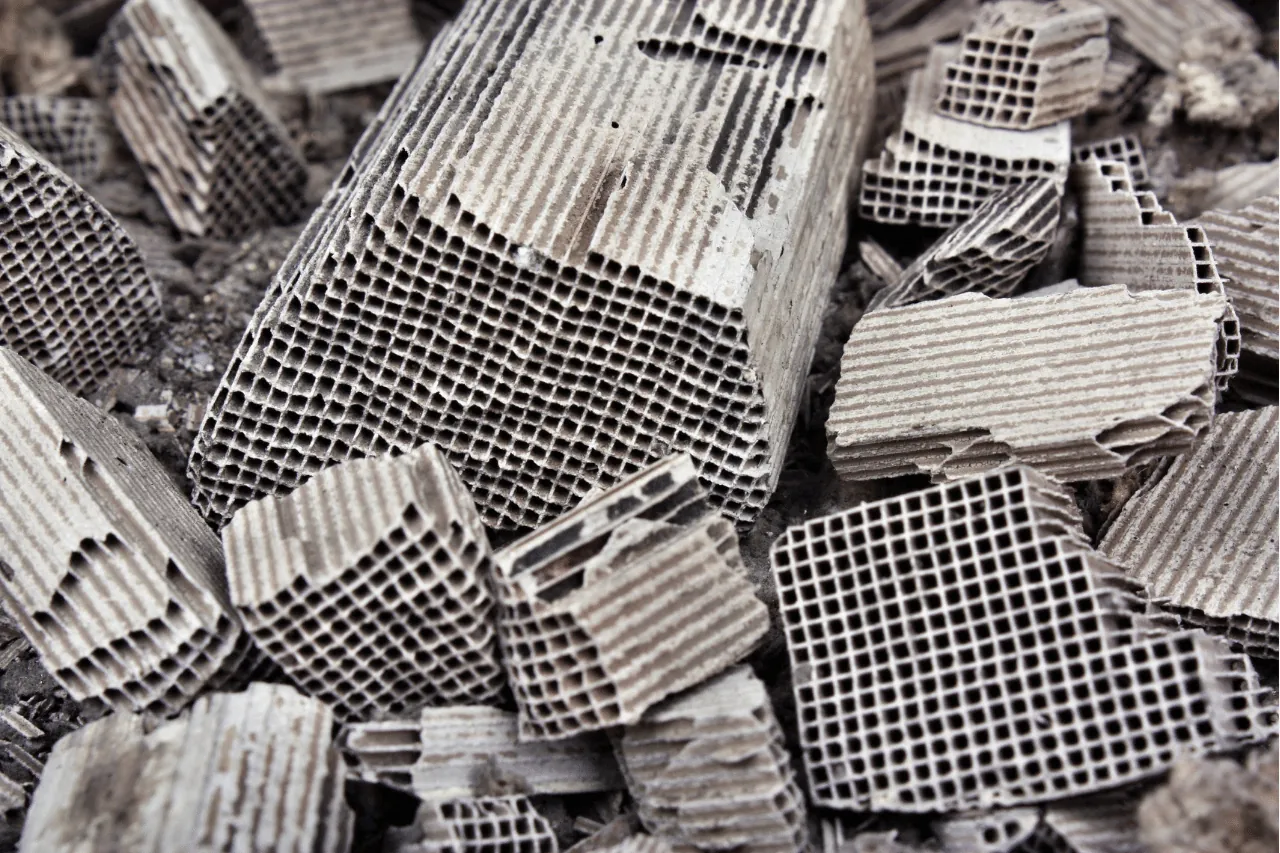
The exhaust flows into the ceramic honeycomb structure. This block has thousands of tiny channels coated in platinum, palladium and rhodium. The wide surface area forces the gas to touch as much metal as possible during its trip through the part.
-
Carbon monoxide and leftover fuel hit the platinum and palladium first. These metals pull oxygen from the air and attach it to the pollutants. That chemical change turns dangerous carbon monoxide into regular carbon dioxide. This step takes less than a second.
-
Nitrogen oxides reach the rhodium section next. Rhodium pulls the nitrogen atoms away from the oxygen atoms. The nitrogen pairs up into harmless nitrogen gas. The freed oxygen moves on to help with other reactions happening inside the same honeycomb.
-
A second oxygen sensor checks the gas leaving the back of the unit. If it still reads too much pollution, the engine computer logs a fault code. You’ll see the check engine light turn on within one or two driving cycles.
-
Cleaned exhaust exits through the tailpipe into the air. The whole trip through the converter takes roughly half a second at idle. Under hard acceleration, the gas moves faster, giving the metals slightly less time to finish their work.
Why Prius converters fail or get stolen
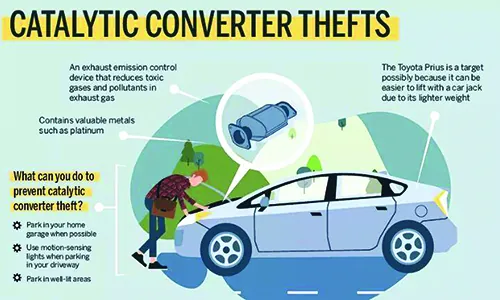
High precious-metal content is the direct reason these units vanish from parking lots. A standard gas-car converter holds maybe 1 to 2 grams of platinum-group metals. The EPA requires all new cars sold in the US to have working converters, but it doesn’t limit how much metal manufacturers use to meet that rule. Toyota adds more metal to the Prius because its engine runs cooler. That extra weight of platinum, palladium and rhodium is what drives the scrap price up.
If your check engine light comes on with codes P0420 or P0430, the honeycomb coating inside is likely degraded. The sensors read that the exhaust isn’t getting cleaned fast enough. Cool running speeds up this wear because the metals need heat to trigger the chemical reaction fully. Running the engine cold means unburned fuel coats the channels instead of breaking down.
A rattling sound from under the car points to physical damage. The ceramic honeycomb cracks from hitting speed bumps or rocks. Once it shatters, pieces bounce around inside the steel shell. You can check this yourself safely: tap the outside of the converter lightly with a rubber mallet while the car is parked and completely cold. A solid thud means the inside is intact. A rattle means the ceramic is broken.
If your car smells like sulfur or rotten eggs, the rhodium section isn’t processing nitrogen oxides correctly. Don’t try to clean this with fuel additives. Pouring chemicals into the tank rarely fixes a physically degraded honeycomb, and some solvents can ruin your oxygen sensors.
Here’s a simple decision rule. If you hear a rattle or smell sulfur, park the car and call a licensed exhaust shop. If you only have a check engine light but the car sounds and smells normal, drive it to a mechanic within a week. Don’t ignore either sign. Driving with a broken converter lets raw exhaust enter the cabin, which is a real health risk.
This guide isn’t for anyone planning to remove the unit themselves. Cutting into an exhaust system requires welding gear, proper jack stands and knowledge of local laws. Tampering with emissions equipment violates federal law. Leave removal and replacement to certified mechanics.
One honest limit: the exact dollar value of your specific converter changes daily based on global metal markets, and you can read today’s live spot prices for platinum, palladium and rhodium on any public commodities exchange board.
What you control and what is fixed
Things you can change
- Your parking spot: choose well-lit areas or a locked garage to deter theft.
- Engine warm-up: avoid short trips under 5 minutes so the converter reaches working temperature.
- Fuel quality: buy top-tier gasoline to leave fewer deposits on the honeycomb walls.
- Sensor replacement: swap failing oxygen sensors before they let a bad fuel mix ruin the metals.
- Anti-theft shields: bolt on a steel plate made for your specific Prius model year.
Things fixed by design
- The amount of precious metal inside is set at the factory and can’t be added later.
- The ground clearance of a Prius makes the part easy to reach from underneath.
- Federal law prohibits selling or installing a used converter for road use.
- The ceramic material will eventually degrade from thermal cycling over years of driving.
Replacing a failed unit requires cutting and welding exhaust pipes. If you don’t have professional automotive lift equipment and welding training, this job carries a risk of burns, carbon monoxide poisoning in enclosed spaces, or voiding your warranty. Take it to an ASE-certified exhaust technician.
Habits that protect your Prius converter
Short trips are the fastest way to ruin the honeycomb inside. If your drive is under 3 miles, the exhaust never gets hot enough to burn off carbon buildup. Combine errands into one longer trip so the system stays above 400°F for at least 15 minutes. That heat is what keeps the metals active.
Fix engine misfires immediately. A misfire dumps raw, unburned fuel straight into the exhaust pipe. That fuel ignites inside the converter, pushing temperatures past 1,500°F. At that heat, the ceramic melts and the precious metals fuse together into useless lumps. If your engine shakes or stumbles, stop driving until it’s diagnosed.
Watch your oil consumption. The 2010–2014 Prius engines are known to burn oil as they age. Oil ash coats the platinum and palladium, blocking the exhaust gas from touching the metal. Check your dipstick every time you fill up gas. If you’re adding a quart between oil changes, have the engine checked.
Park smartly to prevent theft. Thieves target the Prius because it sits low and the part is worth more. If you don’t have a garage, park against a wall so the passenger side—where the converter usually sits—is blocked. An etched VIN on the shell won’t stop a thief, but it helps police prove ownership if they recover it.
Don’t trust “cleaner” fluids poured into the gas tank. They might clear a minor carbon deposit, but they won’t fix melted ceramic or stripped rhodium. Save your money and get a real diagnosis.
FAQs Of Why Toyota Prius Catalytic Converters Are Valuable
Why do thieves steal Prius catalytic converters?
Thieves target them because the scrap price is higher than most other cars. The hybrid engine runs cooler, so Toyota packed extra platinum, palladium and rhodium inside to meet emissions rules. Recyclers pay for those metals by weight. A thief can slide under the car, cut two pipes with a battery saw, and walk away in under three minutes with a part worth hundreds of dollars.
How much is a Prius catalytic converter worth?
Scrap prices are inexpensive relative to the cost of a new replacement unit. Older models from 2004 to 2009 tend to bring more because they contain heavier precious-metal loads. The exact number changes daily with commodity trading. You can check today’s rate by calling a local scrap yard and giving them the stamped part number on your shell.
Is it safe to drive without a catalytic converter?
No, it isn’t safe or legal for street use. Without it, toxic gases like carbon monoxide flow directly out of the tailpipe and can leak into the cabin. Your car will also be extremely loud, and it will fail any state inspection. Federal law prohibits removing emissions equipment from a registered vehicle. You’ll face fines if caught driving without one.
How long does a Prius catalytic converter last?
They typically last 100,000 to 150,000 miles if the engine runs cleanly. Short trips, burning oil, or engine misfires shorten that life significantly. There’s no scheduled replacement interval in the owner’s manual. You only replace it when the check engine light shows a catalyst efficiency code or when physical damage causes a rattle under the floor.
Can I clean my catalytic converter instead of replacing it?
You can’t clean a melted or physically broken converter. Chemical cleaners poured into the gas tank might dissolve light carbon buildup, but they won’t restore missing rhodium or fix shattered ceramic. If your oxygen sensors show the part has stopped working, replacement is the only permanent fix. Don’t waste money on miracle fluids for a failed unit.
Does it matter which replacement part I buy?
Yes, it matters greatly. Aftermarket parts often contain far less precious metal than the original. They might clear the check engine light temporarily but fail again within months because they can’t process the exhaust fast enough. For a Prius, stick to OEM or EPA-compliant direct-fit replacements. Cheap universal parts rarely survive the hybrid’s specific exhaust temperatures.
What happens if my catalytic converter fails completely?
A complete failure blocks exhaust flow or dumps raw pollution. If the ceramic shatters and clogs the pipe, your engine will lose power, stall, or refuse to start because exhaust gas has nowhere to go. If it just stops cleaning, your check engine light stays on and you’ll fail emissions testing. Either way, the car isn’t safe to drive normally.
Why does my Prius smell like rotten eggs?
That sulfur smell indicates the converter isn’t fully oxidizing hydrogen sulfide in the exhaust. It happens when the converter runs too cool to finish the chemical reaction, or when the rhodium coating wears away entirely. Try driving at highway speeds for 20 minutes to heat it up. If the smell returns at idle, the internal coating is likely gone.
Conclusion
If you drive a hybrid, don’t wait for trouble. Park in a well-lit spot or ask your mechanic to weld a protective cage over the exhaust pipe. It’s a small step that’ll save you a huge headache and keep thieves moving on to easier targets.

I am Julian Drive, an automotive enthusiast and repair expert with over 7 years of hands-on experience in vehicle maintenance. At Carora Hub, I simplify complex car issues into easy-to-follow DIY guides to help drivers stay safe and save on repair costs.