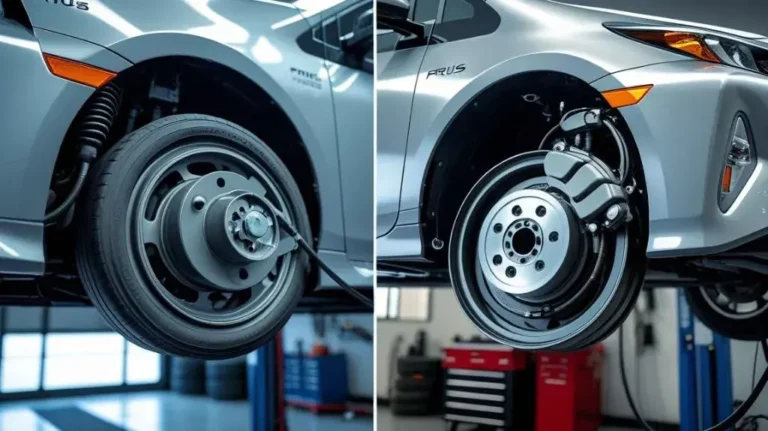
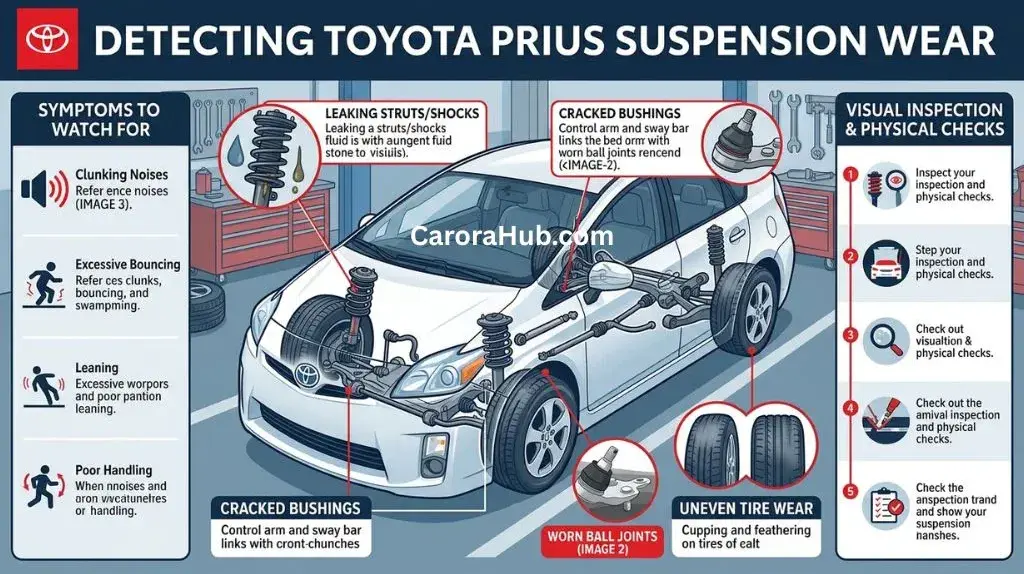
You can detect Toyota Prius suspension wear by checking for fluid leaks on the shock bodies, listening for metal clunks over speed bumps, and feeling if the car drifts across lanes. A worn chassis reduces stability and makes the ride harsh, but catching loose parts early keeps the hybrid safe and efficient on the road.
How to Detect Toyota Prius Suspension Wear
A failing suspension changes how the car drives and sounds. When the dampers and bushings wear down, road bumps travel straight into the cabin.
Unusual noises over bumps
A deep, hollow knocking sound over rough asphalt usually points to worn sway bar end links. A sharp metallic clunk when turning into a driveway often means a bad strut mount or a dry lower ball joint. Squeaking at low speeds happens when rubber control arm bushings dry out and crack.
Uneven tire tread wear
Tires tell the truth about suspension alignment. When shocks lose their damping force, the tire bounces along the pavement instead of rolling smoothly. This bouncing creates a wavy, scooped pattern across the tread called cupping. If your tires show smooth wear only on the inner or outer edge, the suspension has sagged and thrown the wheel camber out of line.
Vehicle pulling to one side
If your Prius drifts toward the shoulder on a flat, straight road, something under the car is misaligned or bent. Worn lower control arm bushings let the front wheels shift forward and backward under load. This shifting changes the car’s steering angle without your hands moving the steering wheel.
Visual Inspection of Struts and Shocks
You can spot many chassis problems with your own eyes before picking up any wrenches. Turn the front wheels completely to one side to get a clear view of the assemblies behind the tires.
Checking for fluid leaks
Look at the steel body of each shock absorber and front strut. A light film of dry, gray road dust is normal. Fresh, dark oil running down the side of the metal tube means the internal hydraulic seal has ruptured. Once the oil leaks out, the damper can’t control spring motion anymore, and you must replace the unit.
Identifying damaged dust boots
The accordion-style rubber boot protects the shiny chrome piston rod inside the strut. Over time, heat and road grime turn this rubber brittle until it splits open.
Testing Suspension Components for Play
A loose part creates slack that hurts steering accuracy. You can test your Prius suspension components safely in your garage or driveway.
The bounce test
Push down hard on one corner of the car using your body weight, then let go immediately. A healthy Prius suspension rebounds upward once and settles right back to its resting height. If the corner bounces up and down two or three times, the internal damping valves are worn out, and the strut needs replacement.
Checking control arm bushings
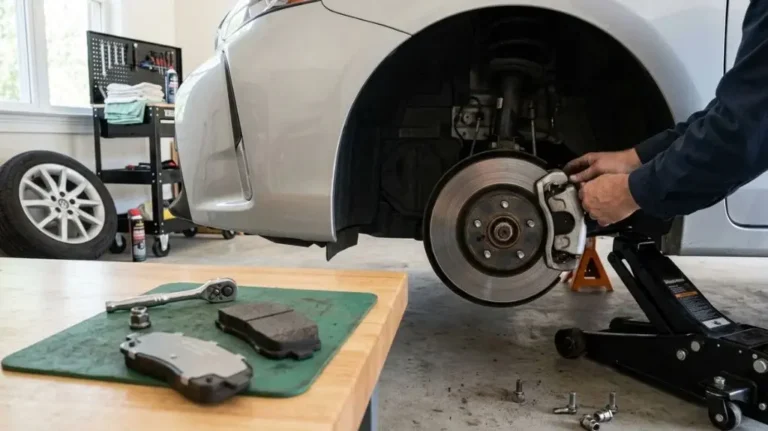
Raise the front of the vehicle with a floor jack and rest it securely on jack stands. Shine a bright flashlight into the large rubber bushings where the lower control arm attaches to the subframe. If the rubber is torn, cracked through, or separated from the metal sleeve, the arm will shift under braking.
Inspecting ball joints and tie rods
Grab the raised front tire with your hands at the 12 and 6 o’clock positions, then rock it firmly back and forth. Any noticeable play at the 12 and 6 o’clock positions indicates a worn wheel bearing or, less commonly, a loose ball joint. Move your hands to the 9 and 3 o’clock positions and shake the wheel side to side. Clunking play here reveals a loose outer or inner tie rod end.
Specific Prius Suspension Challenges
The Prius carries extra equipment that standard gasoline cars don’t have. These hybrid parts change how mechanical forces stress the chassis.
Impact of regenerative braking on suspension load
The Prius electric motor slows the car down to recharge the traction battery during gentle braking. This regenerative drag applies instant, smooth torque to the front wheels before the hydraulic friction pads even touch the discs. Because this happens almost every time you slow down, the front lower control arm bushings endure constant back-and-forth twisting forces that wear them out faster than on a traditional compact car.
Weight distribution and battery placement
The heavy high-voltage hybrid battery pack sits directly over or just ahead of the rear axle, depending on your Prius generation. This constant, unyielding weight never leaves the car, unlike a full tank of gas that empties as you drive. The extra mass keeps the rear coil springs compressed all the time, causing the rear suspension to sag earlier in its life and bottom out over sharp speed bumps.
When to Replace Suspension Parts
Chassis components degrade slowly, so drivers often get used to the worse ride without noticing the danger.
Typical mileage intervals for replacement
Original Prius struts and shocks usually work well for 80,000 to 100,000 miles under normal city and highway driving. Rubber sway bar bushings and end links often fail earlier, around 60,000 to 80,000 miles, because they take the brunt of road vibrations. Heavy city driving over potholes can cut these lifespans down significantly.
Differentiating between comfort and safety repairs
A dry sway bar bushing makes an annoying squeak, but it won’t cause you to lose control of the car. That’s a comfort issue you can delay for a few weeks if money is tight. In contrast, a loose lower ball joint or a blown front strut is an urgent safety hazard.
If a ball joint separates while driving, the wheel folds outward, causing an immediate crash. Replacing parts yourself saves labor fees, but the trade-off is spending hours working under heavy metal parts with hand tools.
Tools Needed for a DIY Suspension Assessment
You don’t need professional shop equipment to check your chassis, but you must have the right gear to lift the car safely. This assessment isn’t for people who lack a level concrete workspace or feel uneasy working around raised vehicles. A common mistake people actually make is relying solely on a hydraulic floor jack without stands; a failing jack seal can drop the heavy car instantly, costing thousands in damage or causing severe physical harm.
- Hydraulic floor jack (rated for at least two tons)
- Two sturdy jack stands (never rely on the car’s emergency spare-tire jack)
- Two rubber wheel chocks
- Heavy-duty steel pry bar (18 to 24 inches long)
- High-output LED flashlight or work lamp
- Thick mechanic work gloves
The Importance of Post-Repair Alignment
Any time you unbolt a front strut, tie rod, or control arm, you change the steering geometry of the car. Even if you carefully mark the bolt positions with paint before removal, the alignment angles change by fractions of an inch. A misaligned car scuffs the tires against the road surface at an angle instead of rolling straight ahead.
This constant rolling resistance scrubs away expensive tire tread in just a few thousand miles and ruins fuel economy. The Prius relies on low rolling drag to hit its high gas mileage ratings. The National Highway Traffic Safety Administration explains how correct tire contact and maintenance keep vehicles safe and stable on public roads. Always drive the car straight to an alignment shop immediately after replacing suspension parts.
Frequently Asked Questions Of Detect Toyota Prius Suspension Wear
Does the Prius hybrid battery affect suspension lifespan?
Yes, the hybrid battery adds around 70 to 180 pounds of permanent mass over the rear axle, depending on whether your car uses a nickel-metal hydride or lithium-ion pack. This constant load wears out rear shock valves and springs faster than those on a gas-only Toyota Corolla.
Can I replace just one strut or should I replace them in pairs?
You should always replace suspension struts in pairs across the same axle. A brand-new strut has firm damping, while an old strut on the opposite side is soft. This uneven balance makes the car pull to one side under hard braking and creates unpredictable handling during sudden lane changes.
How does a worn suspension affect fuel economy?
Worn suspension arms and dead struts allow the wheels to drift out of alignment while the car is moving. This misalignment drags the tires sideways across the pavement instead of letting them spin freely. The extra friction forces the gasoline engine to burn more fuel to maintain highway speeds.
Is it safe to drive with a clunking noise from the front end?
Don’t drive your vehicle until you have identified the source of the noise. A clunk often indicates a worn sway bar link, but it could also signal a failing ball joint or loose tie rod. If a ball joint fails while driving, you may lose steering control entirely.
Final Thoughts
If you notice these signs, don’t wait for the damage to worsen. A quick inspection by a trusted mechanic will confirm if your struts or bushings need replacing. Keeping your suspension in good shape ensures your commute stays smooth, quiet, and safe for many more miles down the road.

I am Julian Drive, an automotive enthusiast and repair expert with over 7 years of hands-on experience in vehicle maintenance. At Carora Hub, I simplify complex car issues into easy-to-follow DIY guides to help drivers stay safe and save on repair costs.