If you own a Toyota Sienna, you know how versatile it can be for family trips and everyday errands. But what if you want to take it a step further?
Installing a trailer hitch opens up a whole new world—towing a bike rack, small utility trailer, cargo carrier, or even a lightweight camper. If you’re like me, you want to do it right the first time. In this guide I walk you through trailer hitch installation for your Toyota Sienna in a clear, practical way. I share the tools I use, common pitfalls to avoid, and wiring tips so your trailer lights work every time.
Keep reading and you’ll be ready to tow with confidence.
Choosing The Right Hitch
Choosing the right trailer hitch for your Toyota Sienna matters. The correct hitch gives safe towing, a clean fit, and long life. I’ll help you pick the best type and capacity. This saves time and keeps you safe on the road.
Types Of Trailer Hitches
Hitches come in classes. Each class covers a range of towing tasks:
- Class I and II — light loads. Good for bike racks or small cargo carriers.
- Class III — the most common choice for minivans. Supports medium trailers, cargo boxes, and bike racks.
- Class IV — heavier trailers and larger loads.
- Class V — heavy-duty towing. Usually used on trucks and big SUVs.
For most Toyota Sienna owners, a Class III or a heavy-duty Class III receiver hitch fits best. It balances strength and sizing for minivan frames. Look for a hitch labeled as compatible with minivans or the Sienna specifically.
Compatibility With Toyota Sienna
Not every hitch fits every car. The Sienna has its own frame and bumper layout. Choose a hitch built for the Sienna’s model years or for similar minivan frames. Brands like Draw-Tite, Curt, and etrailer make vehicle-specific units you can trust.
Tip from experience: pick a hitch that uses the factory mounting points. That avoids drilling into the frame. If you must drill, follow the hitch maker’s instructions exactly.
Weight Capacity Considerations
Know the weight you plan to tow. Combine trailer weight, cargo, and tongue weight. Compare this total to:
- the hitch’s Gross Trailer Weight (GTW) rating,
- the hitch’s tongue weight (TW) limit, and
- your Toyota Sienna’s tow rating (see your owner’s manual).
The Sienna has towing limits you must follow: visit this link for more on Sienna cargo and towing limits: https://carorahub.com/cargo-carrier-weight-limit-for-toyota-sienna/
Never overload the hitch. Overloading reduces handling, brakes, and safety. If you plan to tow often or carry heavy cargo, choose a hitch with a higher rating than your expected loads. Also consider a weight-distribution setup if towing near your vehicle’s max capacity.
Hitch Fit for Model Years and Trim Levels (Added section)
Different Sienna years and trims can have small changes to frame rails or bumper covers. Before buying, check the hitch product page for year and trim compatibility. If you own a hybrid Sienna, confirm fit—exhaust and fuel-system routing can change. Many hitch makers list a fit chart and installation notes. Use those to avoid surprises.

Credit: www.youtube.com
Tools And Materials Needed
Preparation makes an install go fast. I always gather tools the night before. That saves time and keeps me from running to the store mid-job.
Installing a trailer hitch on a Toyota Sienna requires the right tools and parts. Below are essentials plus some extras that make the job easier.
Essential Tools List
- Socket wrench set with metric sockets
- Torque wrench to tighten bolts accurately
- Flathead and Phillips screwdrivers
- Measuring tape to confirm alignment
- Drill with metal bits (only if drilling is required by the hitch)
- Wire cutters and strippers for wiring the trailer lights
- Safety glasses to protect your eyes
- Jack and jack stands for vehicle support (or ramps)
- Rubber mallet to nudge parts into place without damage
- Work gloves for hand protection
Optional Helpful Accessories
- Penetrating oil to loosen rusty or factory-sealed bolts
- Magnetic tray to keep bolts and nuts organized
- Flashlight or work light for better visibility under the vehicle
- Electrical tape for wrapping connections
- Zip ties to secure wiring neatly along frame rails
- Panel removal tool to remove bumper clips without damage
- Anti-seize lubricant for bolt threads to prevent galling
- Ratcheting straps to hold the hitch while you fasten bolts
Pro tip: use a second set of hands or an assistant when aligning the hitch. Hitches are heavy and awkward. A helper makes it safer and faster.
Preparing Your Vehicle
A calm, clean workspace helps. I always take a few minutes to prep the vehicle. These small steps cut frustration and reduce risk.
Preparing your Toyota Sienna for trailer hitch installation is the first step. Proper prep improves safety and speeds the job.
Safety Precautions
- Park on a flat, stable surface.
- Engage the parking brake and chock the front wheels.
- Wear gloves and safety glasses.
- Use jack stands—never rely on a jack alone.
- Keep a clean, well-lit workspace.
- Read the hitch instructions fully before starting.
I also recommend keeping a phone nearby in case you need quick help or to look up a wiring diagram.
Clearing The Installation Area
- Remove dirt and loose debris under the rear bumper.
- Take off any bumper covers, underbody shields, or access panels that block the mounting points.
- Verify the exhaust is cool before working nearby.
- Lay out fasteners in order as you remove them to speed reassembly.
A clean installation area helps you see mounting points and wiring harness locations. If the hitch asks you to lower the exhaust or move heat shields, follow the instructions closely.
Step-by-step Installation
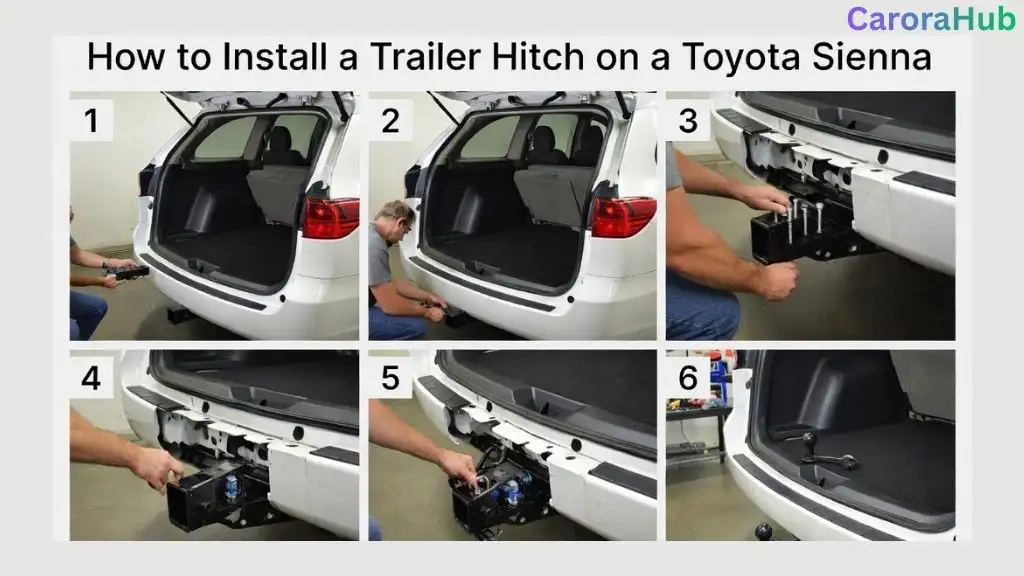
A step-by-step plan keeps the job tidy. Below I break the install into clear stages. Follow the hitch maker’s instructions first. Use these steps as a practical checklist.
Installing a trailer hitch on your Toyota Sienna can seem tough. Follow these clear steps to keep it simple.
Removing Existing Components
- Remove the bumper cover or access panels as needed. Many Sienna hitches require removing small plastic clips.
- Keep all screws, clips, and bolts in labeled bags for reassembly.
- If the hitch needs you to lower the exhaust or heat shield, do that carefully. Use penetrating oil on old bolts to free them.
I once spent 30 extra minutes hunting a missing clip. Label your parts as you remove them.
Aligning The Hitch
- With the help of a friend or jack stands, hold the hitch near the frame.
- Line the hitch holes with the factory mounting points. Some hitches have optional shims to adjust fit—use them if needed.
- Make sure the hitch sits flush and level with the frame rail. Measure from both sides to confirm centering.
A crooked hitch can cause uneven loads and stress. Take time to align it properly before tightening.
Securing Bolts And Fasteners
- Start all bolts by hand to avoid cross-threading.
- Use the supplied hardware and lock washers, or the hardware called out by the hitch maker.
- Tighten bolts in a crisscross pattern where possible to seat the hitch evenly.
- Use a torque wrench and set it to the manufacturer’s specified torque. If the manual gives ranges, follow them closely.
Note: Always follow the exact torque specs from the hitch maker or the installation sheet. As a general reference, many hitch bolts fall in the 70–120 ft·lb range depending on bolt size, but do not rely on this alone—use the manual values.
Double-checking Connections
- Re-check torque on all fasteners after initial tightening.
- Inspect for any gaps between hitch and frame.
- Make sure exhaust and heat shields are reinstalled securely.
- Confirm wiring harness routing will not contact moving or hot parts.
- Test-fit a hitch-mounted accessory (like a ball mount) to ensure clearance.
Before your first tow, drive a short test loop and re-check all bolts and wiring.
Wiring The Trailer Lights
Wiring is as important as the hitch itself. Proper wiring keeps you legal and safe. A harness that plugs into the Sienna’s factory connector is the easiest way.
Wiring the trailer lights is a key step. It ensures your trailer’s brake lights, turn signals, and running lights function properly.
The process is simple but needs care. Find the vehicle harness, make firm connections, and test the output.
Locating The Wiring Harness
- Open the rear hatch. Look behind the tail light panels.
- The Sienna typically has a multi-pin plastic connector near the taillight harness.
- If you have trouble, consult the owner’s manual or a vehicle wiring diagram. Many aftermarket plug-in harnesses match this connector.
Be gentle when unplugging factory connectors. Lock tabs can be brittle on older vehicles.
Connecting The Electrical Components
- Use a vehicle-specific, plug-and-play trailer wiring harness when possible. These avoid splicing and keep the factory circuits intact.
- If you use a universal harness, match wire colors and functions carefully: tail/running lights, left turn/brake, right turn/brake, and ground.
- Secure connections with dielectric grease to resist corrosion in the elements. Use heat-shrink tubing or quality electrical tape on splices.
- Route the wiring along the frame and secure it with zip ties. Keep it away from the exhaust and moving parts.
I prefer plug-in harnesses. They save time and make future removal easier.
Testing The Lights
- Reconnect battery if you disconnected it.
- Activate running lights, left and right turn signals, and brakes while someone watches the trailer connectors.
- Use a 12V test lamp or multimeter at the trailer plug to check for correct signals.
- If anything is wrong, re-check the harness pins, ground connections, and fuses.
Fix wiring issues before you tow. Poor wiring can cause tow vehicle lamp failures or unsafe trailer signaling.
Post-installation Tips
A good install stays that way when you follow a few habits. I check my hitch after the first 50 miles and regularly after that.
After installing a trailer hitch on your Toyota Sienna, follow these tips to maintain safety and reliability.
Torque Specifications
- Always follow the torque specs in the hitch manual.
- Use a calibrated torque wrench.
- Re-torque bolts after the first 50–100 miles of towing and then at regular service intervals.
If the hitch maker lists torque ranges, follow the exact values for each bolt size and grade.
Regular Maintenance
- Clean the hitch area to remove road grime and salt. This reduces rust.
- Inspect bolts monthly for tightness.
- Lubricate moving parts (like ball mounts) and apply anti-seize to threads when reassembling.
- Replace worn components such as hitch pins, clips, or the hitch ball if they show wear.
A small bit of care keeps the hitch working for years.
Troubleshooting Common Issues
- Rattling — check for loose bolts or missing washers. Add thread-locker if needed (per manufacturer guidance).
- Wiring flicker — poor ground or loose connector. Clean and secure the ground strap.
- Clearance problems — confirm the ball mount length and drop are correct for your trailer. Adjust to avoid contact with bumper or cargo.
- Rust or corrosion — clean and apply rust inhibitor or paint to bare metal.
Catch small problems early. They are cheap to fix and prevent big issues later.

Credit: www.youtube.com
Frequently Asked Questions
How Do I Install A Trailer Hitch On A Toyota Sienna?
To install a trailer hitch on a Toyota Sienna, gather the tools and read the hitch instructions. Remove any obstructing parts, align the hitch to the frame, hand-start bolts, then torque to spec. Plug in a wiring harness and test lights. If you are unsure, professional installation is a safe choice.
What Tools Are Needed For Toyota Sienna Hitch Installation?
You need a socket set, torque wrench, screwdrivers, and possibly a drill. A vehicle jack or ramps can help access the underside. Check the hitch instructions for any specific tools. Having all tools ready makes the job smoother.
Can I Install A Trailer Hitch Myself On A Sienna?
Yes, if you have basic mechanical skills and a friend to help, you can install a hitch yourself. Follow detailed instructions and safety steps. For first-timers or complex setups (like drilling or modifying heat shields), professional installation reduces risk.
How Long Does It Take To Install A Trailer Hitch?
Typical installs take 1 to 2 hours. Time varies by experience and whether you need to remove bumpers or modify exhaust components. Preparation and the right tools shorten the job.
Added: Choosing Accessories and Tow Gear (New section)
Choosing the right accessories keeps towing safe and easy.
- Ball mount — pick the correct drop or rise for level towing.
- Hitch ball — match ball size to trailer coupler (1-7/8", 2", 2-5/16").
- Safety chains — cross them under the tongue and attach to solid frame points.
- Electrical adapter — if your trailer plug differs, get a quality adapter.
- Weight-distribution hitch — consider when near the vehicle’s max tow rating for better stability.
- Sway control — helps when towing light trailers or driving in wind.
Match accessories to your hitch class and the trailer’s specs. I always double-check coupler fit before driving off.
Final Thoughts
Installing a trailer hitch on your Toyota Sienna adds real value. It expands what your minivan can do. With the right hitch, correct wiring, and basic maintenance, towing is safe and stress-free.
Take your time to follow each step. Double-check torque specs and wiring. If you run into trouble, don’t hesitate to seek professional help. A well-installed hitch gives you freedom and utility on every trip.
A well-installed hitch improves your vehicle’s function and versatility. Enjoy the freedom to carry more on your trips. This small upgrade can make a big difference. Safe towing starts with a good hitch installation.

Hello, I’m Norman. I work as a car researcher. I am the voice behind CaroraHub. I have over 15 years of experience. I give simple and useful car advice. I help with car care, cleaning, and small repairs. My goal is to help you keep your car healthy. I want car care to be easy and cheap for you. You can trust my tips to keep your car working well for a long time.