When you’re choosing a family minivan, reliability is likely at the top of your list. You want a vehicle that won’t leave you stranded and can handle daily life with ease.
That’s why comparing the Toyota Sienna and Honda Odyssey makes perfect sense. Both have a strong reputation, but which one will truly give you peace of mind year after year? You’ll discover the key differences in reliability between these two popular models.
By the end, you’ll feel confident making the right choice for your family’s needs. Keep reading to find out which minivan stands out when it comes to dependability.
Toyota Sienna Reliability
The Toyota Sienna has a strong reputation for reliability. In my experience and from what owners report, it’s a minivan that just keeps going. It fits family life well. Many drivers trust its long-term performance. The Sienna regularly ranks high in dependability surveys and owner reviews. That reputation reduces worry about breakdowns and unexpected repair bills. I’ll walk through the main reasons it earns that trust.
Engine Performance And Durability
The Sienna uses a smooth V6-based hybrid powertrain in recent generations. It gives steady power for city driving and highway merging. The hybrid setup lowers stress on the gasoline engine and improves fuel economy. Many owners report trouble-free engine use past 200,000 miles with routine care. Simple steps like regular oil changes and timely fluid checks keep these engines healthy for the long haul.
Transmission And Drivetrain
Modern Siennas come with an 8-speed (or CVT-style hybrid) automatic that shifts smoothly. You can choose front-wheel drive or all-wheel drive (AWD) on many trims. Both layouts deliver confident traction and stable handling. Transmission problems are relatively rare when you follow scheduled maintenance. The AWD system is well-integrated and useful for wet or snowy climates, adding to the Sienna’s day-to-day dependability.
Common Issues And Recalls
Serious issues with the Sienna are uncommon. Most reported problems are minor—small electrical glitches, door lock or sensor quirks, or software updates. Toyota tends to address these quickly through recalls or dealer fixes. While no vehicle is perfect, Toyota’s recall process and software update workflow reduce downtime. If you buy used, check the vehicle’s recall history and that any recalls were repaired.
Maintenance Costs
Owning a Sienna is generally affordable. Parts are widely available. Routine service—oil, filters, brakes, tires—costs are reasonable compared with some rivals. The hybrid system reduces fuel costs and, in many cases, lowers wear on brakes thanks to regenerative braking. Staying on the factory maintenance schedule helps avoid big repair bills and keeps total cost of ownership down.
Owner Satisfaction
Owners commonly praise the Sienna for reliability and comfort. Families like the roomy cabin, simple controls, and low maintenance needs. Positive reviews often mention long-lasting engines and fewer trips to the shop. That steady owner satisfaction supports resale value and buyer confidence when shopping used.
Honda Odyssey Reliability
The Honda Odyssey is known for solid reliability across many model years. I’ve seen owners get excellent service life from their Odysseys when they follow maintenance schedules. It balances performance, comfort, and durability. Below I break down the engine, transmission, common issues, and ownership costs so you can compare directly with the Sienna.
Engine Performance And Durability
The Odyssey typically uses a strong V6 gasoline engine. It delivers smooth, quiet power for daily driving and highway cruising. With regular oil changes and scheduled care, the engine can last many miles. Older Odysseys have a record of reaching high mileage when owners keep up with maintenance.
Transmission And Drivetrain
The Odyssey’s automatic transmission shifts smoothly in most model years. Front-wheel drive is standard and gives good traction for everyday use. When properly maintained, the transmission and drivetrain hold up well. Still, some older model years had more transmission-related repairs than more recent ones, so it pays to check service records on a used unit.
Common Issues And Recalls
Certain older Odysseys experienced problems like transmission slipping and door latch failures. Honda addressed many of these with recalls and technical service bulletins (TSBs). Newer generations have benefitted from design fixes and improved components. If you’re shopping used, review the recall and service history and confirm that any recall repairs were completed.
Maintenance Costs
Routine maintenance on the Odyssey is generally affordable. Parts and labor costs are reasonable across most service items like brake pads and tire rotations. Regular upkeep helps keep repair needs low. For how-to guidance on common tasks, see this guide to changing brake pads, which applies to similar procedures on minivans.
Owner Satisfaction
Many owners praise the Odyssey for a comfortable cabin and strong resale value. Reviews often mention dependable performance and family-friendly features. When maintained, Odysseys deliver long service life with relatively few surprises.
Safety Features And Ratings
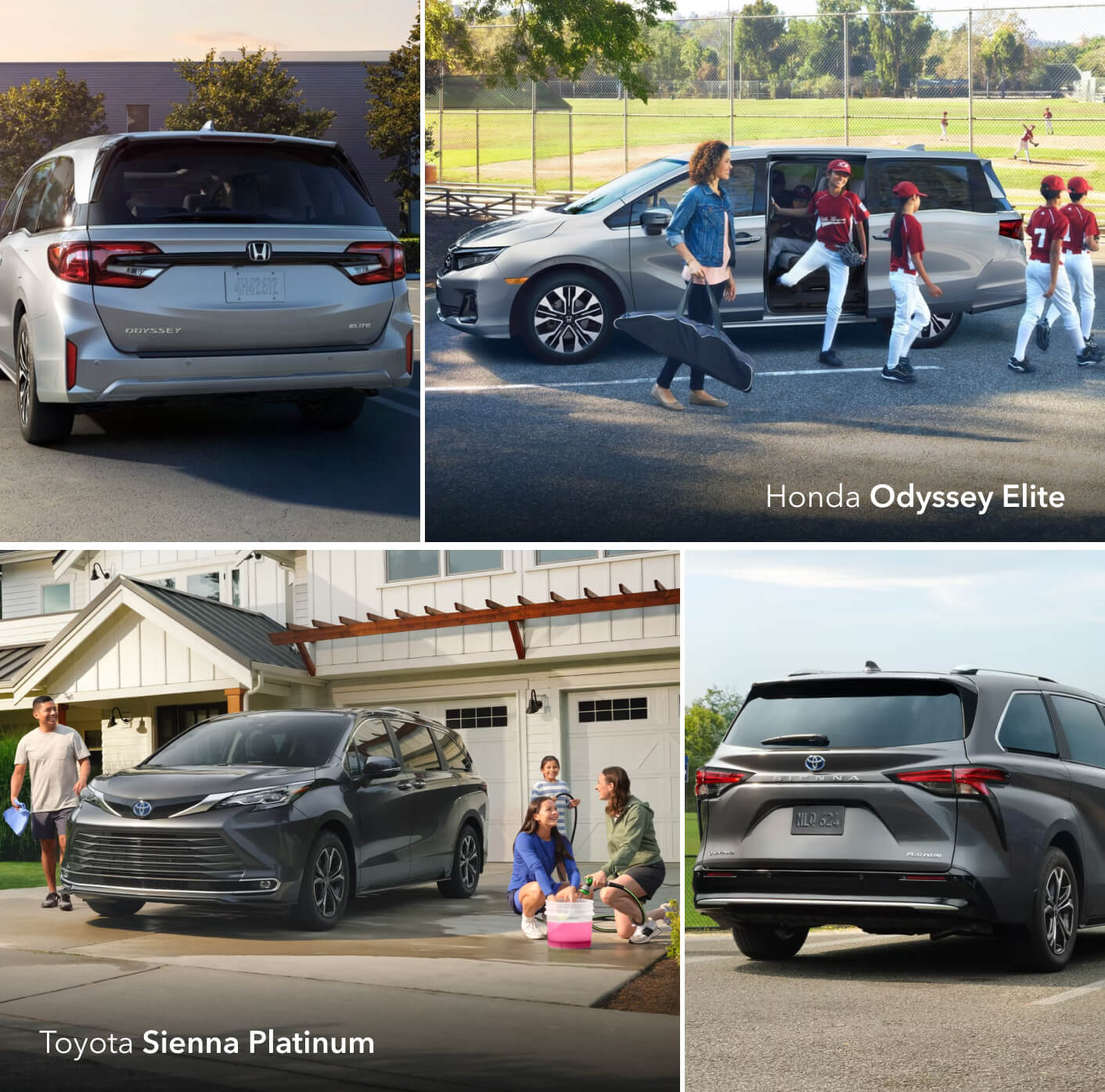
Safety is key when you run a family. Both the Toyota Sienna and Honda Odyssey include modern safety tech and earn strong crash-test results. I’ll summarize crash ratings, driver assistance tech, and child-safety features that matter to parents and daily drivers.
Crash Test Results
Both minivans perform well in crash tests. They typically receive strong ratings from the National Highway Traffic Safety Administration (NHTSA). The Insurance Institute for Highway Safety (IIHS) often awards them top scores for frontal, side, and rollover protection. High crash-test marks mean better protection for kids and adults in common crash scenarios.
Advanced Safety Technologies
Toyota equips the Sienna with Toyota Safety Sense. This includes automatic emergency braking, lane departure alert, and adaptive cruise control. Honda’s Honda Sensing package offers similar features: collision mitigation braking, lane-keeping assist, and adaptive cruise. These systems can prevent or reduce the severity of crashes and make daily driving less stressful.
Child Safety And Convenience
Both vans focus on child safety. LATCH anchors make car-seat installation easier. Rear door child locks and rear-seat reminder systems add protection. Spacious second and third rows give children room to ride comfortably. These practical features are designed to give parents peace of mind on school runs and long trips.
Credit: www.planethondanh.com
Fuel Efficiency Comparison
Fuel economy affects running costs and how often you stop for gas. The Sienna and Odyssey differ here because the Sienna is a hybrid while the Odyssey uses a gasoline V6. Below I break down city and highway MPG and explain why it matters for total cost of ownership.
City Vs Highway Mileage
The Toyota Sienna offers about 36 miles per gallon on the highway and similar combined figures due to its hybrid system. That makes it very efficient for a three-row vehicle. The Honda Odyssey gets roughly 19 mpg in the city and about 28 mpg on the highway with its gasoline V6. For daily stop-and-go driving, the Sienna’s hybrid setup can significantly cut fuel costs over time.
Hybrid Options
The Toyota Sienna is offered only as a hybrid in recent model years. Its gas-electric powertrain lowers fuel consumption and improves city driving efficiency. The Honda Odyssey does not currently offer a hybrid variant and relies on a traditional gasoline engine. If fuel economy is a priority, the Sienna’s hybrid powertrain is a major advantage.
Interior Comfort And Space
Cabin comfort and usable space matter for family life. Both minivans are designed with families in mind. Below I compare seating, cargo, and infotainment so you know what daily life will feel like in each van.
Seating Capacity And Layout
Both vans seat seven or eight people depending on trim and seat configuration. The Sienna and Odyssey offer second-row captain’s chairs or a bench. Sliding doors make entry easy. Legroom is generous in both the second and third rows. Headroom is ample, which helps taller passengers stay comfortable on long drives.
Cargo Space
Cargo space behind the third row is similar between the two. Folding the third row expands room for luggage, strollers, or sports gear. The Sienna’s flat load floor simplifies loading heavy items. The Odyssey offers a handy underfloor storage compartment for smaller items. Both vans are practical for weekend trips and family errands.
Infotainment And Connectivity
Both come with modern touchscreen infotainment. The Sienna supports Apple CarPlay, Android Auto, and Amazon Alexa. The Odyssey supports Apple CarPlay and Android Auto as well. USB ports are placed throughout the cabin. Higher trims add rear-seat entertainment systems. These tech options keep kids entertained and drivers connected.
Driving Experience
How a minivan drives affects everyday comfort and confidence. The Sienna and Odyssey each have different on-road characters. Below I outline ride comfort, handling, and cabin noise so you know what to expect behind the wheel.
Ride Quality
The Toyota Sienna favors a soft, cushioned ride that soaks up bumps. It’s tuned for comfort over sporty handling. The Honda Odyssey leans toward a firmer setup, offering more road feedback and a slightly sportier feel. If you value a floaty, relaxed ride, the Sienna is a good match. If you like more connection to the road, the Odyssey may suit you better.
Handling And Maneuverability
The Odyssey often feels nimbler in city driving and tight parking situations. Steering is precise and confidence-inspiring. The Sienna is stable and predictable, especially at highway speeds, and still handles urban turns well. Both offer decent visibility and relatively tight turning radii for a vehicle of this size.
Noise And Vibration
The Sienna keeps cabin noise low on highways, aided by its hybrid powertrain. Road and engine noise are well-masked. The Odyssey controls noise effectively too, though some model years allow slightly more road sound inside. Vibrations remain minimal in both when maintained correctly.
Resale Value And Warranty
Resale value and warranty affect long-term ownership costs. A vehicle that holds value well lowers the true cost of ownership. Both Toyota and Honda offer similar factory warranties, and both have strong certified pre-owned programs. Below I break down depreciation, warranty terms, and CPO benefits.
Depreciation Rates
The Toyota Sienna tends to retain value slightly better than some competitors. Slower depreciation helps owners keep more resale value at trade-in. The Honda Odyssey also holds value well but may depreciate a bit faster in some model years. Both vans still outperform many non-luxury vehicles in their segment when it comes to resale.
Warranty Coverage
Toyota and Honda offer similar basic warranties: 3 years/36,000 miles for the bumper-to-bumper and 5 years/60,000 miles for the powertrain. Both brands typically include roadside assistance during these warranty periods. These standard warranties provide peace of mind for early ownership years.
Certified Pre-owned Programs
Certified pre-owned (CPO) options can be a smart choice if you want added coverage. Toyota’s CPO program includes a 12-month/12,000-mile limited warranty beyond the original factory warranty. Honda’s CPO program often advertises extended powertrain coverage (for example, 7 years/100,000 miles, depending on the promotion). Both programs include multipoint inspections and roadside assistance. CPO units add confidence for used-vehicle buyers.
Final Reliability Verdict
The final reliability verdict between the Toyota Sienna and Honda Odyssey highlights key differences. Both vans are reliable choices, but they bring different strengths. Your decision should match how you drive, your budget, and what you value most—fuel economy, long-term ownership costs, or cabin comfort and features.
Strengths Of Toyota Sienna
The Sienna stands out for durability and fuel savings thanks to its hybrid powertrain. Toyota’s parts network is large and parts tend to be affordable. Fewer serious recalls and a strong track record for long-term ownership make it ideal for buyers who want low upkeep and consistent performance.
Strengths Of Honda Odyssey
The Odyssey offers a smooth ride, solid build quality, and family-focused convenience. Its V6 delivers strong performance and the cabin is thoughtfully laid out. Honda packs advanced safety tech into many trims, and maintenance costs are reasonable. It’s a great fit for families who prioritize comfort and driving feel.
Which Van Fits Your Family Needs?
Choose the Toyota Sienna if you want top fuel economy, lower running costs, and proven long-term reliability. Choose the Honda Odyssey if cabin comfort, handling, and a traditional V6 driving feel are more important. Both vans are dependable—pick the one that matches your daily life and maintenance habits.

Credit: www.youtube.com
Frequently Asked Questions
Which Minivan Is More Reliable: Toyota Sienna Or Honda Odyssey?
Toyota Sienna generally has higher reliability ratings than Honda Odyssey according to consumer reports and many owner surveys. That said, properly maintained Odysseys are also very dependable.
How Often Does Toyota Sienna Need Major Repairs?
Toyota Sienna usually requires major repairs less often than many vehicles in its class. Many owners report needing major work after around 150,000–200,000 miles, especially when maintenance is regular.
What Are Common Reliability Issues With Honda Odyssey?
Older Honda Odyssey models have had transmission problems and occasional engine-related issues. Door latch assemblies and sliding-door parts can also wear. Most of these issues became less common in later model years after design updates.
Is Toyota Sienna Better For Long-term Ownership?
Yes. The Sienna tends to hold value and need fewer repairs over many years—especially because of its hybrid drivetrain and Toyota’s reliability track record.
How Do Maintenance Costs Compare Between Sienna And Odyssey?
Toyota Sienna often has lower maintenance costs compared to Honda Odyssey, in part because of fuel savings from the hybrid system and generally affordable parts and service.
Which Minivan Has Fewer Recalls: Sienna Or Odyssey?
Toyota Sienna has experienced fewer high-impact recalls than some rival models in recent years, though both manufacturers act on safety issues promptly when they arise.
Does Honda Odyssey Have Better Warranty Coverage?
Both Toyota and Honda offer similar factory warranty coverage for their minivans: 3 years/36,000 miles basic and 5 years/60,000 miles powertrain. Check local dealer offers for any extended warranty or promotions.
Are Toyota Sienna Parts Easy To Find And Affordable?
Yes, Toyota Sienna parts are widely available through dealerships and aftermarket suppliers. That availability often keeps repair costs down and shortens wait times for service.
How Do Customer Satisfaction Ratings Compare For Both Minivans?
Toyota Sienna scores slightly higher in customer satisfaction related to reliability, though both vans receive positive owner feedback for comfort and functionality.
Which Minivan Holds Value Better Over Time?
Toyota Sienna generally retains its value better than the Honda Odyssey over several years, making it a strong choice for long-term ownership or resale value considerations.
Bottom Line
Both Toyota Sienna and Honda Odyssey offer strong reliability. Toyota Sienna has a solid reputation for durability and excellent fuel economy thanks to its hybrid system. Honda Odyssey performs well but may face more repairs in older model years. Maintenance costs are generally lower with the Sienna, and owners often praise Toyota’s long-lasting engines.
Honda provides good features, a comfortable ride, and family-focused convenience but sometimes faces minor issues in older models. Choosing depends on your budget and needs. Both vans serve families with reliable rides. Trust in either will keep you moving. Pick the one that fits your lifestyle best. Reliability matters most for daily driving peace.
Reliability by Model Year: What to Watch
Recent Model Years (Recommended)
For both the Sienna and the Odyssey, the most recent two or three generations generally show the fewest reliability headaches. Updated powertrains, improved transmissions, and enhanced safety tech reduce common problems. If you want the best balance of modern features and reliability, target newer used models with complete service records.
Model Years to Inspect Closely
Some older Odyssey model years reported more transmission repairs and door latch issues. For the Sienna, early hybrid integration years can have software updates or minor electrical fixes. When shopping used, ask for maintenance records and confirm that any recalls or TSB repairs were completed.
Buying Used: Practical Checklist
- Request full service records. Look for regular oil changes and scheduled maintenance.
- Check the vehicle’s recall history and verify recall repairs were made.
- Have a trusted mechanic perform a pre-purchase inspection focused on the transmission, brakes, and hybrid system (Sienna).
- Test the sliding doors, power features, and infotainment during a test drive.
- Confirm the cabin electronics, sensors, and safety systems work correctly.
Routine Maintenance Checklist to Maximize Reliability
- Change engine oil and filter per the owner’s schedule.
- Service the hybrid battery cooling (for hybrid Sienna) when recommended.
- Inspect and replace brake pads, rotors, and fluids on schedule.
- Rotate tires regularly and check alignment.
- Monitor transmission fluid condition and follow replacement intervals if specified.
- Keep software and firmware updated at the dealer for safety and drivability fixes.
If you follow these steps, you can extend the useful life of either van and keep repair surprises to a minimum.

Hello, I’m Norman. I work as a car researcher. I am the voice behind CaroraHub. I have over 15 years of experience. I give simple and useful car advice. I help with car care, cleaning, and small repairs. My goal is to help you keep your car healthy. I want car care to be easy and cheap for you. You can trust my tips to keep your car working well for a long time.