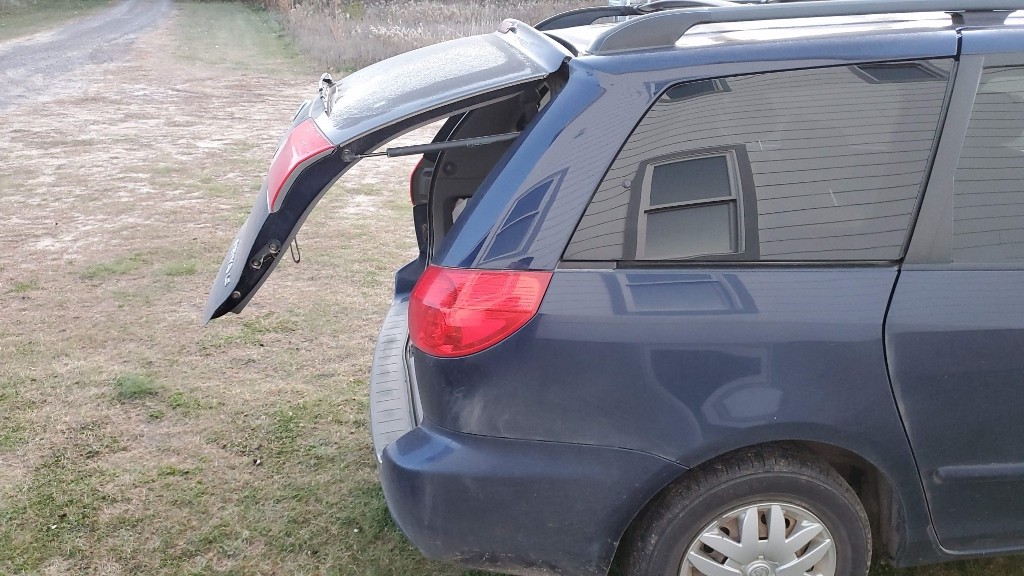
Is your Toyota Sienna’s liftgate stuck and won’t open? This can be frustrating, especially when you need quick access to your cargo or kids.
You’re not alone. I’ve dealt with a stuck Sienna liftgate myself, and I’ve learned a few clear, reliable fixes that work most of the time. Below I share easy steps you can try at home. Follow them in order — many problems are simple and low-cost to fix. If a step feels unsafe or beyond your tools, stop and get professional help.

Credit: www.youtube.com
Common Reasons For Liftgate Issues
Electrical problems are the top cause I see. A dead or weak liftgate battery, a blown fuse, bad wiring, or a faulty switch can stop the power liftgate from working. The Body Control Module (BCM) or liftgate control module can also fail or lose communication.
Mechanical failures include worn struts, damaged hinges, or binding linkages. If the struts no longer hold pressure the door may sag. Hinge wear or bent metal can make the liftgate jam or open unevenly.
Lock and latch malfunctions are common, too. Dirt, rust, and sticky grease can keep the latch from releasing. A broken actuator or frayed cable in the latch assembly will stop the door from unlocking even if the motor runs.
Other causes I’ve seen: frozen seals, a misaligned striker, or an internal panel blocking the manual release. Knowing the likely causes helps you focus your checks and saves time.
Tools Needed For Diy Fixes
Basic hand tools you’ll use often:
- Screwdrivers (Phillips and flat)
- Pliers and needle-nose pliers
- Socket set and wrench set
- Flashlight or headlamp
- Gloves and safety glasses
Diagnostic devices that speed troubleshooting:
- Multimeter to check voltage and continuity
- OBD2 scanner for stored electrical or BCM codes
- Fuse puller or small tweezers
Replacement parts and consumables I keep handy:
- Spare fuses of the correct amperage
- Replacement liftgate struts and/or actuator (OEM or quality aftermarket)
- Silicone spray or white lithium grease
- Cleaning supplies (contact cleaner, rags)
Safety checklist (quick)
- Park on level ground and set the parking brake.
- Disconnect the 12V battery when working on wiring or the actuator.
- Support the liftgate with a prop rod or helper if struts are removed.
- Avoid forcing parts — that causes more damage.
Checking The Liftgate Battery
The liftgate battery (if your Sienna has a separate one) is usually behind the rear liftgate interior panel. On some model years the liftgate electronics draw power directly from the car battery; on others there’s a small local battery or backup. Check your owner’s manual for the exact location.
How I test it:
- Remove the interior panel carefully to access the battery and wiring. Keep clips and screws in a safe place.
- Set a multimeter to DC volts. With the battery connected, a healthy 12V battery reads about 12.6 volts at rest. Below 12 volts is weak.
- Check terminals for corrosion. Clean terminals with a wire brush and contact cleaner if needed.
If the battery is weak, replace it with the correct type and size for your Sienna. Secure it and reconnect wiring. After replacement, test the power liftgate several times to confirm proper operation.
Credit: practicalmechanic.com
Inspecting The Liftgate Fuse
The fuse box is usually under the dash or in the engine bay. The owner’s manual shows the exact fuse locations. Look for the fuse labeled for the liftgate, power door, or rear hatch.
Step-by-step:
- Turn the ignition off before removing fuses.
- Use the fuse puller or tweezers to remove the liftgate fuse.
- Inspect the thin metal filament inside. If it’s broken, the fuse is blown.
- Replace only with the same amp rating fuse. Wrong fuses risk fire or damage.
- If a new fuse blows immediately, you have a short and should stop and get a pro.
After replacing a blown fuse, test the liftgate. If it works, monitor whether that fuse blows again — repeat failures point to wiring or a bad component.
Resetting The Liftgate System
A reset often clears software hiccups. I use two simple methods first:
- Key fob reset: Close the liftgate. Hold the liftgate close button on the key fob for 10 seconds. Release and try opening.
- Vehicle battery reset: Disconnect the negative cable from the vehicle’s 12V battery for 2–5 minutes, then reconnect. This can reset the BCM and liftgate module.
For vehicles with a touchscreen menu:
- Go to the dashboard menu, find Liftgate or Doors settings, and choose any reset or recalibrate options.
- Use your OBD2 scanner to clear stored codes if you see an error stored in the BCM.
| When to Seek Professional Help |
|---|
| Liftgate still won’t open after reset attempts |
| Unusual sounds or resistance when trying to open |
| Warning lights or error messages on dashboard |
| Electrical problems or fuses blown repeatedly |
Lubricating The Lock And Hinges
Lubrication helps if the latch or hinges are sticking. I recommend silicone spray or white lithium grease. These work well on metal and rubber and do not attract much dirt. Avoid thick oils such as heavy motor oil or WD-40 as a long-term lubricant — they can gum up over time.
Application tips:
- Clean the latch area with contact cleaner first. Remove dirt and rust as best you can.
- Use a small nozzle, straw, or cotton swab for precise application.
- Wipe away excess lubricant to keep the area clean.
- Operate the liftgate several times after lubricating to work the lubricant into moving parts.
- Check and lubricate locks and hinges every 3–6 months.
- Keep the area dry and free of grit before applying lubricant.
- Do not over-lubricate; a thin film is enough.
Replacing The Liftgate Actuator
The liftgate actuator is the motor or mechanism that physically moves the latch. If you hear the motor run but the latch does not release, the actuator or its linkage may be failing.
My step-by-step guide:
- Disconnect the car battery to avoid short circuits.
- Remove the interior trim panel on the liftgate. Keep track of clips and screws.
- Locate the actuator. Unplug its electrical connector and any link rods or clips.
- Unscrew and remove the old actuator. Compare it to the new part to ensure fit.
- Install the new actuator, reconnect wiring and linkages, and reattach the panel.
- Reconnect the battery and test the liftgate. Cycle it several times and listen for smooth operation.
Notes:
- Buy OEM or high-quality aftermarket actuators matched to your Sienna year and trim.
- If the new actuator doesn’t work, check power to the connector with a multimeter first before assuming the part is bad.
- Torque fasteners to spec but don’t overtighten plastic fasteners.
Dealing With Frozen Or Stuck Liftgate
Thawing frozen liftgates safely:
- Use warm (not hot) water around the seals to melt ice. Hot water can crack trim or glass.
- A hairdryer on low can thaw seals and latches. Keep it moving and avoid blowing hot air on plastic for too long.
- Apply silicone spray to rubber seals to reduce refreezing.
Prevention tips I use:
- Park in a garage or under cover when possible.
- Keep seals clean and lightly lubricated with silicone spray before cold weather.
- Wipe seals dry after rain or snow to reduce freeze risk.
Emergency release: Your Sienna usually has a manual release lever inside the liftgate panel. Know its location before you need it. Use it only when the power release fails and you cannot access the liftgate otherwise.
When To Consult A Mechanic
Complex electrical issues often hide under simple symptoms. If you see flickering lights, unresponsive buttons, or repeated blown fuses, stop DIY work and get a pro. These signs point to wiring shorts, BCM faults, or intermittent module failures.
Safety is key. Don’t force a stuck liftgate. Forcing can injure you or damage hinges and the body. A qualified mechanic has the tools to safely disassemble panels, test modules, and repair wiring.
| Cost Factor | Details |
|---|---|
| Diagnostic Fee | Usually $50-$100 to find the exact problem |
| Parts Replacement | Can vary from $100 to $500 depending on the part |
| Labor Charges | Typically $80-$150 per hour based on mechanic rates |
Expect some cost, but proper repair protects your vehicle and family. If the problem is a failed actuator or broken wiring that requires panel removal, professional service is often worth the price.
Frequently Asked Questions
Why Won’t My Toyota Sienna Liftgate Open?
Common causes are a dead battery, a faulty latch or actuator, a blown fuse, or wiring issues. Start with the simple checks: fuses, key fob battery, and visible wiring. If the motor sounds but the latch won’t release, suspect the actuator or latch linkage.
How To Manually Open A Stuck Toyota Sienna Liftgate?
Find the manual release lever inside the liftgate panel. Remove the trim carefully and pull the lever to unlock. Use this only when the electric release won’t work. If the panel is hard to remove, consult the manual so you don’t break clips.
What Are Quick Fixes For Toyota Sienna Liftgate Issues?
Try these quick steps:
- Lock and unlock the vehicle with the key fob.
- Check and replace the liftgate fuse if blown.
- Test the key fob battery and replace if weak.
- Clean and lubricate the latch and hinges.
- Reset the system by disconnecting the car battery for a few minutes.
When Should I Replace The Liftgate Latch On My Sienna?
Replace the latch when it’s visibly damaged, the striker won’t engage, or the liftgate still fails after troubleshooting. If the latch sticks or the actuator pulls but the door won’t latch or unlatch, a new latch assembly is usually needed. A mechanic can confirm with a quick inspection.
Bottom Line
Fixing a stuck Toyota Sienna liftgate is often simple. Start with the basics: check fuses, the key fob, and battery. Clean and lubricate the latch and hinges. Test the power and listen for the actuator. If you try the reset tricks and basic checks and still have trouble, call a trusted mechanic.
Keep a small toolkit and spare fuses in your car. Regular care — cleaning and lubricating the latch and checking seals — prevents many liftgate issues. If you spot small problems early, you’ll avoid bigger repairs later. With a few checks and the right parts, your Sienna’s liftgate will be back to normal fast.

Hello, I’m Norman. I work as a car researcher. I am the voice behind CaroraHub. I have over 15 years of experience. I give simple and useful car advice. I help with car care, cleaning, and small repairs. My goal is to help you keep your car healthy. I want car care to be easy and cheap for you. You can trust my tips to keep your car working well for a long time.