Many drivers today want a dash cam in their car. I get it — I’ve had one for years. Dash cams record accidents, help fight insurance fraud, and sometimes cut premiums. The big question I hear most is: Does hardwiring a dash cam void my car warranty? If you care about your warranty and want to make a smart choice, you need clear, practical answers. In this guide I’ll explain what hardwiring means, how warranties work, and what steps protect you and your car.
What Does “Hardwiring” A Dash Cam Mean?
Most dash cams can be powered in a few ways:
- Plugging into the cigarette lighter (12V socket)
- Using a USB port
- Hardwiring directly to the car’s fuse box
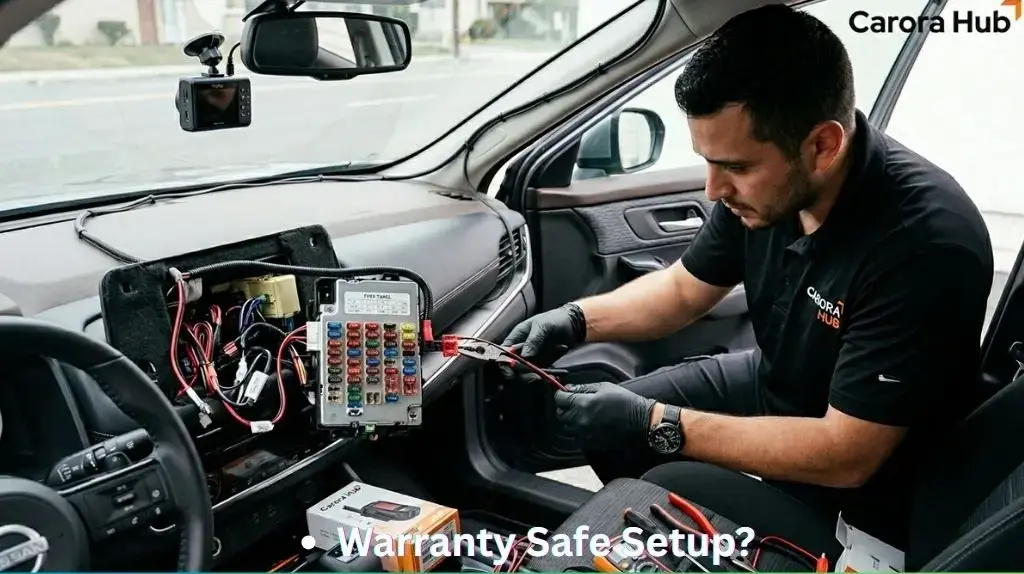
When you “hardwire” a dash cam, you connect it directly to the car’s electrical system. This is usually done at the fuse box with a hardwire kit or fuse tap. The main reason people hardwire is for parking mode — the camera can record while the car is off. Hardwiring also hides wires and frees the 12V socket.
Because this is a physical change to wiring, many people worry: Will this void my car’s warranty?
Understanding Car Warranties
To know if a dash cam affects your warranty, you need to know what a warranty covers. I’ll keep this simple.
A car warranty is a promise from the maker or dealer to fix certain faults for free. It usually runs for a set time or miles. Main types include:
- Bumper-to-bumper warranty: Covers most parts except normal wear items
- Powertrain warranty: Covers engine, transmission, and related parts
- Corrosion/rust warranty: Covers body rust damage
Warranties cover defects in the car. They do not cover damage caused by modifications or third-party parts. That’s the key point to remember.
Before installing permanent power, Can I use a regular SD card in a dash cam helps ensure your setup is reliable.
Car Modifications And Warranty Rules
Car makers expect owners to add accessories. This is vehicle modification. The main legal rule in the U.S. is straightforward: adding an accessory alone cannot void your warranty. The warranty can be denied only if the modification causes the damage.
This protection comes from the Magnuson-Moss Warranty Act. It prevents unfair warranty denials. Still, if your modification is the cause of a failure, you’ll likely pay for that repair.
Quick comparison — what is and isn’t covered:
| Action | Warranty Status | Reason |
|---|---|---|
| Install dash cam using 12V socket | Covered | No change to car wiring |
| Hardwire dash cam incorrectly | Not covered (if damage occurs) | Modification caused electrical fault |
| Hardwire dash cam professionally with no issues | Covered | No proven connection to any problem |
How Hardwiring Can Affect Your Warranty
Installing a dash cam does NOT automatically void your warranty. How you install it matters a lot. Here are the three likely outcomes I’ve seen in real cases.
1. No Damage, Proper Installation:
If installed correctly, a hardwired dash cam won’t void the warranty. The maker can’t deny unrelated repairs just because you added a camera. I’ve had a camera hardwired in my car for years with no warranty issues.
2. Bad Installation Causes Damage:
If the install is poor — wires cut, wrong fuse, short circuit — and that causes a fault, the repair tied to that damage can be denied. I once saw a DIY tap into the wrong fuse and it drained the battery. The dealer pointed to the wiring when denying coverage for the battery damage.
Dealers can say: “The dash cam install caused this.” If they can prove that, the cost is on you.
3. Unrelated Problems:
If a non-electrical part fails, like the AC compressor, the warranty should still cover it. The dealer must link the dash cam to the fault before denying the claim. If they can’t prove it, you’re covered.
Real-world Examples
Real people. Real outcomes. Here are examples I’ve collected and seen firsthand:
- Case 1: Proper Hardwire, No Issues
John had his camera hardwired with an add-a-fuse and good ground. Later, when his transmission failed, the dealer fixed it under warranty. The dash cam was not an issue.
- Case 2: DIY Mistake, Electrical Problem
Sarah hardwired hers and used the wrong fuse. Her lights flickered and the battery drained. The dealer found the wiring at fault. The repair cost was denied under warranty.
- Case 3: Unrelated Claim Denied (but challenged)
Mike’s infotainment failed. The dealer blamed the hardwired dash cam and denied the claim. Mike asked for proof. The dealer couldn’t show a link, so the warranty covered the repair.
What Car Manufacturers Say
Different brands phrase policies differently. But most follow similar logic: a modification is OK unless it causes damage.
| Car Brand | Official Position on Hardwiring | Notes |
|---|---|---|
| Toyota | Allowed if installed correctly | Dealer installation preferred |
| Honda | Allowed with proper installation | Warns against cutting wires |
| Ford | Modification must not cause faults | May void warranty if damage results |
| BMW | Check with dealer before modifying | Offers OEM dash cams |
| Hyundai | Third-party accessories not covered | Damage by accessory not covered |
My tip: check your owner’s manual. Then call the dealer and ask how they handle third-party installs. Get answers in writing if you can.
Dealer-installed Vs. Diy Dash Cams
Dealers often install dash cams. When a dealer or OEM-approved installer fits the camera, warranty worries drop. The dealer is responsible for proper work. They may even cover related faults.
DIY installs can be safe. But they rely on your skill. Poor work raises risk. I recommend a shop if you’re unsure.
How To Hardwire A Dash Cam Safely
If you choose to hardwire, follow best practices to protect your warranty and vehicle. Here’s a clear, step-by-step approach I use and recommend:
1. Use A Proper Hardwire Kit
Look for these features:
- Fuse tap (add-a-fuse) for a non-invasive connection
- Voltage protection to avoid draining the battery
- Correct connectors so you avoid cutting factory wires
Avoid kits that require splicing factory harnesses. A good kit reduces risk and makes removal easy.
2. Choose The Right Fuse
Tap a low-power, non-critical circuit — like radio or accessory. Never tap into airbag, ABS, or engine fuses. If you’re unsure, check the fuse diagram in your manual or ask a pro.
3. Ground Properly
Use a solid unpainted metal bolt for the ground. A poor ground causes noise, false warnings, and unpredictable behavior. I always test voltage at the ground before finalizing the install.
4. Protect The Battery
Use a hardwire kit with a low-voltage cut-off. This turns the camera off before the battery drops below a safe level. It prevents no-start situations and avoids unnecessary battery wear.
5. Avoid “permanent” Changes
Don’t drill holes or cut factory wires. Use existing trim clips, factory grommets, and removable connectors. This preserves the car and makes it easier to show the dealer what you did if asked.
6. Test Everything
After install, check these: headlights, indicators, A/C, infotainment, airbag light, and battery voltage. If any warning appears, stop. Find and fix the issue before you drive long distances.
7. Document The Process
Take photos step-by-step. Keep receipts for parts and labor. If a dealer questions your warranty later, documentation helps you prove the install was proper.
Professional Installation Vs. Diy
Some drivers can install safely. Most will benefit from a pro. Here’s a quick comparison based on my own installs and shop work I’ve seen:
| Method | Cost | Warranty Risk | Quality |
|---|---|---|---|
| DIY | Low ($10-$50 for kit) | Higher (if mistakes occur) | Depends on skill |
| Professional | Medium ($100-$300 incl. labor) | Low (if reputable installer) | High |
| Dealer | High ($300+) | Very low | OEM-quality |
Tip: If you use a shop, get a written receipt and a description of the work. That paperwork can help with warranty questions later.
What If There’s A Problem After Hardwiring?
If your car develops an issue after hardwiring, follow these steps I recommend:
- Stay calm. Your warranty isn’t automatically void.
- Assess the issue. Is it electrical, or unrelated?
- Let the dealer diagnose. They must determine the cause.
- Ask for proof. If they blame the dash cam, request evidence in writing.
- Get a second opinion. Another dealer or certified mechanic can help.
If the dash cam didn’t cause the problem, your warranty should remain valid. If it did, you likely pay for that repair — not lose the entire warranty.
Common Mistakes To Avoid
Here are the common errors I see that cause warranty headaches:
- Cutting factory wires instead of using a fuse tap
- Tapping into airbag, safety, or engine fuses
- Using poor-quality kits that lack voltage protection
- Leaving wires loose where they can snag or short
- Not checking all systems after installation
Avoid these, and you lower the chance of a denied claim.
Should You Tell Your Dealer About A Dash Cam?
You don’t need to tell the dealer about every accessory. But be honest if your car needs service and you have a hardwired dash cam. Dealers will often notice the install. Being open helps build trust and avoids surprises.
If you want the dealer to install it or review your plans, ask them. Some dealers offer dash cam installation as an add-on.
Insurance And Dash Cam Hardwiring
Some insurers offer discounts for dash cams. Hardwiring gives true 24/7 coverage. Insurers value parking surveillance and continuous recording. Still, if a bad install causes a fire or electrical damage, your insurer may deny that claim.
Tip: Check with your insurance agent before you hardwire. Ask if they require documentation or approve specific models for discounts.
Legal Aspects In Different Countries
This guide is US-focused, but similar rules exist elsewhere. In the UK, the Consumer Rights Act 2015 limits unfair warranty denials. In Australia, the Australian Consumer Law offers similar protections. Many countries protect consumers against blanket warranty voids for modest modifications.
Still, dealers can be stricter in some places. Always check local laws and your warranty terms.
Non-obvious Insights Most People Miss
1. Not All Dash Cams Are Created Equal
Some cameras draw more power, run hot, or aren’t made for 24/7 use. Cheap cameras are riskier. Choose reputable brands that support parking mode and have good heat and power management. Read reviews and spec sheets before buying.
2. Some Cars Have “accessory Power” Settings
Modern cars have smart power systems. Some cars cut accessory power after a few minutes. That can make parking mode tricky. For these cars, an OEM dash cam or an experienced installer is a good choice. Also consider an intelligent hardwire kit that works with smart power states.
What Matters Most To Protect Your Warranty
- Quality of installation — use proper kits, never cut factory wires, and protect the battery.
- Documentation — keep photos, receipts, and a clear description of the work.
- Proof — if a claim is denied, ask the dealer to prove the dash cam caused the problem.
- Professional help — when in doubt, use a certified installer or the dealer.
When Is Hardwiring Not A Good Idea?
There are cases when hardwiring is a poor choice:
- Leased cars — some leases ban electrical modifications.
- New cars with complex smart electrical systems — these may need special knowledge or kits.
- If you plan to sell soon — buyers may be wary of a modified electrical system.
In these cases, use a plug-in option or a battery pack.
Alternatives To Hardwiring
If you don’t want to hardwire, try these options:
- 12V socket power — easy and safe, no wiring changes
- OBD-II port adapters — plug into the diagnostic port (works on some cars)
- Battery packs — dedicated dash cam battery packs that don’t touch the car wiring
These methods may not support full parking mode. But they avoid warranty risk and are good for temporary or leased cars.
How To Talk To Your Dealer About Dash Cams
Ask these direct questions when you talk to your dealer. I always do:
- Do you offer dash cam installation?
- Does installing a dash cam affect my warranty?
- What happens if there’s a problem caused by the dash cam?
- Can I use my own dash cam, or do I need an “approved” model?
Get answers in writing when possible. Written confirmation helps if a future dispute arises.
Should You Worry About Your Warranty?
For most drivers, the answer is no. If you install a dash cam carefully and follow best practices, your warranty should remain intact. The key is to avoid mistakes, document the work, and use quality parts or a reputable installer.
If a dealer tries to deny a claim because of your dash cam, remember your rights. The burden is on them to show the camera caused the problem. The Magnuson-Moss Warranty Act and similar laws protect you.
For more detail on the law see FTC.gov.
Follow these guidelines and stay informed. You can enjoy the safety and peace of mind a dash cam gives without needless worry about your car’s warranty.
FAQs Of Does Hardwiring a Dash Cam Void My Car Warranty
Does Installing Any Dash Cam Void My Warranty?
No. Simply installing a dash cam — especially if you use the 12V socket or USB — does not void your car’s warranty. Hardwiring only risks your warranty if it causes damage.
What Should I Do If My Dealer Says My Warranty Is Void?
Ask for written proof. Dealers must show that your dash cam caused the problem. If they can’t, your warranty should still apply.
Is It Better To Have A Professional Install My Dash Cam?
Yes, especially if you are not comfortable with car wiring. Professional installers know how to avoid common mistakes that can cause warranty problems.
Can I Remove A Hardwired Dash Cam Before Going To The Dealer?
You can, but some signs of installation may remain. It’s better to use proper methods and be honest with your dealer.
Are Dash Cam Battery Packs A Good Alternative?
Yes. Dedicated battery packs power your dash cam without changing the car’s wiring. They are more expensive, but they avoid any risk to your warranty.

I am Julian Drive, an automotive enthusiast and repair expert with over 7 years of hands-on experience in vehicle maintenance. At Carora Hub, I simplify complex car issues into easy-to-follow DIY guides to help drivers stay safe and save on repair costs.