Stop worrying about the weather while your battery is dead. Understanding is it safe to jump start a car in the rain gives you the confidence to handle a wet-weather breakdown safely and efficiently without any guesswork.
This is not just a practical question; it’s a safety concern that can make even an experienced driver hesitate.
In this article, we’ll journey through the science, risks, and real-life advice about jump starting a car in the rain. You’ll get clear answers, practical steps, and honest insights that go beyond the usual car manual instructions. By the end, you’ll know when it’s truly safe, when to wait, and how to keep yourself protected if you ever need to revive a dead battery on a stormy day.
Understanding The Basics Of Jump starting A Car
Before we dig into the details of wet-weather jump-starts, let’s look at how jump-starting works. Most people know the basics: you use a working battery (usually from another car) to give power to a dead battery. You do this with jumper cables—thick wires with metal clamps on each end.
Inside your car, the battery stores energy as chemical power. When you turn the key, it sends an electric current to the starter motor, which gets the engine running. If the battery is low, there’s not enough power to start. Jump-starting provides a quick, temporary fix by sharing power from another battery.
But there’s more to it than just connecting cables. The process involves:
- Electricity: Direct current (DC), usually 12 volts.
- Positive and negative terminals: Each battery has a “+” (positive/red) and “–” (negative/black) post.
- Safety risks: Sparks, short circuits, and battery acid.
Understanding these basics helps you see why rain adds more complexity—and more things to be careful about.
The Science: Electricity, Water, And Your Car
Water and electricity are a risky mix, but the details matter. In theory, pure water does not conduct electricity well. However, rainwater is not pure—it contains minerals and impurities that make it a good conductor. This means that jump-starting your car in the rain could, in some cases, increase the chance of short circuits or shocks.
But here’s a key point: car batteries use low-voltage DC power. Unlike household AC outlets, which can be deadly, 12-volt DC systems are generally less dangerous for humans. Still, under the right (or wrong) conditions, even 12 volts can cause problems, especially if cables are damaged or connections are loose.
Let’s look at why water can make things worse:
- Wet hands or metal surfaces can create better paths for electricity, raising the risk of a mild shock or spark.
- Water inside connectors can cause corrosion later, even if the jump works now.
- Slippery conditions make it easier to drop a cable, which can cause accidental shorting.
These risks are not just theory. In real-world situations, many drivers have reported sparks or fizzing sounds when jump-starting in the rain. While most survive without injury, the risk is still real, especially for beginners.
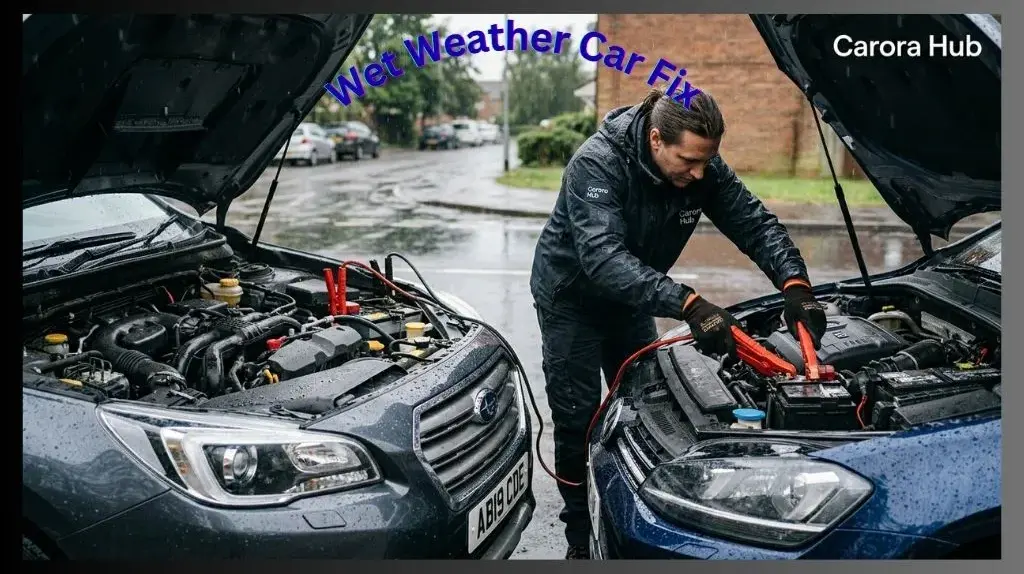
Is It Safe To Jump Start A Car In The Rain?
The short answer: it can be safe, but only if you follow some strict precautions. Most modern cars are built with insulation and weatherproofing around the battery and electrical systems. If you use proper technique, good cables, and take your time, the chance of serious danger is low.
However, “low risk” is not the same as “no risk.” Here are the main dangers:
- Electric shock: Rare but possible, especially with wet hands or damaged cables.
- Sparks and explosions: Car batteries can produce hydrogen gas, which is flammable. A spark near the battery in wet conditions could, in rare cases, ignite gas.
- Slips and falls: Wet pavement increases the chance of slipping while handling cables.
So, while it’s not usually as dangerous as people fear, you must be extra careful. Don’t rush, and never ignore your instincts if something feels wrong.
Step-by-step Guide: How To Jump Start Safely In The Rain
If you decide you must jump-start your car during rain, follow these steps. Each step is designed with safety in mind.
- Park the Cars Safely
- Move both vehicles as close as possible, but do not let them touch.
- Turn off both engines and set the parking brakes.
- Make sure you’re not standing in deep puddles. Water up to your ankles or higher increases risk.
- Prepare Your Equipment
- Use insulated jumper cables in good condition. Never use cables with cracked or exposed wires.
- Wear rubber gloves if you have them, or at least keep your hands dry.
- Wipe off battery terminals and cable clamps with a dry cloth if possible.
- Connect the Cables in the Right Order
- Attach one red clamp to the positive terminal of the dead battery.
- Attach the other red clamp to the positive terminal of the good battery.
- Attach one black clamp to the negative terminal of the good battery.
- Attach the other black clamp to an unpainted metal part of the dead car (like a bolt on the engine block), not directly to the negative terminal. This reduces spark risk.
- Start the Working Car
- Let it run for 1–2 minutes to send power to the dead battery.
- Start the Dead Car
- Try turning the key. If it doesn’t start, wait another minute, then try again.
- Don’t crank for more than 10 seconds at a time.
- Remove the Cables in Reverse Order
- Remove the black clamp from the grounded metal part.
- Remove the black clamp from the good battery.
- Remove the red clamp from the good battery.
- Remove the red clamp from the dead battery.
- Let the Jumped Car Run
- Keep the engine running for at least 15–20 minutes to recharge the battery.
This process is similar in dry weather, but rain adds extra steps: keep things as dry as you can, don’t hurry, and check all connections before each step.
Common Mistakes When Jump Starting In The Rain
Even experienced drivers can make mistakes, especially when they’re cold, wet, or stressed. Here are the most common errors and how to avoid them:
- Touching Metal Parts While Connecting Cables
- If your hand is wet and you touch both cable clamps together or touch a clamp and the car body, you could get a mild shock or cause a spark.
- Placing Clamps on Dirty or Wet Battery Terminals
- Water, dirt, or oil can reduce the connection and cause arcing (sparks). Wipe terminals before connecting.
- Connecting to the Wrong Terminals
- Mixing up positive and negative can damage both cars’ electrical systems and create big sparks.
- Jump Starting with Damaged Cables
- Cracked insulation lets water in, increasing the risk of short circuits.
- Standing in Deep Water
- Even if the voltage is low, standing in a puddle while handling electricity is never smart.
- Rushing the Process
- Many accidents happen when people try to finish quickly, especially in bad weather. Take your time.
Many of these mistakes are easy to avoid if you stay calm and pay attention to each step.
Real-world Data: How Often Do Accidents Happen?
Let’s look at some numbers to understand the true risk. According to the National Fire Protection Association (NFPA), car battery-related fires and explosions are rare, making up less than 1% of vehicle fires in the US each year. Most injuries come from improper handling of jumper cables, not from rain or water alone.
In a 2022 survey of roadside assistance companies, about 15% of jump-start service calls happened during rain or snow. Only a tiny fraction (less than 0. 05%) reported any injury or damage related to wet conditions.
Still, insurance companies often warn drivers not to jump-start in heavy rain unless absolutely necessary. Their main concern is not electrocution, but the risk of slipping, dropping equipment, or causing battery damage due to rushed or careless connections.
How Rain Affects Your Car’s Electrical System
Your car’s electrical system is built to handle moisture. The battery, wires, and key connections are usually shielded or covered. However, problems can develop if water gets into:
- Cracked battery cases: Water can mix with acid, causing corrosion and reducing battery life.
- Loose cable connections: Water can seep in, leading to rust and poor conductivity.
- Exposed wires: Older cars or DIY repairs may leave wires unprotected.
If you regularly drive or park in wet conditions, it’s a good idea to check your battery and cables each season. Look for white or green powder (corrosion) and clean with a battery brush. Replace damaged cables right away.
When You Should Not Jump Start In The Rain
There are times when it’s better to wait for help rather than risk a jump-start. Here’s when you should avoid it:
- Thunder and Lightning
- Handling metal cables during a thunderstorm is dangerous. Lightning can strike vehicles or the ground nearby.
- Flooded Areas
- If water is above your ankles or pooling near the battery, don’t try to jump-start. Wait for the rain to pass or call for help.
- Damaged Battery or Cables
- If you see cracks, leaks, or exposed wires, do not attempt a jump. Batteries can explode if damaged.
- You Feel Unsafe or Unsure
- If you’re nervous, cold, or not confident, it’s better to call roadside assistance.
- Modern Cars with Sensitive Electronics
- Some new cars have advanced computer systems. Jump-starting the wrong way can cause thousands of dollars in damage.
In these cases, waiting for a professional is the safest option.
Comparing Jump Starting In Wet Vs. Dry Weather
Here’s a side-by-side look at the differences between jump-starting in rain and in dry conditions:
| Factor | Dry Weather | Rainy Weather |
|---|---|---|
| Shock Risk | Very low | Slightly higher (if hands/equipment are wet) |
| Sparking Risk | Low | Moderate (wet connections can spark more easily) |
| Corrosion Risk | Low | Higher (moisture can cause rust later) |
| Slipping Risk | Low | High (wet ground is slippery) |
| Visibility | Good | Reduced (rain, fog, poor light) |
| Comfort | Comfortable | Uncomfortable (cold, wet) |
As you can see, most risks are higher in the rain, but not by a huge margin if you’re careful.
Extra Tips For Safe Jump Starting In Bad Weather
Here are some extra pieces of advice many guides don’t mention, but can make a real difference:
- Keep an umbrella handy: One person holds the umbrella over the battery area while the other connects cables. This keeps things dryer and safer.
- Carry a headlamp or flashlight: Rainy days are often dark. Good light helps you see the terminals clearly, reducing mistakes.
- Use a plastic mat or rubber car mat: Stand on this to keep your feet dry and insulated from wet ground.
- Check your car manual: Some cars (especially hybrids or EVs) have special jump-start instructions. Don’t guess—read first.
- Store jumper cables in a waterproof bag: Wet cables can rust over time.
- Practice in good weather: If you’ve never jump-started a car, try it in your driveway on a dry day. Muscle memory helps when you’re stressed.
These small preparations can turn a stressful moment into a safe, manageable task.
Alternatives To Traditional Jump Starting
There are modern solutions if you want to avoid using another car and cables, especially in the rain.
- Portable Jump Starters
- These are battery packs designed to start your car without another vehicle. Many are water-resistant and have safety features to prevent sparks. They’re perfect for emergencies, but need to be charged every few months.
- Roadside Assistance Services
- Many insurance policies include roadside help. Call them, and a professional will jump your car safely, even in bad weather.
- Push Start (Manual Transmissions Only)
- If you drive a stick shift, you can sometimes push-start the car. This won’t work for automatics or if the battery is completely dead.
Here’s a quick comparison:
| Method | Pros | Cons |
|---|---|---|
| Traditional Jumper Cables | Cheap, reliable, works with most cars | Needs another car, not ideal in rain |
| Portable Jump Starter | Works alone, safer in rain, compact | Must keep charged, higher upfront cost |
| Roadside Assistance | Safe, no work for you | Wait time, may cost extra |
| Push Start | No tools needed, instant | Manual cars only, not for total battery failure |
For most people, a portable jump starter is a smart backup, especially if you live in a rainy climate.
What Most Beginners Don’t Realize
There are a couple of insights that often surprise new drivers:
First, jump-starting in the rain is not as dangerous as many people fear, but it requires patience and good habits. The real risks—like slipping, mixing up cables, or using damaged tools—are more common than electrocution.
Second, even one small mistake (like connecting the wrong terminal) can damage both cars’ computers, leading to expensive repairs. It’s not just about safety for you—it’s also about protecting your wallet.
And here’s an advanced tip: if your car’s battery keeps dying, rain is probably not the problem. Most battery failures come from age, poor maintenance, or leaving lights on. If you need a jump more than once every few months, have your battery and alternator checked by a mechanic.
How To Care For Your Battery And Cables After A Wet Jump Start
After jump-starting in the rain, take a few minutes to maintain your equipment:
- Dry off cables and terminals before storing them. This reduces rust and corrosion.
- Spray terminals with battery protector (available at auto stores) to keep moisture out.
- Inspect cables for any damage and replace if you see cracks or worn spots.
- Test your battery at a shop within a few days. Many places will check it for free.
Regular care extends the life of your battery and keeps you ready for the next emergency.
Real-life Stories: Lessons Learned From The Road
Stories bring the topic to life. Here are a few real situations that show the range of what can happen:
Case 1: The Rainy Commute
Maya, a teacher in Seattle, found her car dead after work—on one of the city’s wettest days. She had never jump-started a car, but a coworker helped. They used an umbrella, stood on a rubber mat, and followed each step carefully. The car started, and both felt proud (and a bit relieved). Lesson: Teamwork and simple tools make the process much safer.
Case 2: The Rookie Mistake
Jake, a college student, rushed to jump his car during a thunderstorm. He mixed up the red and black clamps, causing a giant spark and killing the working car’s battery. Both cars needed repairs. Lesson: Never rush or guess—double-check every connection, especially in bad weather.
Case 3: The Prepared Driver
Lina kept a portable jump starter in her trunk. When her battery died in heavy rain, she jump-started it herself in minutes—no cables, no help, and no stress. Lesson: Preparation makes all the difference, especially when the weather is against you.
The Bottom Line: Is It Worth The Risk?
In most cases, jump-starting a car in the rain is reasonably safe if you follow proper steps and use good equipment. The chances of serious injury or car damage are low, but not zero. The biggest dangers come from rushing, using broken cables, or ignoring wet conditions around the battery.
If you have a choice, wait for the rain to slow or call for help. If you must do it yourself, go slowly, keep things as dry as possible, and double-check every connection. Your safety—and your car’s health—are worth the extra time.
For more details on car battery safety, you can visit the National Highway Traffic Safety Administration.
Jump-starting in the rain is a skill every driver should understand. With the right steps, the right tools, and a bit of patience, you can stay safe—even when the weather is not on your side.
FAQs On Is It Safe to Jump Start a Car in the Rain
Can I Get Electrocuted By Jump-starting A Car In The Rain?
The risk is very low because car batteries use low-voltage DC power. However, wet hands or damaged cables can make mild shocks more likely. Always keep hands dry, use insulated tools, and avoid standing in puddles.
Is It Safe To Touch The Battery Terminals With Bare Hands In Wet Conditions?
It’s best not to. While the voltage is low, wet skin conducts electricity more easily. Wear rubber gloves or at least dry your hands before touching terminals or clamps.
What Should I Do If The Battery Is Cracked Or Leaking In The Rain?
Do not attempt to jump-start a cracked or leaking battery, wet or dry. Battery acid is dangerous and can cause burns. Call roadside assistance and keep away from the car until a professional arrives.
Does Jump-starting In The Rain Damage The Car’s Electronics?
If you follow the correct steps, it usually does not. The biggest risk comes from connecting cables to the wrong terminals or causing a short. Always double-check connections, especially in poor weather.
Are Portable Jump Starters Safe To Use In The Rain?
Many portable jump starters are designed to be water-resistant. Check your device’s manual for details. Keep the main unit dry as much as possible, and use insulated clamps. If in doubt, wait for lighter rain or cover the area with an umbrella.

I am Julian Drive, an automotive enthusiast and repair expert with over 7 years of hands-on experience in vehicle maintenance. At Carora Hub, I simplify complex car issues into easy-to-follow DIY guides to help drivers stay safe and save on repair costs.