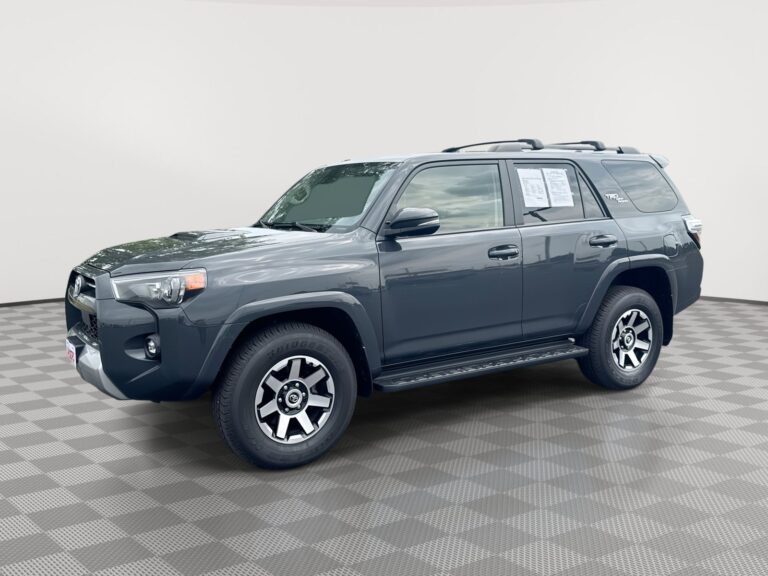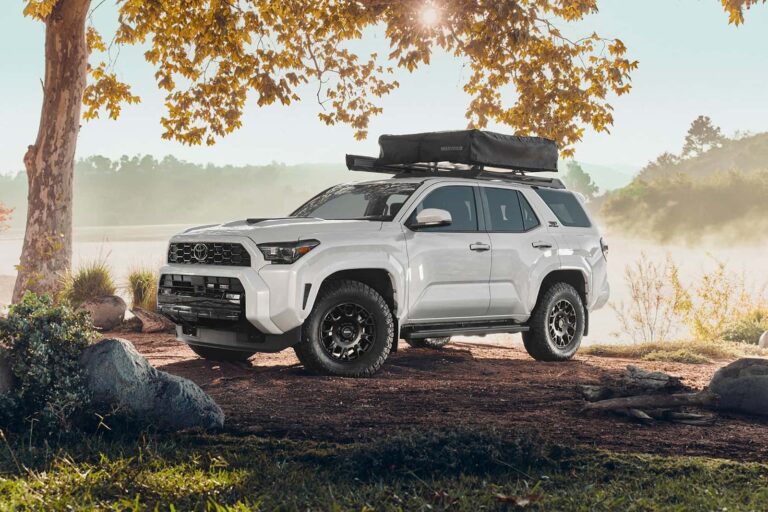
The best roof racks for Toyota 4Runner owners are the OEM-style rail and crossbar set, aftermarket platform racks, basket racks, and low-profile bar systems. All four carry gear on top of your truck. What separates them is how much weight they hold, how much noise they make, and whether you want a clean daily look or a full camping setup.
Roof rack types for a 4Runner
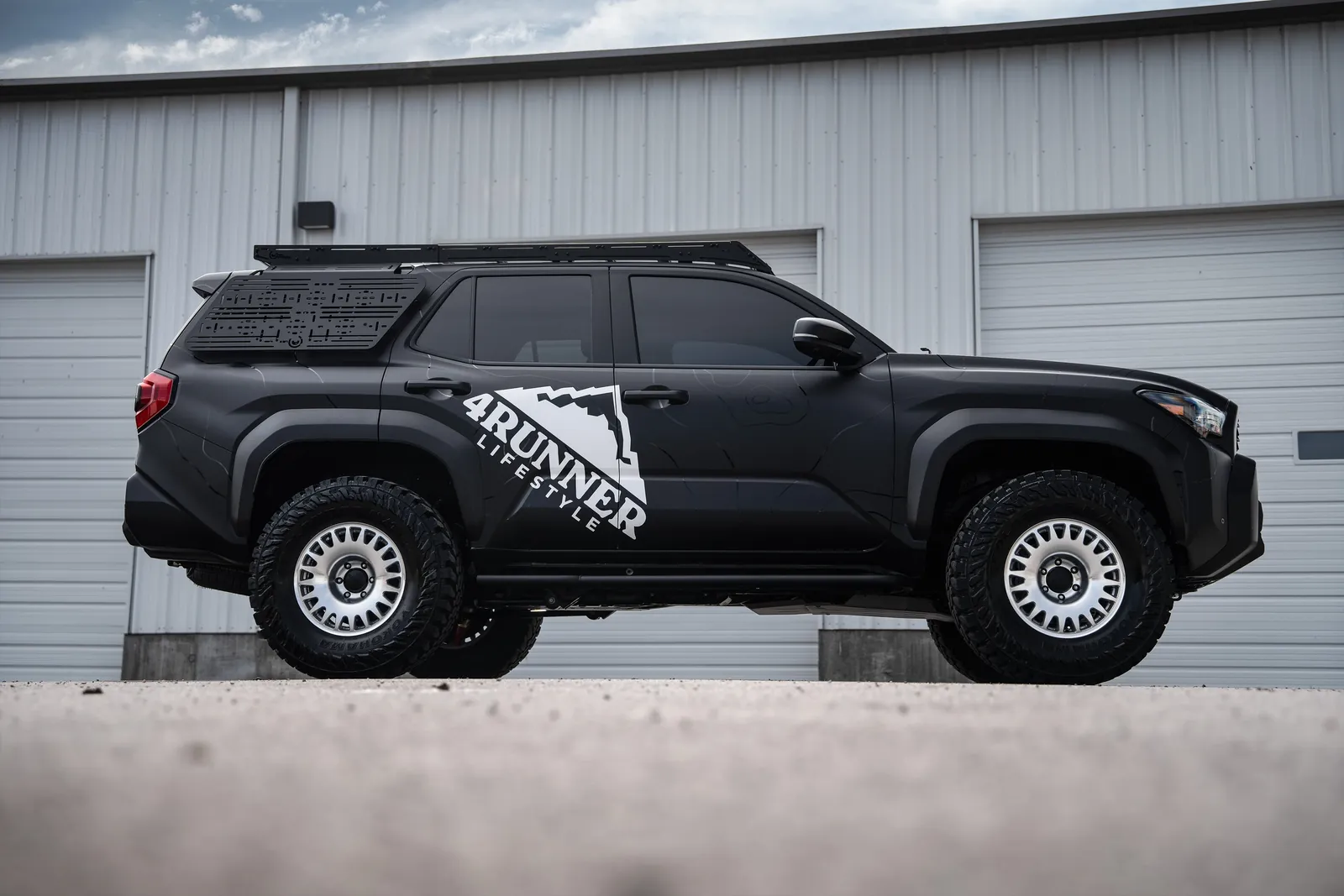
| Rack type | Best for | Example |
|---|---|---|
| OEM-style rails and crossbars | Daily driving, light loads | Factory crossbars on a TRD Off-Road |
| Platform rack | Roof tents, heavy gear | Prinsu-style flat deck |
| Basket rack | Camping trips, bulky items | Curved steel basket |
| Low-profile bars | Quiet highway driving | Aero crossbars |
| Ladder-style rack | Full-length cargo | Baja-style full rack |
Every type here bolts to the 4Runner’s roof rails or the mounting points on the roof itself. Check your trim first, because some 4Runners come with rails and some don’t.
OEM-style rails and crossbars
The factory rail and crossbar setup is the rack that comes with many 4Runner trims, and it’s the easiest place to start. It suits owners who mostly drive on roads and carry light gear. If your 4Runner already has rails, you may only need to add crossbars.
- Carries luggage, bikes, and small boxes without extra drilling
- Keeps the factory look and resale value
- Works with most roof boxes and bike mounts
- Costs less than a full aftermarket system
Toyota lists the dynamic load limit for its own roof racks in the owner’s manual, so read that page before you load anything. A typical example: a family straps two duffel bags and a cooler to the factory bars for a weekend trip, staying under the manual’s stated limit.
Platform racks
A platform rack is a flat, open deck that runs the length of the roof, and it does something crossbars can’t — it gives you a solid surface to mount almost anything. It suits owners who camp, overland, or carry a roof tent.
- Mounts a roof tent, awning, and jerry cans at once
- Spreads weight across a wide, flat surface
- Lets you bolt on lights, traction boards, and tools
- Keeps gear low and out of the wind
One real example: you bolt a two-person roof tent to a platform rack and sleep on top, leaving the cabin free for gear. The weight limit depends on your rack’s rated capacity and your 4Runner’s roof rating — check both before you load.
Basket racks
A basket rack is a raised tray with side walls, and unlike a flat platform it stops loose items from sliding off. It suits campers and families who throw in bulky, odd-shaped loads.
- Holds coolers, firewood, and chairs without straps everywhere
- Adds side rails that catch shifting gear
- Fits over an existing rail system on many models
- Handles tall items a flat deck can’t contain
A typical use: you load a cooler, two camp chairs, and a folded table into the basket for a beach trip. The walls keep everything in place on turns. One limit — a basket adds height and wind noise, so it’s a poor pick if you drive long highway miles every day.
Low-profile aero bars
Low-profile aero bars are slim, quiet crossbars shaped to cut wind noise, and they do one thing the others don’t — stay nearly silent at highway speed. They suit daily drivers who only occasionally carry a box or bike.
- Cuts wind noise compared with square bars
- Keeps a clean, low look on the roof
- Works with most roof boxes and bike trays
- Easy to remove when you don’t need them
One example: you fit aero bars, clip on a bike tray, and drive to the trailhead without the whistle you’d get from a basket. If you carry heavy or bulky cargo often, a platform or basket serves you better.
Other 4Runner rack options worth knowing
- Ladder-style full rack — a long frame that runs the whole roof, best for overlanders who want maximum mounting space.
- Roof box — a sealed hard shell that keeps luggage dry and locked, ideal for family trips and rain.
- Bike and kayak mounts — dedicated carriers that clamp to your bars, best if you haul one type of gear often.
- Awning mounts — brackets that hold a side awning, good for campers who want shade at the trailhead.
Each of these attaches to a rack you already have, so pick the rack first.
How to choose the right 4Runner rack
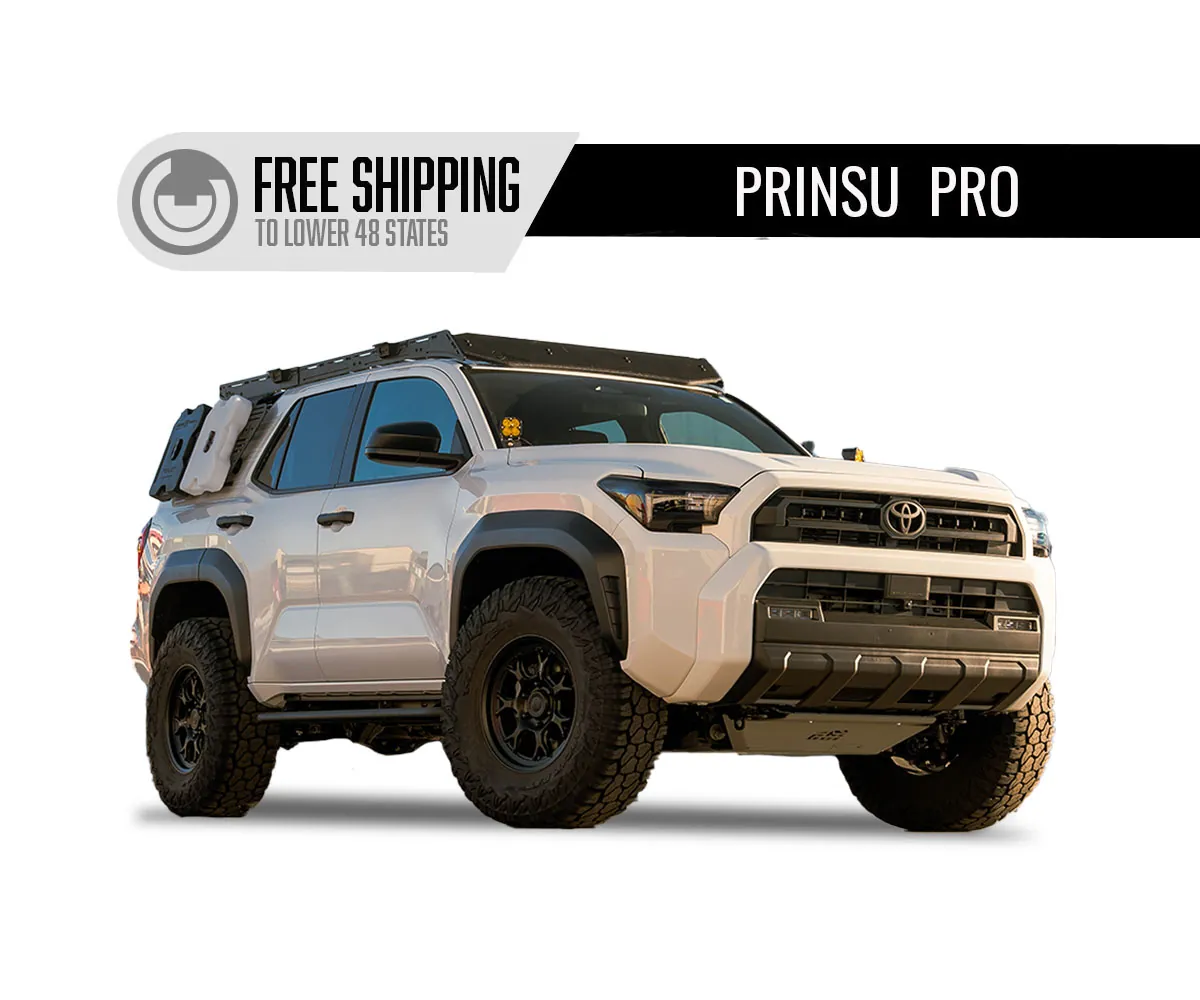
Your roof rails decide your starting point. If your 4Runner came with factory rails, the OEM-style crossbars or a platform that clamps to those rails is your simplest path — no drilling. If your truck has a bare roof, you’ll need a rack with its own mounting feet, and that narrows your list fast.
How you use the truck settles the rest. If you drive mostly on pavement and carry light loads, low-profile aero bars or OEM crossbars are yours. If you camp and want a roof tent, a platform rack is the one. If you haul bulky, loose gear, a basket rack wins. If you carry one bike or kayak, a simple bar set with a mount does the job.
These can be combined. A platform rack accepts a roof box, a bike tray, and an awning at once. But picking a basket usually means giving up the quiet highway ride of aero bars — you rarely get both.
Related guides
- Best Roof Racks For Toyota Prius: Top Picks & Fit Guide
- How to Install a Roof Rack on a Toyota Prius: Easy Step-by-Step Guide
- How to Install a Lift Kit for 33-Inch Tires on Toyota 4Runner
FAQs About What are the Best Roof Racks for Toyota 4Runner
Can I put a roof rack on any Toyota 4Runner?
No, it depends on your trim and roof. Many 4Runners come with factory roof rails, which most racks clamp onto. If your truck has a bare roof, you need a rack with its own mounting feet. Check your specific model year and trim before buying.
Why does my 4Runner roof rack make so much noise?
Wind noise comes from the rack’s shape and the gaps between bars. Square bars and baskets whistle more than aero bars. Moving the front crossbar back a few inches, or adding a fairing, often cuts the noise. If your rack is loose, tighten the mounts.
How long does it take to install a 4Runner roof rack?
Most clamp-on racks take about 30 to 60 minutes with basic hand tools, assuming your 4Runner already has rails. A rack that needs drilling or new mounting points takes longer and may need a shop. Read your rack’s own instructions for the exact time.
Is it safe to carry a roof tent on a 4Runner rack?
Only if the rack and your 4Runner’s roof are both rated for the tent’s weight, including people inside. Check the dynamic and static load limits in your rack’s documentation and Toyota’s owner’s manual. If either limit is unclear, ask the rack maker before you load.
What happens if I overload my 4Runner roof rack?
You risk cracking the roof, damaging the rails, or losing cargo on the road. Roof load limits are set by Toyota and by the rack maker, and the lower number wins. Weigh your gear and stay under that figure. Never guess.
Does a roof rack hurt my 4Runner’s gas mileage?
Yes, a little. Anything on the roof adds drag, and a tall basket or platform costs more than slim aero bars. The exact drop depends on your speed and the rack’s size. Expect the biggest hit at highway speeds with a full load.
How much weight can a 4Runner roof rack hold?
It varies by rack and model year. Toyota states a dynamic load limit in the owner’s manual, and aftermarket makers list their own ratings. The lower of the two is your real limit. Check both documents for your exact setup.
Do I need crossbars if my 4Runner already has rails?
Not always, but usually yes. Rails alone are the side tracks; crossbars are what your gear actually mounts to. Many 4Runner trims need you to add crossbars to the rails. Some racks replace the rails entirely.
What to do next
Check whether your 4Runner has factory roof rails, then read the load limit in your owner’s manual. Next, weigh your gear and confirm it stays under that limit before you install anything.

I am Julian Drive, an automotive enthusiast and repair expert with over 7 years of hands-on experience in vehicle maintenance. At Carora Hub, I simplify complex car issues into easy-to-follow DIY guides to help drivers stay safe and save on repair costs.