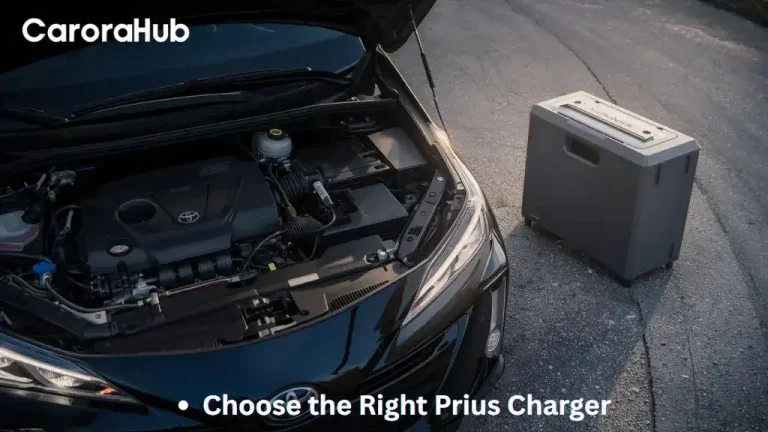
The 12V powers control systems; the hybrid battery drives the car with high voltage.
If you own a Prius, this guide will make your life easier. I’ve serviced these cars for years, and I’ve seen the same mix-ups over and over. In this Toyota Prius 12V battery vs hybrid battery explained guide, I break down what each battery does, how they fail, and what to do next. Read on to avoid costly mistakes and keep your Prius happy.
What the 12V battery does vs the hybrid (traction) battery
The Toyota Prius has two batteries that do very different jobs. The small 12V auxiliary battery powers computers, relays, lights, and locks. The large high-voltage hybrid battery powers the electric motors and moves the car.
Think of the 12V as the key that wakes the car. It boots the ECUs and closes the high-voltage contactors. Then the hybrid battery takes over and delivers drive power. In this Toyota Prius 12V battery vs hybrid battery explained breakdown, that split is the core idea.
Key differences you should know:
- 12V battery: about 12.6 volts at rest, low capacity, AGM type in most models.
- Hybrid battery: about 200 volts nominal, much larger energy, NiMH or Li‑ion.
- 12V starts systems only; it does not crank the engine.
- Hybrid battery powers MG1/MG2 and supports the gas engine when needed.
If you mix them up, you can chase the wrong fix. I’ve seen owners replace the hybrid pack when a weak 12V caused the issue. This Toyota Prius 12V battery vs hybrid battery explained guide helps you avoid that trap.
How the two batteries work together
On start-up, the 12V wakes the car. It powers the brake ECU, the hybrid ECU, and the dash. Those ECUs then close the hybrid battery contactors. Now the inverter and motors can run, and the car shows Ready.
Once in Ready, the DC‑DC converter uses high voltage to charge the 12V battery. You will see about 13.8 to 14.4 volts at the 12V terminals in Ready. So the 12V is a passenger once the car is on, while the hybrid battery and engine do the heavy lifting.
Here is the flow in plain steps:
- You press Start with your foot on the brake.
- 12V wakes the computers and closes relays.
- Hybrid battery links in and powers the inverter.
- DC‑DC converter feeds the 12V system and charges it.
- The car drives on electric power and gas as needed.
This Toyota Prius 12V battery vs hybrid battery explained view helps you see why a dead 12V can stop the car from going Ready, even if the hybrid battery is fine.
Chemistry, specs, and lifespan
The 12V battery in most Prius trims is an AGM type. It is small and sealed. It likes a gentle charge and dislikes deep discharge. Resting voltage near 12.6 V is healthy. Below 12.2 V is weak. Below 12.0 V is trouble.
The hybrid battery is a NiMH pack in most generations. Some trims use Li‑ion. Nominal pack voltage is around 201.6 V for NiMH. Capacity is about 1.3 to 1.6 kWh in non‑plug‑in models, but the car uses only a slice to extend life.
Typical lifespans I see in real cars:
- 12V battery: 4 to 6 years with normal use. Short trips and heat shorten life.
- Hybrid battery: 8 to 12 years is common. Many last longer with good cooling.
Other useful numbers:
- 12V charging in Ready: 13.8 to 14.4 V at the terminals.
- Healthy 12V parasitic draw: about 20 to 50 mA at rest.
- Hybrid battery health: balanced block voltages under load; steady temps.
If you need a quick mental model, the 12V is a flashlight battery, and the hybrid is a power tool pack. That image sticks, and it fits this Toyota Prius 12V battery vs hybrid battery explained guide.
Symptoms, testing, and diagnostics
A weak 12V often causes odd behavior. I have seen random warning lights, a no‑Ready condition, and memory resets in the radio. Door locks may feel slow. The problem can show up after the car sits for a week.
Quick 12V checks you can do:
- Measure resting voltage after the car sits overnight. Aim near 12.6 V.
- Turn the car to Ready. You should see about 14 V at the 12V battery.
- Do a load test if you can. Many parts stores can help.
Hybrid battery warnings look different:
- The engine revs more and fuel economy drops.
- The state of charge swings fast on the display.
- The battery fan in the rear gets loud.
- Codes like P0A80 (Replace Hybrid Battery) or P301X show up.
Use a scan tool for deeper checks. Toyota Techstream is ideal. Good third‑party apps also help. In shop tests, I look for block voltage spread under load and temperature deltas. This is the heart of Toyota Prius 12V battery vs hybrid battery explained in practice.

Replacement, cost, and warranty
Replacing the 12V battery is simple. Use the correct AGM type and vent it if required. Expect to pay $150 to $300 for the part and $50 to $150 for labor. Use a memory saver if you care about presets, but it is not required.
Hybrid battery choices vary:
- New OEM pack: $2,000 to $3,500 for parts, plus $500 to $1,000 for labor.
- Factory reman or reputable rebuild: often $1,200 to $2,500 installed.
- Module swaps: cheapest, but usually do not last. I do not advise it.
Warranty notes to keep in mind:
- Hybrid battery warranty was 8 years/100,000 miles in many states.
- In some states and newer models, it is up to 10 years/150,000 miles.
- 12V battery warranty is much shorter, often 1 to 3 years.
Get quotes in writing. Ask about core charges and disposal. A clear invoice builds trust. This Toyota Prius 12V battery vs hybrid battery explained section should help you plan and budget with calm.
Maintenance, storage, and safety
If you drive short trips, give the 12V some love. A smart maintainer set to AGM mode helps. I suggest 1 to 4 amps max. Driving in Ready for 30 minutes can also top it up.
For storage:
- Lock the car, then let it sleep. Avoid opening doors often.
- Use a maintainer if the car will sit for weeks.
- Keep the hybrid battery cool. Clear the vent by the rear seat.
Safety first with high voltage:
- Orange cables mean high voltage. Do not touch them.
- Remove the service plug only if you know the steps.
- Wear gloves and eye protection. Take off metal jewelry.
Jump‑starting tips:
- You can jump a Prius with a dead 12V to get Ready.
- Use the under‑hood jump points if equipped.
- Do not use your Prius to jump a large dead vehicle. It is risky.
These habits add years to both batteries. That is a key lesson in Toyota Prius 12V battery vs hybrid battery explained advice from the field.
Upgrades, myths, and common mistakes
Lithium 12V upgrades are popular now. They are light and can crank hard in other cars. In a Prius, gains are small. Cold weather can be tricky for some lithium drops. If you go that route, choose a model made for Prius and with a proper BMS.
Grid charging for NiMH can help balance a tired pack. It is not magic. It may buy time, but it does not fix bad modules. I have used it to stabilize packs before sale or while waiting on parts, but I still plan a real repair.
Mistakes to avoid:
- Replacing the hybrid pack when the 12V is weak.
- Using a standard charger on an AGM without the right setting.
- Blocking the rear seat vent with bags or pet hair.
- Ignoring a loud battery fan.
If you remember only one line, make it this: test before you spend. That is the spirit of Toyota Prius 12V battery vs hybrid battery explained and the fastest way to a calm, cheap fix.
Frequently Asked Questions of Toyota Prius 12V battery vs hybrid battery explained
Are the 12V and hybrid battery the same thing?
No. The 12V runs electronics and wakes the car. The hybrid battery is high voltage and powers the motors.
Can a bad 12V cause hybrid battery warnings?
Yes. A weak 12V can cause false codes and random lights. Always test and charge the 12V first.
How long does it take to charge the 12V in Ready mode?
About 30 to 60 minutes can help a low 12V. A smart maintainer does a safer and fuller job.
What are signs my hybrid battery is failing?
Rapid state of charge swings, worse MPG, and a loud rear fan are common. Codes like P0A80 confirm it.
Is it safe to jump‑start a Prius?
Yes, if you use the right jump points and correct polarity. Do not use your Prius to jump big dead batteries.
Which battery is more expensive to replace?
The hybrid battery costs far more than the 12V. Plan for thousands vs a few hundred.
Will a new 12V improve fuel economy?
Not directly. It improves reliability and startup behavior, which can help the car run as designed.
Conclusion
You now know the roles of both batteries, the signs they give, and the steps to fix issues with calm. Test first, start with the 12V, and keep the cooling path clean for the hybrid pack. These simple moves prevent drama and save real money.
Put this knowledge to work today. Check your 12V voltage, clear that rear vent, and set a reminder to drive the car long enough to charge. Want more tips like this? Subscribe, share your questions, or leave a comment with your Prius story.

I am Julian Drive, an automotive enthusiast and repair expert with over 7 years of hands-on experience in vehicle maintenance. At Carora Hub, I simplify complex car issues into easy-to-follow DIY guides to help drivers stay safe and save on repair costs.