Choosing the right brake fluid for your Toyota Prius requires matching your vehicle’s chemical requirements to your specific driving needs. While Genuine Toyota Brake Fluid offers factory-standard performance, Bosch ESI6-32N provides an extended service life. The best choice depends on your model year, local climate, and maintenance habits.
Best for: Drivers who want to extend the time between brake fluid flushes.
This fluid is designed for modern braking systems and aims to provide a longer service life than traditional options. It combines low viscosity with a high wet boiling point, which helps it perform well in various temperatures. Because it’s backward compatible with most systems, it can be a versatile addition to your garage.
The formula is designed to reduce wear and noise by providing excellent lubricity for your brake system components. If you decide to switch to this, remember that you’ll need multiple quarts to perform a full system flush. It isn’t compatible with vehicles that require DOT 5 fluids, so check your manual first.
Good if:

1. Genuine Toyota Fluid 00475-1BF03 Brake Fluid

-
- You want to follow the factory maintenance guide exactly.
-
- You prefer using Original Equipment Manufacturer (OEM) parts.
-
- You want to ensure full compatibility with existing seals.
-
- You’re looking for a fluid that lasts longer than standard intervals.
-
- You want a high-performance fluid for extreme temperature ranges.
2. BOSCH ESI6-32N Low Viscosity Extended Life Brake Fluid

-
- You want to go longer between brake fluid changes.
-
- You need a fluid that performs well in both heat and cold.
-
- You’re comfortable performing a full system flush.
-
- Your vehicle requires DOT 5 fluid.
-
- You only need a small amount for topping off.
3. Ford Genuine Ford Fluid PM-20 DOT-4 LV High Performance Motor

-
- Your car has an ABS system with stability control.
-
- You live in a climate with very cold winters.
-
- Your manual specifically calls for DOT-4 LV fluid.
-
- You have a much older vehicle that doesn’t use ABS.
-
- You prefer a standard DOT 3 fluid for simplicity.
4. Valvoline DOT 3 & 4 Synthetic Brake Fluid

-
- You want a high-boiling point for safety.
-
- You need a fluid that mixes easily with existing types.
-
- You want a widely available, reliable synthetic option.
-
- You need a specialized low-viscosity fluid for ABS.
-
- You only want to use the exact brand recommended by Toyota.
5. Prestone AS401 DOT 3 Synthetic Brake Fluid

-
- You drive in heavy traffic that heats up your brakes.
-
- You want to prevent a spongy pedal feeling.
-
- You need a fluid that exceeds government safety standards.
-
- Your car requires a higher DOT rating than 3.
-
- You want the latest low-viscosity technology.
6. Lucas Oil 10788 Synthetic Brake Fluid DOT 4

-
- You want to prioritize seal health and longevity.
-
- You prefer synthetic fluids for their heat resistance.
-
- You want a simple, reliable DOT 4 option.
-
- You need a fluid specifically engineered for low-viscosity ABS.
-
- You’re looking for an extended-interval fluid.
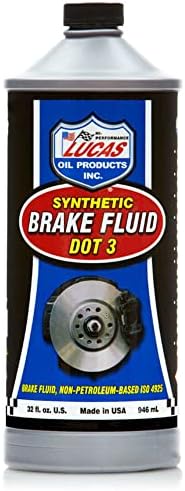
7. Lucas Oil 10826 Brake Fluid
-
- You have an older car with aging rubber seals.
-
- You want extra protection against rust and corrosion.
-
- You want a fluid compatible with most other types.
-
- You need a high-performance fluid for racing or extreme heat.
-
- You have a brand-new car under warranty that requires specific OEM fluids.
Where These Overlap
Most of these fluids overlap significantly in their basic function: they all serve as the hydraulic medium to stop your vehicle. Products like Valvoline DOT 3 & 4 and Prestone DOT 3 are very close in their goal of providing a safe, high-boiling point for standard driving. If you aren’t sure, these synthetic-based options are generally compatible with most systems that call for those ratings. The real difference appears when you look at the specialized formulas. Genuine Toyota Brake Fluid is the baseline for your vehicle, while Bosch ESI6-32N and Ford DOT-4 LV are targeted at modern vehicles with sensitive electronics. The Lucas Oil options are distinct because they lean heavily into seal protection and lubricity. If you have a standard daily driver, the choice between these often comes down to whether you want to prioritize long-term seal health or modern, extended-interval performance.Still Not Sure?
How often do I really need to flush my system?
Most manufacturers recommend changing your brake fluid every two to three years to remove moisture. Moisture causes corrosion and lowers the boiling point, which makes your pedal feel soft. If you want to go longer between these services, a fluid like Bosch ESI6-32N is designed for those extended intervals. If you prefer sticking to the manual, Genuine Toyota Brake Fluid is your safest bet.Does my car have a special ABS system requirement?
Using a standard, high-viscosity fluid in a system designed for low viscosity might result in sluggish ABS performance.Am I most likely to regret choosing the wrong DOT rating?
Yes, using the wrong DOT rating can be a serious mistake. While some are backward compatible, you should never use a lower-spec fluid than what your manual requires. For example, never use DOT 3 if your car requires DOT 4. You can find more information about these safety standards through the National Highway Traffic Safety Administration guidelines. If you’re unsure, stick to the fluid that matches your manual’s exact specification. Related guidesFAQs About Best Brake Fluids for Toyota Prius
Can I mix different brands of brake fluid?
You can generally mix fluids as long as they share the same DOT rating, such as mixing two different DOT 3 fluids. However, avoid mixing different classes, like DOT 3 and DOT 5, as they use different base chemicals that don’t work well together. For the best performance, it’s always better to perform a full system flush rather than just topping off with a different brand.Will changing my own brake fluid void my warranty?
Performing your own maintenance usually doesn’t void your warranty, provided you use fluids that meet the manufacturer’s specifications. You must keep records and receipts of the fluids you purchase to prove you followed the required service schedule. If you’re worried about potential issues, using Genuine Toyota Brake Fluid provides a clear link to the manufacturer’s own recommended maintenance path.Why does my brake fluid look dark in the reservoir?
Brake fluid absorbs moisture from the air, which causes it to darken and lose its effectiveness.Does the bottle size matter for my Prius?
The amount of fluid you need depends on whether you’re just topping off or doing a full system flush. A single 12 oz or 16 oz bottle is usually enough for a top-off. If you’re doing a full flush, you’ll need a 1-quart bottle, like the Bosch ESI6-32N or Lucas Oil 10826, to ensure you have enough to push all the old fluid out of the lines.Conclusion
Choosing between these fluids comes down to your maintenance style: stick with Genuine Toyota Brake Fluid for factory-standard reliability, or upgrade to Bosch ESI6-32N if you want to extend your service intervals.I’m Sarah, a passionate product analyst and content contributor specializing in automotive accessories at CaroraHub. With a keen eye for detail and a love for hands-on testing, I deliver honest, data-driven reviews that help shoppers make smarter buying decisions.
Affiliate Disclosure: As an Amazon Associate, I may earn from qualifying purchases at no extra cost to you.
Amazon and the Amazon logo are trademarks of Amazon.com, Inc, or its affiliates.