A direct look at the Toyota Prius hybrid drivetrain vs conventional drivetrain shows that the hybrid replaces a traditional multi-gear transmission, starter motor, and alternator with two electric motor-generators and an electronic power-split device. This design lets the car shut off its gasoline engine when stopped or coasting, while a conventional car keeps burning fuel unless fitted with an auxiliary start-stop system.
Toyota Prius hybrid drivetrain vs conventional drivetrain: Core differences
A conventional powertrain relies on a single power source: an internal combustion engine. This engine connects to a manual, automatic, or continuously variable transmission that uses belts, clutches, and hydraulic fluid to change gear ratios. Because a gas engine can’t produce torque at zero revolutions per minute, it needs a separate 12-volt starter motor to spin it up, along with an alternator to recharge that battery while driving.
The Toyota Prius uses a system called Hybrid Synergy Drive. It pairs an Atkinson-cycle gasoline engine with two electric motors and a high-voltage traction battery pack. The vehicle moves using power from the gas engine, the electric motors, or both at the same time. There’s no mechanical clutch or torque converter connecting the engine to the wheels.
| Feature | Conventional Powertrain | Toyota Prius Hybrid Drivetrain |
|---|---|---|
| Primary Power Sources | 1 Gas Engine | 1 Gas Engine + 2 Electric Motor-Generators |
| Transmission Type | Stepped Automatic, Manual, or Belt CVT | Power-Split Planetary Gear Set (e-CVT) |
| Starting Mechanism | Dedicated 12V starter motor | High-voltage electric motor (MG1) |
| Accessory Charging | Belt-driven alternator | Solid-state DC-DC converter |
| Braking Energy Capture | None (wasted as heat) | Regenerative (recharges traction pack) |
| Reverse Gear | Mechanical reverse gear idler | Electric motor runs backward |
How the Toyota hybrid system manages energy
The Hybrid Synergy Drive continuously balances power demands through a central computer called the Power Control Unit. This computer monitors vehicle speed, throttle position, and battery charge to decide the most efficient power path.
The role of the planetary gear set
Instead of shifting through physical gears, the Prius links the gas engine and both electric motors through a single planetary gear set. This setup acts as an electronically controlled continuously variable transmission.
The gas engine connects to the planet gear carrier, the smaller electric motor connects to the sun gear, and the larger electric motor connects to the outer ring gear that drives the wheels. By varying the electrical resistance and speed of the sun gear, the car can alter engine RPM independently of road speed. You get seamless acceleration without shift shock, though engine noise can spike during hard acceleration while the car catches up to the engine speed.
Read More: How to Maintain a Toyota Prius Hybrid Battery
Regenerative braking and battery charging
When you lift off the accelerator or press the brake pedal, the vehicle reverses the flow of power. The main drive motor turns into a generator, using the forward momentum of the car to spin the rotor and create electricity.
This process slows the vehicle while routing power through the inverter back into the hybrid battery. The friction brakes—the steel rotors and ceramic pads—engage whenever the braking demand exceeds the regenerative capacity of the motor-generators. This capture saves fuel that a standard car wastes as brake dust and friction heat.
Mechanical complexity and component longevity
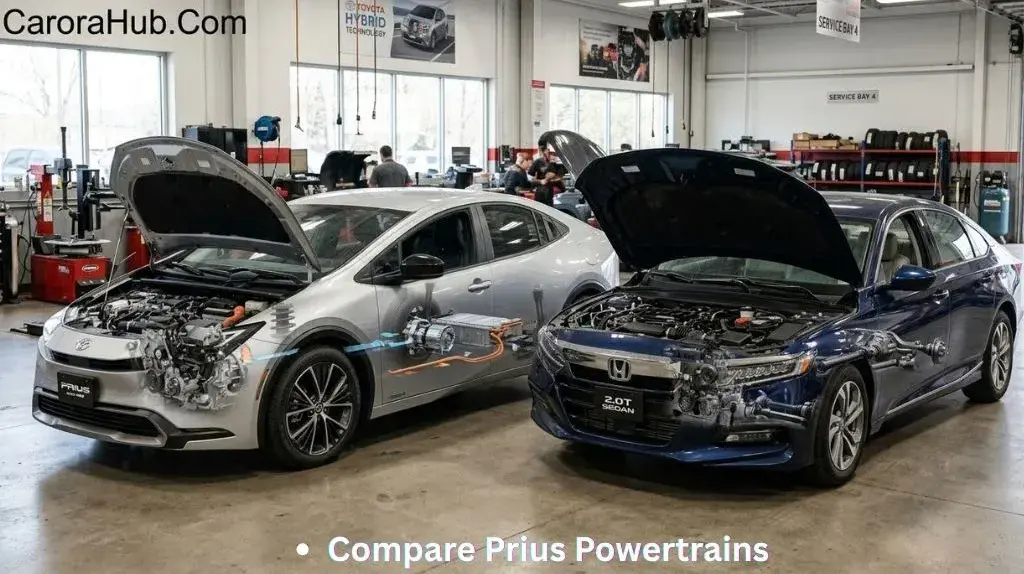
A hybrid has more electrical components than a standard car, but it removes several mechanical parts that commonly fail. The Prius doesn’t have an alternator, a conventional starter, power steering pumps, or drive belts. The water pump and air conditioning compressor run on electric motors powered by the high-voltage pack.
Wear parts last noticeably longer in the hybrid system. Because regenerative braking does most of the stopping work, brake pads and rotors often last past 100,000 miles before needing replacement. However, long-term battery degradation is a real trade-off; as the pack ages past a decade, internal resistance increases, which slowly lowers overall efficiency.
The system also has limits. For example, the high-voltage traction battery relies on an interior cooling fan located near the rear seats. If pet hair or luggage blocks that intake vent, the battery overheats and cuts electric assist. A standard car doesn’t carry this cooling vulnerability.
Real world fuel efficiency and driving dynamics
City driving shows the biggest difference between the two systems. A conventional car is at its least efficient in stop-and-go traffic because idling burns fuel without moving the vehicle, and accelerating from a dead stop requires high torque at low engine efficiency.
The Prius excels in the city because it shuts the engine off while waiting at red lights and starts moving using pure electric torque. The federal testing recorded on the official fueleconomy.gov database shows modern front-wheel-drive Prius models achieving around 57 miles per gallon in combined driving, while an efficient gas-only compact car averages around 32 to 35 miles per gallon under the same test procedures.
The driving dynamic feels different, too. If quick, mechanical gear shifts and sporty throttle feedback matter to you, don’t buy a hybrid with an e-CVT; if your daily priority is smooth traffic crawling and low fuel bills, choose the hybrid.
This setup isn’t for high-speed cross-country towers or people who carry heavy payloads daily. Under heavy strain, the Atkinson-cycle engine must work at high RPM, which erases much of the hybrid’s fuel advantage over a small displacement turbocharged gas engine.
Maintenance requirements and long term reliability
Routine maintenance intervals for a Prius look similar to a standard car: regular engine oil changes, tire rotations, and cabin air filter replacements. However, ignoring the hybrid inverter coolant loop is a mistake people actually make, and it costs them a significant repair bill if an overheated inverter module burns out.
The inverter uses its own dedicated cooling system with a separate radiator core and electric water pump. This fluid requires replacement just like standard engine coolant.
But remember that component lifespan varies by model year, climate, and driving habits—check the owner’s manual label for your exact service schedule.
FAQs Of Toyota Prius Hybrid Drivetrain vs Conventional
Does a hybrid vehicle require a special type of motor oil?
Toyota hybrids use ultra-low-viscosity synthetic oils, such as 0W-16 or 0W-20, to reduce internal engine friction. Because the gas engine repeatedly turns off and restarts during a trip, the oil must flow instantly at low temperatures to protect internal bearings. Always verify the correct grade on the oil filler cap.
Can a hybrid drivetrain be repaired by a standard mechanic?
Basic wear items like suspension arms, wheel bearings, and brake pads can be serviced by any licensed mechanic. However, issues involving the high-voltage cables, the power inverter, or internal transaxle motor-generators require a technician trained in high-voltage safety and hybrid diagnostics.
How does extreme cold weather affect hybrid battery performance?
Sub-zero temperatures slow the chemical reactions inside the nickel-metal hydride or lithium-ion cells. As a result, the computer runs the gas engine more frequently to warm the cabin and keep the battery within safe operating temperatures, which temporarily lowers winter fuel economy.
Is the resale value of a hybrid different from a gas-only model?
Modern hybrids maintain strong resale value due to persistent demand for fuel efficiency and long-term durability. Values often drop sharply once the car reaches 12 to 15 years old if the original traction battery hasn’t been replaced.
Toyota Prius, in short
Choosing between these systems really comes down to how you drive each day. If you’re tired of frequent fuel stops, it’s worth visiting a local dealership to test drive a hybrid model. You’ll quickly see how the seamless power delivery feels on the road, and you won’t want to look back.

I am Julian Drive, an automotive enthusiast and repair expert with over 7 years of hands-on experience in vehicle maintenance. At Carora Hub, I simplify complex car issues into easy-to-follow DIY guides to help drivers stay safe and save on repair costs.