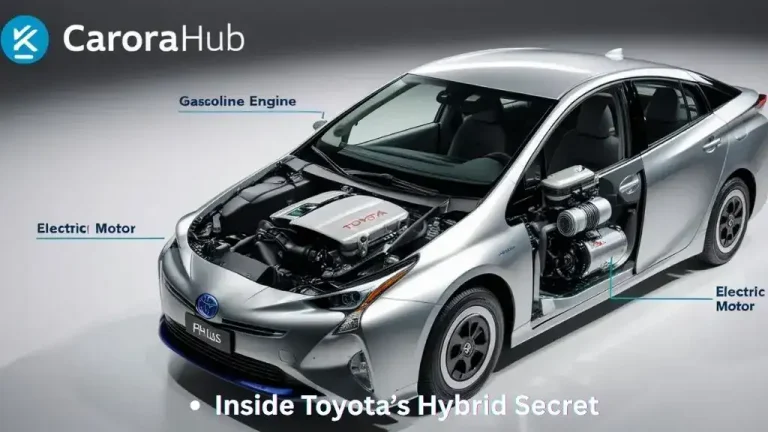
Toyota Prius hybrid battery recycling recovers valuable metals and keeps aging battery packs out of unsafe waste streams.
Toyota Prius hybrid battery recycling is more than a way to dispose of an old part. It is a careful process that tests, transports, dismantles, and reclaims materials from a high-voltage battery pack. This guide explains when recycling makes sense, how the process works, what it may cost, and how Prius owners can avoid safety and disposal mistakes.
What Toyota Prius hybrid battery recycling means
A Toyota Prius hybrid battery stores electricity for the hybrid drive system. Unlike a small 12-volt car battery, it contains many connected cells, electronic parts, cooling hardware, and high-voltage cables.
Toyota Prius hybrid battery recycling means sending the complete pack to a qualified handler. The handler makes the battery safe, separates its parts, and recovers useful materials. These materials may include nickel, cobalt, copper, aluminum, steel, plastics, and other components.
The term “recycling” is often confused with “reconditioning.” Reconditioning may restore a battery for continued use. Recycling breaks the pack down so its materials can enter another manufacturing cycle.
A recycling company may first test the battery. If the pack has usable modules, it may be suitable for repair or reuse. If the cells are badly damaged, recycling is usually the safer and more practical choice.
Why Prius hybrid battery recycling matters
A Prius battery can last many years, but no battery lasts forever. Heat, age, repeated charging cycles, and long periods of poor storage can reduce its capacity.
Leaving an old battery in a garage creates several risks:
• High-voltage shock can occur if someone opens or handles the pack without proper training.
• Damaged cells can leak, overheat, or catch fire.
• Heavy metals and other materials can harm soil and water if managed poorly.
• An abandoned battery loses valuable materials that could be recovered.
Toyota Prius hybrid battery recycling supports a circular supply chain. Think of the battery as a tool box made of useful parts. Even when it can no longer power a Prius, some of its metal and electronic content still has value.
Recycling also reduces the need to mine every material from new sources. It does not remove the environmental impact of battery production, but it helps lower waste and supports better resource use.
Read More: Toyota Prius Hybrid Battery Replacement Vs Repair
When a Prius battery should be recycled
A weak battery does not always need immediate recycling. Some packs need a proper diagnosis, while others have reached the end of their useful life.
Common signs of a failing Prius hybrid battery include:
• A hybrid system warning light
• Reduced fuel economy
• The gasoline engine running more often
• A battery charge display that changes quickly
• Uneven battery bars on the dashboard
• A cooling fan that runs loudly or often
• Weak acceleration or limited electric assistance
These signs can also come from other problems. A blocked battery fan, weak 12-volt battery, failed sensor, or electronic fault may create similar symptoms.
A qualified technician should scan the vehicle before anyone replaces or recycles the hybrid pack. I have seen owners spend money on a replacement battery when a clogged cooling intake was the real problem. Diagnosis comes first.
Recycle the pack when it has severe cell damage, cannot be safely repaired, or has no reasonable reuse value. A damaged case, signs of overheating, corrosion, or liquid leakage also call for professional handling.
Prius battery types and materials
Most older Toyota Prius models use nickel-metal hydride, or NiMH, battery packs. Many later hybrid vehicles use lithium-ion packs, although Prius battery chemistry depends on the model year, trim, and market.
NiMH packs commonly contain:
• Nickel
• Steel
• Aluminum
• Copper
• Rare earth materials in some components
Lithium-ion packs may contain:
• Lithium compounds
• Nickel
• Cobalt or manganese, depending on the chemistry
• Aluminum
• Copper
• Graphite
• Steel and plastics
The exact material mix varies. Do not assume the chemistry by looking only at the car badge. A recycling center can identify the pack by its part number, vehicle information, and physical design.
This difference matters because lithium-ion and NiMH batteries require different handling methods. A company that accepts one type may not accept the other.
How Toyota Prius hybrid battery recycling works
The recycling process usually follows several controlled steps. The details vary by company, but the basic path is similar.
1. Battery identification
The recycler records the vehicle model, year, battery chemistry, part number, and condition. This helps determine safe transport and possible reuse.
2. Safe removal
A trained technician disconnects the high-voltage system. The technician uses insulated tools, protective equipment, and the correct service procedure.
Prius battery removal is not a good home repair project. Turning off the car does not remove every electrical hazard inside the pack.
3. Testing and sorting
The pack may be tested for voltage, capacity, resistance, temperature behavior, and visible damage. Good modules may be sent for reuse or refurbishment.
A pack with severe damage may skip the reuse stage and go straight to material recovery.
4. Discharge and dismantling
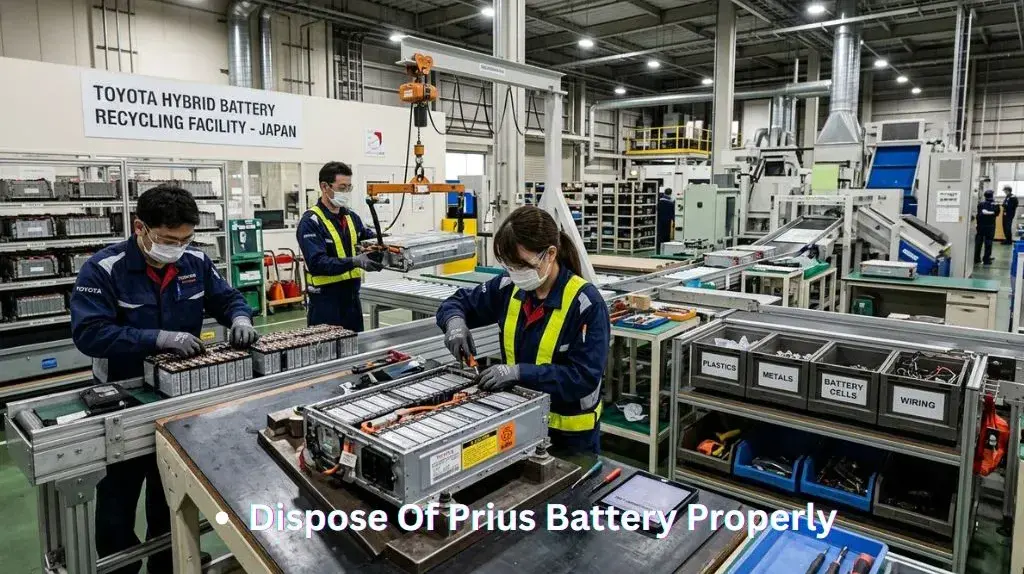
The recycler makes the pack electrically safe before opening it. Workers then separate modules, bus bars, wiring, cooling parts, cases, and control electronics.
5. Material recovery
Specialized facilities process the battery materials through mechanical, thermal, or chemical methods. The goal is to recover useful metals and prepare them for new industrial products.
6. Final processing
Recovered materials are cleaned, refined, and sold to manufacturers or other industrial users. Some nonrecoverable waste still requires controlled disposal.
Toyota Prius hybrid battery recycling is not a single universal method. The process depends on the battery chemistry, facility equipment, local rules, and condition of the pack.
Repair, reuse, and recycling compared
Recycling is only one option. The best choice depends on battery condition and cost.
Repair
A repair may replace a failed module, fan, sensor, or connection. This can cost less than a new pack, but the result depends heavily on the technician’s skill and the condition of the remaining modules.
Reconditioning
Reconditioning usually includes testing, balancing, cleaning, and replacing weak modules. It may extend battery life, but it does not make an old pack equal to a new one.
Reuse
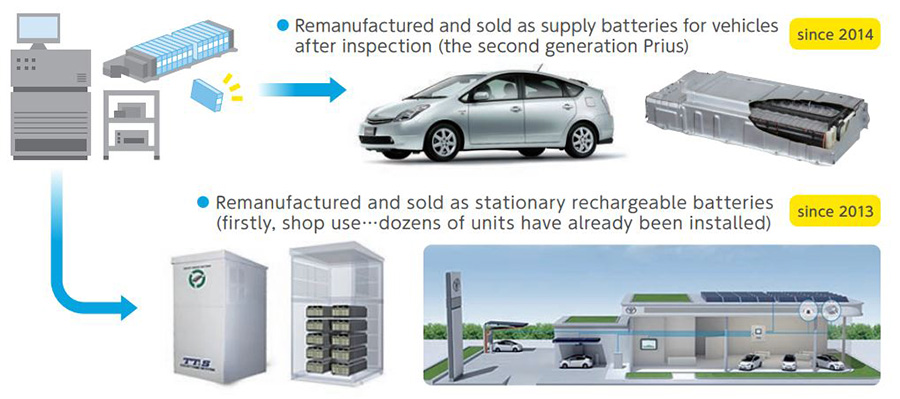
Some modules can serve in stationary energy storage or training equipment. Reuse keeps the component working longer, but it still requires safe testing and proper design.
Recycling
Recycling is the right path when the battery is damaged, unstable, heavily worn, or not worth rebuilding. It is also the final step after a reused battery reaches the end of its second life.
A useful rule is simple: repair what can be safely repaired, reuse what still has value, and recycle what cannot be trusted.
How to recycle a Prius hybrid battery in the United States
Start with the vehicle manufacturer, a Toyota dealer, or a qualified hybrid battery recycler. Ask whether the business accepts complete Prius battery packs and whether it handles NiMH, lithium-ion, or both.
Use this process:
Confirm the Prius model year and battery type.
Ask a qualified shop to diagnose the battery.
Request a written estimate for removal, transport, and recycling.
Ask whether the recycler provides proof of acceptance or a recycling record.
Confirm who handles shipping and hazardous material requirements.
Keep the battery in the vehicle unless a trained professional removes it.
Never place a hybrid battery in household trash, a curbside recycling bin, or a normal scrap-metal pile.
Some programs accept the battery through dealer networks or manufacturer collection systems. State rules may also affect transport, storage, and disposal. California and other states with strong battery and hazardous-waste programs may have stricter requirements than other areas.
Call ahead. A general auto parts store may accept a 12-volt lead-acid battery but not a Toyota hybrid battery.
Toyota Prius hybrid battery recycling cost
The cost can vary widely. Several factors affect the final price:
• Vehicle model and battery chemistry
• Battery size and weight
• Whether removal is included
• Distance to the recycling facility
• Shipping and hazardous-material rules
• Battery damage or leakage
• Local labor rates
• Whether the pack has resale or core value
In some cases, a recycler or dealer may accept a usable battery at little or no recycling charge. The battery has value as a core or source of modules. In other cases, the owner may pay for removal and transport.
Do not compare only the recycling fee. A low quote may exclude diagnosis, removal, packaging, or freight. Ask for the full price in writing.
A safe service with trained labor may cost more than informal disposal, but the difference protects you, your property, and the environment.
Safety rules for Prius battery handling
Hybrid batteries can deliver dangerous voltage even when the car will not start. The safest approach is to avoid opening or moving the pack yourself.
Remember these basic rules:
• Do not cut, drill, crush, or puncture the battery case.
• Do not open the pack without high-voltage training.
• Do not place tools or metal objects on the battery.
• Do not store a damaged pack near homes, vehicles, heat, or flammable materials.
• Do not wash a battery or pour liquid on it.
• Do not transport a leaking or smoking battery without professional advice.
If the pack is hot, smoking, swollen, leaking, or making unusual sounds, move people away and call emergency services. Do not touch it. Lithium-ion batteries can experience thermal runaway, while NiMH packs also require careful handling.
One practical lesson is worth repeating: never trust a warning light alone. A warning light may show a battery fault, but it does not tell you that the pack is safe to handle.
Environmental benefits and limits
Toyota Prius hybrid battery recycling offers clear environmental benefits. It reduces the amount of battery waste sent to disposal facilities and helps recover metals that can support new products.
Recycling can also reduce pressure on raw material extraction. However, recycling is not impact-free. Facilities use energy, transport creates emissions, and some materials remain difficult or costly to recover.
The environmental result depends on the recycler’s process. A licensed facility with strong safety controls is a better choice than an informal operation that strips parts without proper waste management.
The most responsible path usually follows this order:
Keep the battery in service when it is safe.
Repair or refurbish it when testing supports that choice.
Reuse suitable components.
Recycle the remaining materials through a qualified facility.
This approach treats the battery as a resource, not just a waste item.
Mistakes Prius owners should avoid
Many battery disposal problems begin with good intentions. Owners want to save money, but shortcuts can create serious risks.
Avoid these common mistakes:
• Buying a used battery without checking its age, test results, or warranty
• Assuming every hybrid battery recycler offers the same service
• Removing the pack with ordinary hand tools
• Sending a complete battery through regular parcel shipping
• Leaving the battery outside in rain or direct sun
• Confusing a 12-volt battery recycling program with hybrid battery recycling
• Ignoring a cooling fan problem after installing another battery
• Choosing a replacement before confirming the fault
A shop should explain the diagnosis and provide clear paperwork. Ask about the battery’s source, test method, warranty, and end-of-life plan.
From a practical standpoint, the best savings often come from accurate diagnosis. Replacing the wrong part is far more expensive than paying for a proper inspection.
Choosing a responsible recycling company
A trustworthy recycler should answer basic questions without hesitation.
Look for:
• Experience with Toyota Prius battery packs
• Staff trained in high-voltage systems
• Proper handling of NiMH and lithium-ion batteries
• A clear removal and transport plan
• Insurance and required business licenses
• Written pricing
• Safe storage procedures
• A documented recycling or reuse pathway
Be careful with companies that promise a very high payout without inspecting the battery. Battery value depends on condition, chemistry, demand, and transportation costs.
You can also contact a Toyota dealer and ask about available battery collection channels. The dealer may not be the cheapest option, but it can provide a reliable path for diagnosis and handling.
Local environmental agencies can explain state rules. Requirements change, so current guidance is more useful than advice from an old forum post.
Frequently Asked Questions About Toyota Prius Hybrid Battery Recycling
Can I put a Prius hybrid battery in the trash?
No. A Prius hybrid battery should not go in household trash or a curbside recycling bin. Contact a Toyota dealer, qualified hybrid shop, or approved battery recycler for safe handling.
Is Toyota Prius hybrid battery recycling free?
Sometimes, but not always. A recycler may accept a usable pack because it has core value, while damaged packs may involve removal, transport, or processing fees.
Can a Prius hybrid battery be refurbished instead of recycled?
Yes, if testing shows that the case, wiring, electronics, and most modules remain safe and useful. Refurbishment may extend service life, but it is not the same as installing a new battery.
How long does a Prius hybrid battery last?
Many Prius batteries last well over 100,000 miles, but life depends on age, heat, use, maintenance, and model year. A warning light or poor fuel economy does not prove the battery has failed, so diagnosis is important.
Can I ship a Prius battery myself?
Do not assume you can ship it as a normal package. High-voltage batteries may be regulated for transport, and damaged batteries have stricter requirements; use a qualified service that understands current shipping rules.
Does Toyota buy back old Prius batteries?
Some dealer and manufacturer programs may accept old packs through collection or core channels. Availability and payment vary by location, model, battery condition, and current program rules.
What materials are recovered from a Prius battery?
Recyclers may recover nickel, copper, aluminum, steel, plastics, and other materials. The exact materials depend on whether the pack uses NiMH or lithium-ion chemistry.
Conclusion
Toyota Prius hybrid battery recycling gives an aging battery a safer and more useful final path. The right process begins with diagnosis, continues with trained removal and testing, and ends with responsible reuse or material recovery.
Do not open or ship a Prius battery casually. Contact a qualified technician, compare complete service quotes, and ask how the company handles the pack after removal. If this guide helped, share it with another Prius owner or explore local dealer and recycling resources before your battery reaches the end of its service life.

I am Julian Drive, an automotive enthusiast and repair expert with over 7 years of hands-on experience in vehicle maintenance. At Carora Hub, I simplify complex car issues into easy-to-follow DIY guides to help drivers stay safe and save on repair costs.