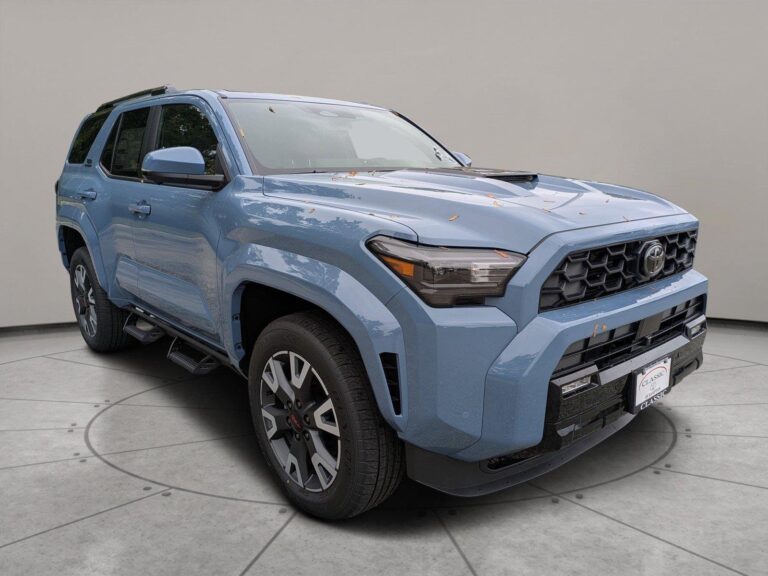
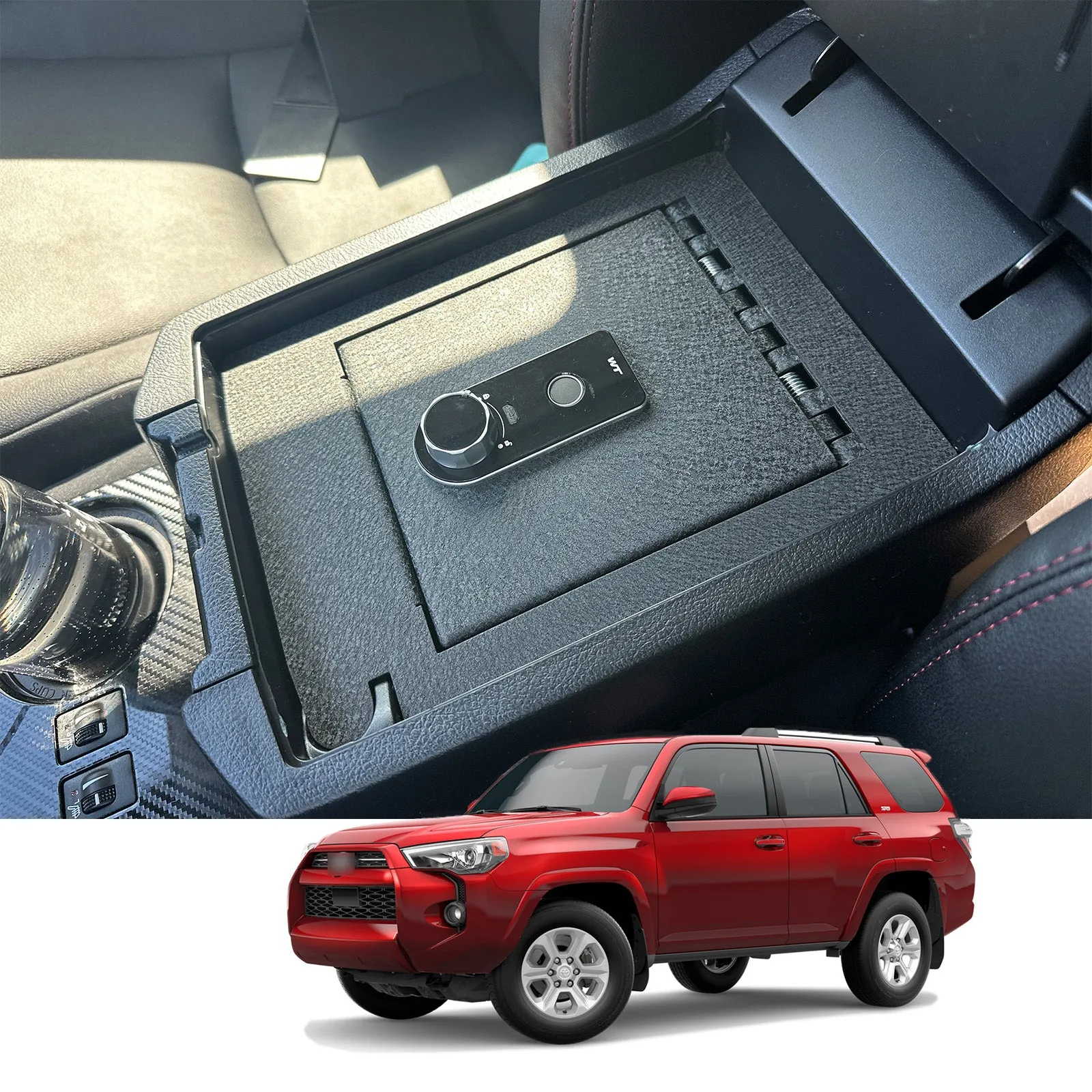
A Toyota 4Runner center console safe locks inside the factory console to hide small valuables from plain view. It fits 5th-generation models built between 2010 and 2024, where the inner tray dimensions stay the same across all trims. If your truck is a 6th-generation model from 2025 or newer, the interior was redesigned, so you’ll need a safe shaped for that specific layout.
4Runner console safe specs at a glance
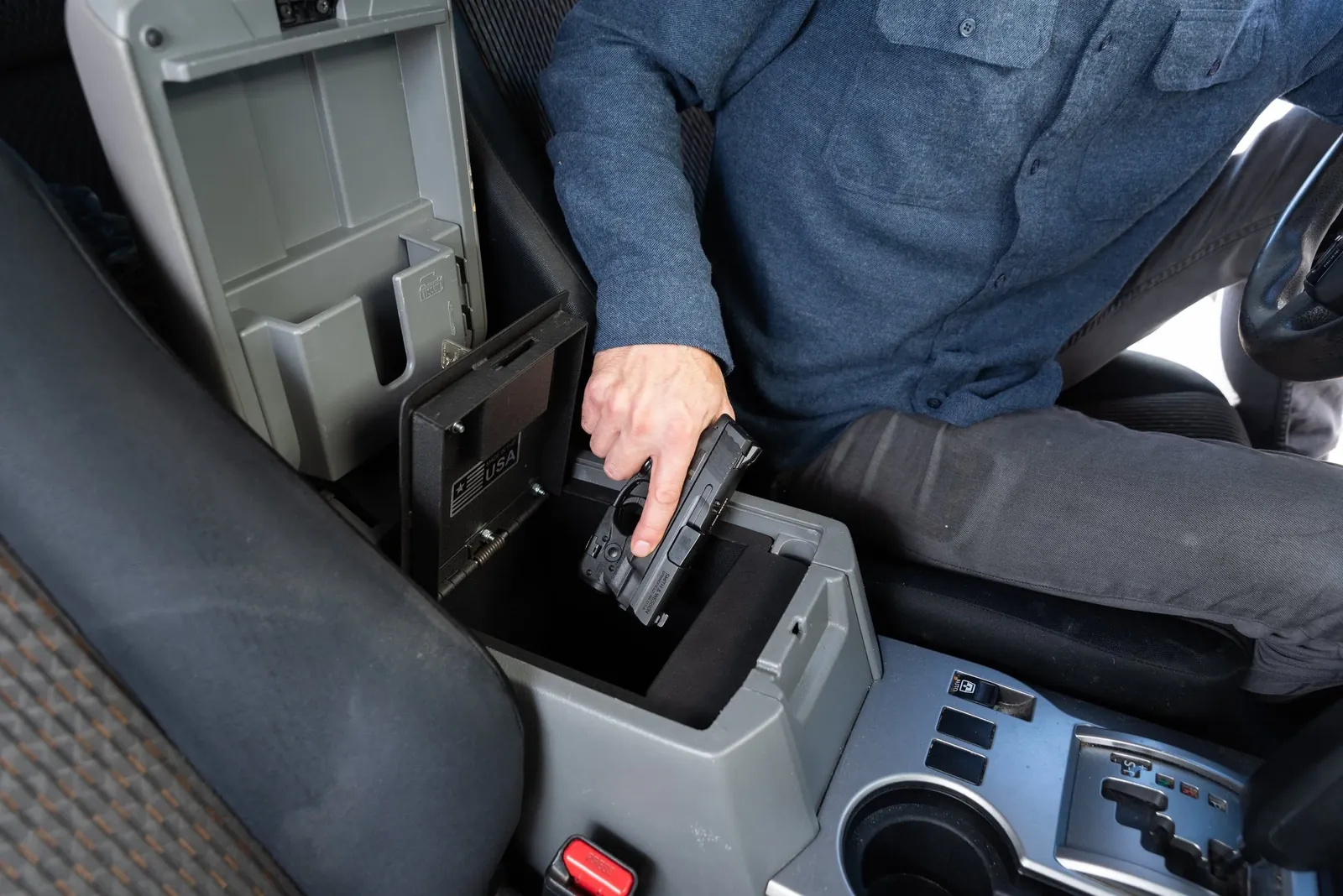
- Fits 5th-generation Toyota 4Runners (model years 2010–2024) with the standard factory console box.
- Locks using either a flat key, a combination dial, or a biometric fingerprint reader, depending on the model chosen.
- Built from steel ranging from 14-gauge to 16-gauge thickness; heavier gauge means more weight but better resistance to prying.
- Installs in under five minutes using existing factory screw holes—no drilling required if you buy the correct year match.
- Leaves enough room underneath for registration papers or a tire pressure gauge when the top tray is removed.
- Check your exact interior width between the hinge mounts before buying; read it off the plastic lip inside your open console lid.
The 2014 mid-cycle refresh changed the center console shape slightly. Safes made for 2010 through 2013 models won’t seat flush in a 2014 or newer truck.
Biometric readers run on small lithium cells hidden behind the lock plate. Expect to replace that battery every twelve to eighteen months.
A dead battery locks you out just like a lost key does. Keep the mechanical override key somewhere outside the vehicle itself.
Combination dials avoid batteries entirely but take three full seconds longer to open each time. That delay adds up at gas stations.
Why a console insert stops theft
Thieves target the center console first because it’s where drivers leave wallets, spare keys, and garage remotes. A factory plastic lid takes less than two seconds to pop open with a flathead screwdriver. Steel inserts change that timeline entirely. They bolt directly into the structural points of the console bin, turning a flimsy plastic box into a locked vault. The metal walls prevent someone from simply reaching around the lock mechanism.
The protection relies on the mounting hardware, not just the steel thickness. When bolts thread through the bottom of the safe and into the vehicle’s floor bracket, pulling the whole unit out requires tearing up the truck’s interior. That kind of damage makes noise and takes time. Smash-and-grab thieves don’t have either.
Gauge thickness matters, but there’s a trade-off you can’t avoid. A 14-gauge steel box weighs roughly twice as much as an 18-gauge one. Heavier steel resists bending when pried with a tool. But adding too much weight to the console hinges causes them to sag over time, making the factory lid sit crooked. You’re balancing security against the wear on your truck’s plastic parts.
Lock type changes how fast you get your own things back. Keyed cylinders are cheap and reliable, but you can lose the key in the seat gap. Combination dials don’t need keys, yet they take longer to open while parked. Biometric scanners work in about a second, but cold weather or dirty fingers cause misreads. Pick the one that matches how often you reach into that box during a normal drive.
This setup isn’t meant to stop a determined thief with power tools. It exists to beat the person walking down a parking lot checking door handles. Toyota’s official parts catalog lists the specific console dimensions for your trim level, which you should verify before ordering any aftermarket steel box.
When the 4Runner console safe doesn’t fit
| Situation | What changes | What to do instead |
|---|---|---|
| 6th-gen 2025+ models | Entire console shape changed | Buy a 2025-specific insert |
| Aftermarket armrest installed | Mounting holes no longer align | Remove armrest or skip install |
| Console subwoofer equipped | Depth is reduced by speaker | Use a shallow-profile lockbox |
| Heavy winter gloves worn | Biometric sensor won’t read skin | Switch to keyed or combo lock |
A fifth-generation safe won’t drop into the redesigned sixth-generation center stack. The outer walls taper differently now. Toyota moved the USB ports and cupholders for 2025. You need an insert stamped specifically for that model year.
Aftermarket padded armrests look great but ruin factory tolerances. The bolts holding your new cushion occupy the exact holes the safe needs. If you refuse to remove the pad, leave the safe in its box.
TRD Pro seats use thicker side bolsters with extra padding. That foam pushes inward toward the console by almost half an inch. Grab a tape measure before you click buy.
The JBL subwoofer sits directly beneath the storage bin. It eats up vertical space fast. A standard-depth lockbox will rest on the speaker magnet. Look for a unit under four inches tall.
How to install the steel insert
-
Empty the factory console completely and remove the rubber mat at the bottom. Look for four threaded holes near the corners of the plastic bin. These are the factory mounting points used to secure the insert. Wipe away dust so the bolts seat flush.
-
Place the steel safe into the console box without forcing it. It should drop straight down and rest flat against the bottom. If it tilts or catches on the side walls, you’ve bought the wrong year range. Take it out and check your model number.
-
Thread the provided bolts through the bottom of the safe into the factory holes. Hand-tighten them first to keep everything aligned. Don’t use a power drill on high speed here, because cross-threading the soft plastic brackets strips them permanently.
-
Tighten each bolt with a socket wrench until the box doesn’t shift when you push it side to side. Check the top edge to ensure the steel doesn’t block the factory lid from closing fully. Leave about two millimeters of clearance so the latch clicks shut.
-
Test your chosen lock mechanism ten times before putting anything valuable inside. If it’s a combination dial, set your code now and write it down somewhere outside the truck. For biometric units, register your thumb while sitting in the driver’s seat at the normal angle.
-
Put your registration and insurance cards beneath the safe if space allows. Replace the rubber mat over the bolts if it still fits. Close the factory lid and pull up firmly to confirm the entire assembly holds tight without rattling.
Mistakes that ruin the installation
Buying a safe listed for “all 4Runners” without checking the generation splits at 2010 and 2025, which results in a box that physically won’t drop into the bin.
The 2010 redesign widened the console floor by nearly an inch. The 2025 model changed the mounting points entirely. Measure your plastic bin before ordering.
Using self-tapping screws instead of the included machine bolts, which cracks the thin plastic floor of the console and leaves the safe loose enough to rattle on dirt roads.
Machine bolts spread clamping force across a washer. Self-tappers bite into one spot until the plastic splinters outward.
Setting a biometric scanner while standing outside the truck, meaning your finger hits the glass at a different angle when you’re actually seated and driving.
Register your prints while sitting in the driver seat. Your wrist rotates differently from behind the wheel. That slight twist is enough to fail a scan.
Leaving the emergency override keys inside the very console you just locked, defeating the purpose the moment the battery dies or the sensor fails.
Keep one key on your house ring. Hide the second somewhere else in the cab.
Overloading the box with heavy tools or firearms that exceed the hinge weight limit, causing the factory plastic lid to warp and refuse to latch shut.
The factory hinges were engineered for sunglasses and registration papers. Weigh your gear first. If it pulls the lid down even slightly, remove something.
Related guides
- How to Install a Lift Kit on Toyota Prius: Easy Step-by-Step Guide
- How to Install Toyota Sienna Seat Covers: Easy Step-by-Step Guide
FAQs About Toyota 4Runner Center Console Safe
Can I fit a handgun inside the 4Runner console?
Yes, subcompact pistols like the Glock 43 or Sig Sauer P365 fit inside most 14-gauge inserts designed for 5th-generation models. Full-size duty weapons won’t clear the depth of the factory bin. Always check your local state laws regarding loaded firearms stored in vehicle compartments before leaving one unattended in the truck.
Why does my biometric lock fail in winter?
Cold temperatures reduce blood flow to your fingers, flattening the ridges, and dry skin reduces conductivity on capacitive sensors or contrast on optical sensors. Capacitive sensors handle this better, but they still struggle below freezing. If you park outside in cold climates, choose a combination dial or keyed cylinder instead of relying solely on a fingerprint reader.
How long does the battery last on electronic models?
Electronic locks powered by AAA batteries typically run for 9 to 12 months under normal daily use. Models using coin-cell CR2032 batteries last closer to 6 months. Keep the emergency override key outside the vehicle, because once the battery dies completely, the keypad and scanner stop working until you swap cells.
Is it safe to drill new holes for mounting?
No, drilling into the console floor risks puncturing wiring harnesses or fuel vapor lines routed beneath the center tunnel on some 4Runner trims. Factory inserts use pre-existing threaded holes for a reason. If your safe doesn’t line up with those holes, you have the wrong part number for your specific model year.
What happens if I lose the only key?
You’ll need to call an automotive locksmith who can pick a tubular or wafer lock without destroying the surrounding plastic. Drilling the cylinder out ruins the safe and costs more to replace than the locksmith’s fee. Store one backup key in your house and another in a magnetic box hidden on the frame rail.
Does the steel box block cell phone signal?
Yes, a closed steel container acts as a Faraday cage and blocks cellular, Bluetooth, and GPS signals completely. Don’t store your primary phone inside if you expect emergency calls to come through. This feature is actually useful if you want to prevent relay attacks on keyless entry fobs left in the truck.
How much weight can the console hinges hold?
The factory plastic hinges on a 5th-generation 4Runner aren’t rated for heavy loads. Overloading the console with items resting against the lid can cause it to sag and the latch not to catch. Stick to documents, spare keys, and small electronics.
Do these safes fit the Limited trim differently?
The Limited trim uses the same internal console dimensions as the SR5 and TRD Pro for 5th-generation models. The difference is only in the leather wrapping on the outside lid. The steel insert drops into the plastic bin identically across all trims, so you don’t need a special version for the Limited package.
Conclusion
The right steel insert turns an easily opened plastic bin into a real barrier against quick theft by matching the gauge and lock type to daily truck use, measuring the specific console before buying, and keeping backup keys far from the box.

I am Julian Drive, an automotive enthusiast and repair expert with over 7 years of hands-on experience in vehicle maintenance. At Carora Hub, I simplify complex car issues into easy-to-follow DIY guides to help drivers stay safe and save on repair costs.